
Lobster rolls approach $50, but Bostonians appear happy to shell out
Restaurants don’t want to gouge customers, but costs have risen precipitously.
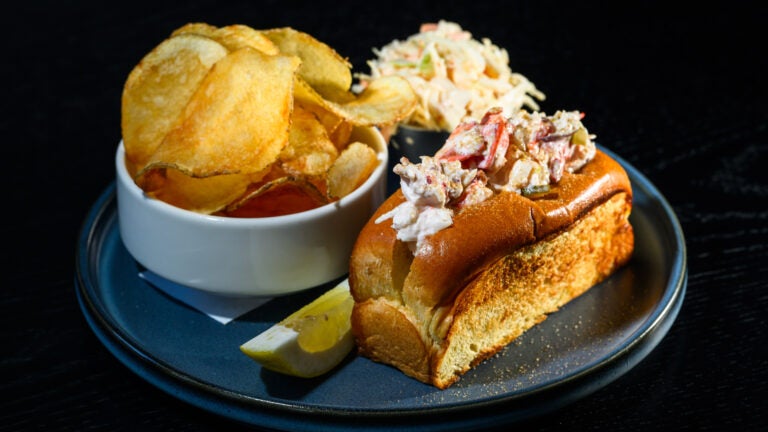
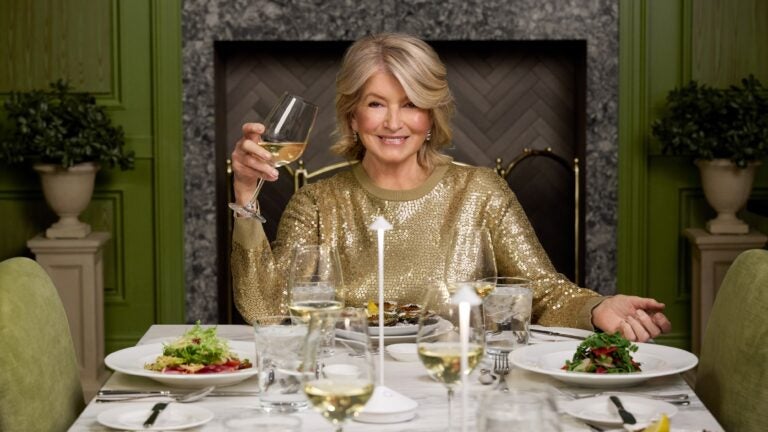
How much would you pay for a lobster roll? Martha Stewart recently declared that she wouldn’t serve a $60 one at her new Foxwoods Resort Casino restaurant. In the swanky Hamptons, chefs are bracing for a spendy summer, predicting that lobster roll prices will approach $50.
Maine’s catch of lobsters declined for the fourth straight year, state fishing regulators said, as the industry continued to grapple with soaring business costs, inflation, and climate change. The haul of lobster has declined every year since 2021 amid warming oceans, spurring lobsters’ migration to Canadian waters.
Lobster rolls aren’t quite $50 in Boston, but they’re getting close. That’s put restaurateurs in a precarious position, wondering how much is too much to charge for an iconic menu item that tourists and locals demand. In many cases, it’s better to break even than to lose customers.
“I can’t really charge you $100 for a lobster roll, even though, over the last two weeks, maybe I should be charging $70 or $80,” says Row 34’s Jeremy Sewall, whose restaurants are known for creamy lobster rolls.
“There is a ceiling,” he says. “When you get over 50 bucks, I have a little twinge of guilt that we’re charging so much for food, even though it’s the correct price.”

Saltie Girl’s Kathy Sidell has always tried to keep her lobster roll at $42 or under. “On rare occasions when the prices skyrocket, I will raise the price to $44. But it’s such a signature dish for us. I believe we should keep it as reasonable as possible, in spite of at some points breaking even or even losing money,” she says.
To keep costs down, she’ll sometimes swap lobster for crab elsewhere, like switching a lobster fra diavolo pasta for a spicy chili crab spaghetti. But offloading lobster rolls entirely? Not a chance.
“Eating a great lobster roll in Boston is one of those quintessential New England experiences,” Sidell says. “That’s what people want and expect, certainly at Saltie Girl. Say Boston. Say lobster roll.”
Late winter is a notoriously tricky time to source lobsters. They slow down in cold water and burrow, making them harder to catch. Fishing itself becomes more difficult, too, with rough weather limiting how often boats can go out. And this winter has been especially frosty.
“We’re in an in-between time, when lobsters aren’t moving as much and the weather really is challenging,” says Sewall. “It’s been a real winter, the first one we’ve had in a while. Getting out fishing for these wild creatures is never easy, and this year has been even harder.”
And it takes a lot of precious lobster to make a roll, about six lobsters to yield a single pound of meat. Current wholesale prices are about $15 per pound for small “chick” lobsters, and restaurant supplier Wulf’s Fish is currently charging nearly $80 per pound for claw-and-knuckle meat.
In the North End, Paul Barker is unruffled by rising costs: He sells hundreds of lobster rolls per week at his namesake restaurant, Pauli’s. Would he swap cheaper shrimp or crab? Not a chance.
“There’s no comparison. Shrimp can be a little tough. Scallops don’t work well; if you don’t cook them right, they can be tough as well. Lobster meat done right is just smooth. It’s tasty, it’s sweet, it’s succulent,” he says.
It’s also a tourist attraction. Pauli’s sells a two-foot lobster sub for $110, called the USS Lobstitution, the equivalent of four lobster rolls. If you can “sink” it in 10 minutes, it’s free. (Some people attempt the challenge; others bring their family and share it to save money.)
At Cambridge’s popular Puritan Oyster Bar, chef Will Gilson is breaking even on lobster rolls. He pays between $42 and $47 per pound for shucked meat and sells the rolls for between $45 and $48, with fries. He used to save money by buying whole lobsters and picking the meat in-house. Now, with labor costs up, there’s little difference between that and buying the meat ready to go, he says. And charging more really isn’t an option.
“We’re not on Newbury Street; we’re not in the Seaport. We want to make sure that we don’t alienate people with a lobster roll that costs that much,” he says.
For a New England oyster bar like Puritan, Gilson says, “it’s a cost we have to endure.”
He’s tweaked his menu a bit in response, though. For a long time, Puritan served toast with a combination of pureed lobster and scallop meat, dunked in butter. But scallops are also $45 per pound, he says. He replaced the dish with shrimp toast. Shrimp, he says, costs $10 per pound.
“I can’t justify charging people $30 for an appetizer,” Gilson says.
When prices climb, Row 34’s Sewall will remove lobster from his menus outside the city. But he won’t pull it from his Boston restaurants: Guests expect it.
To offset lobster, he offers cheaper rolls, like shrimp or crab. And he tries to educate customers about why lobster is so pricey in the first place.

“It’s a conversation with our guests as soon as they get here: ‘Hey, the market price on the lobster roll today is X. My cousin and nephew go out and catch our lobster. We’re really close to the source,’” Sewall says. “If you know how hard it was for those guys to make a living, you have a little more empathy,” he says. “But I don’t want to upset the guest. It’s a fine line.”
At The Banks Seafood and Steak in the Back Bay, chef Robert Sisca — a Le Bernardin-trained chef who recalls when lobster rolls were a mere $25 — also won’t pull his $48 buttered lobster roll from the menu. His business and tourist clientele wouldn’t allow it.
“Our lobster roll is our number-one seller. There’s no way we could ever take it off,” he says.
He’s modified his marketing approach, though. Instead of listing the dish at a mysterious market price, which can feel like roll roulette, Sisca is transparent about the day’s prices. And he’ll never go above $50.
“Some people get sticker shock when you see the market price, so we’re always upfront,” Sisca says. “We tell them what the price is” — $48 — “which is expensive, but there’s nothing we can really do about it.”

Legal Sea Foods founder Roger Berkowitz has been in the business long enough to remember when lobster “was the food of the underclass,” he says — unappreciated, plentiful, hardly the stuff of $40-something sandwiches.
“My grandfather used to brag about getting two lobsters for a quarter or 50 cents.”
This winter, Berkowitz opened Roger’s Fish Co. at Logan Airport. Of course, lobster rolls are on the menu. Now, he watches prices climb and does what many operators are doing: absorbs what he can and tries not to flinch. He’s seen rolls creeping toward $50 and beyond (“obscene,” he says), even if he understands exactly how they got there.
“It’s hard for me to wrap my head around it. But at the same time, I do appreciate the difficulty. I appreciate what the fishermen, the lobstermen, are doing to bring it in. But I think at a certain point, you hit a threshold where it’s hard to rationalize any degree of value,” he says.
Still, in New England, value might not be the point. Lobster is more than dinner. It’s a ritual. And so customers keep ordering. Barker, creator of the two-foot lobster roll, thinks the lobster business will be even stronger in the summer, because of Boston’s 250th anniversary events and the FIFA World Cup.
“I think this summer is just going to be something that we’ve never seen before, because of all the tourist influx,” he says. “There are going to be a lot of lobster rolls sold this summer.”



Be civil. Be kind.
Read our full community guidelines.To comment, please create a screen name in your profile
To comment, please verify your email address