
Sign up for The Dish
Stay up to date on the latest food and drink news from Boston.com.
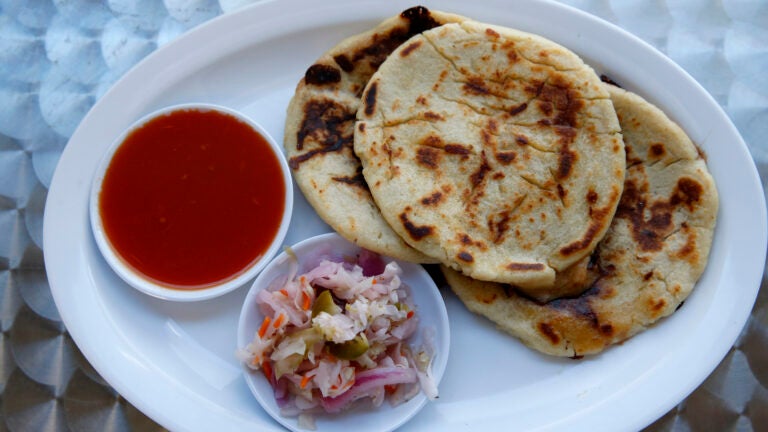
There’s a mile-long stretch of Broadway in Somerville that offers some of the most affordable food one can find in this pricey suburb of Boston. Among the tacos and burritos that dominate menus, one unassuming dish stands out: the pupusa — a perfectly round, crispy corn cake stuffed with cheese, beans, and other edible fillings.
It’s El Salvador’s national dish, but pupusas are lesser known to American palettes. While the dish is more accessible in East Somerville, pupusas appear on menus alongside classic Mexican dishes at restaurants like Taco Loco and Don Julio. They may not be the star of the menu, but they’re delicious, dependable, and cheap, as low as $3.50 apiece.
But for chef and Dos Manos Kitchen business owner Edwin Orellana, that’s not good enough.
“Everybody knows about tacos,” Orellana said. He hopes the pupusa can become as much of a household name as Americans’ favorite Tuesday meal.
On a windy Wednesday in Greater Boston, Orellana and his wife, Alexis Orellana, are taking Boston.com on a pupusa crawl. Together they run Dos Manos, a pupusa-only pop-up, that’s part restaurant, part educational service.
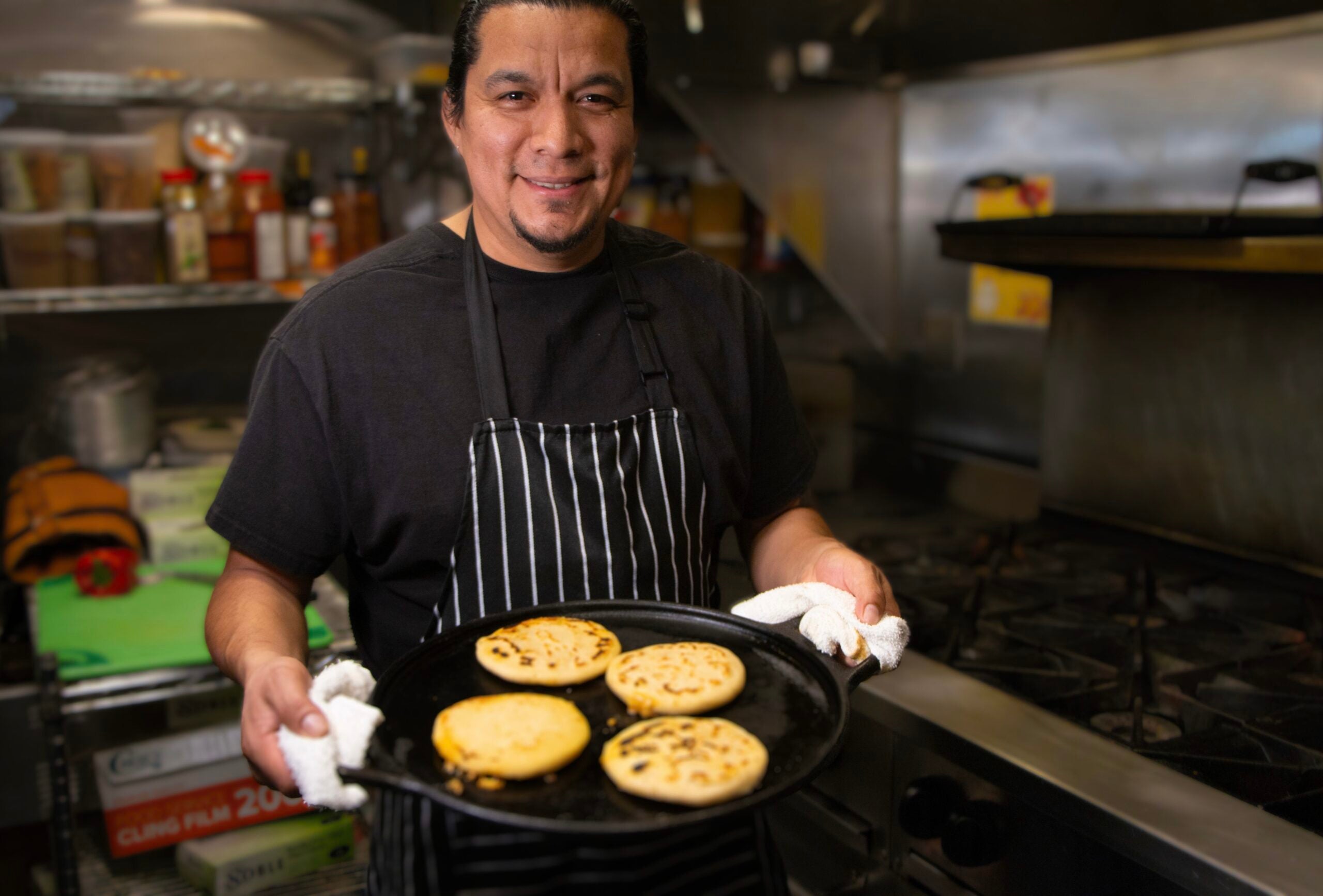
We started at Taco Loco Mexican Grill, a Somerville staple since 1994. Orellana remembers coming here decades ago with family.
“I didn’t go to this area [except] for coming to eat, specifically to eat pupusas,” he said.
For $3.50, he ordered the loroco pupusa, filled with a green, savory edible flower bud often used for dishes in Central America, and cheese. The pupusa, in general, is all-consuming in El Salvador — at festivals, family dinners — and many Salvadorans grow up learning to make them by hand.
Orellana said his earliest memory of pupusas was when he was around age 8, helping his family harvest corn.
The corn would be ground into masa through a molino, or corn mill. He’d then watch his mother cook pupusas on a clay comal, a traditional griddle used in Central America.
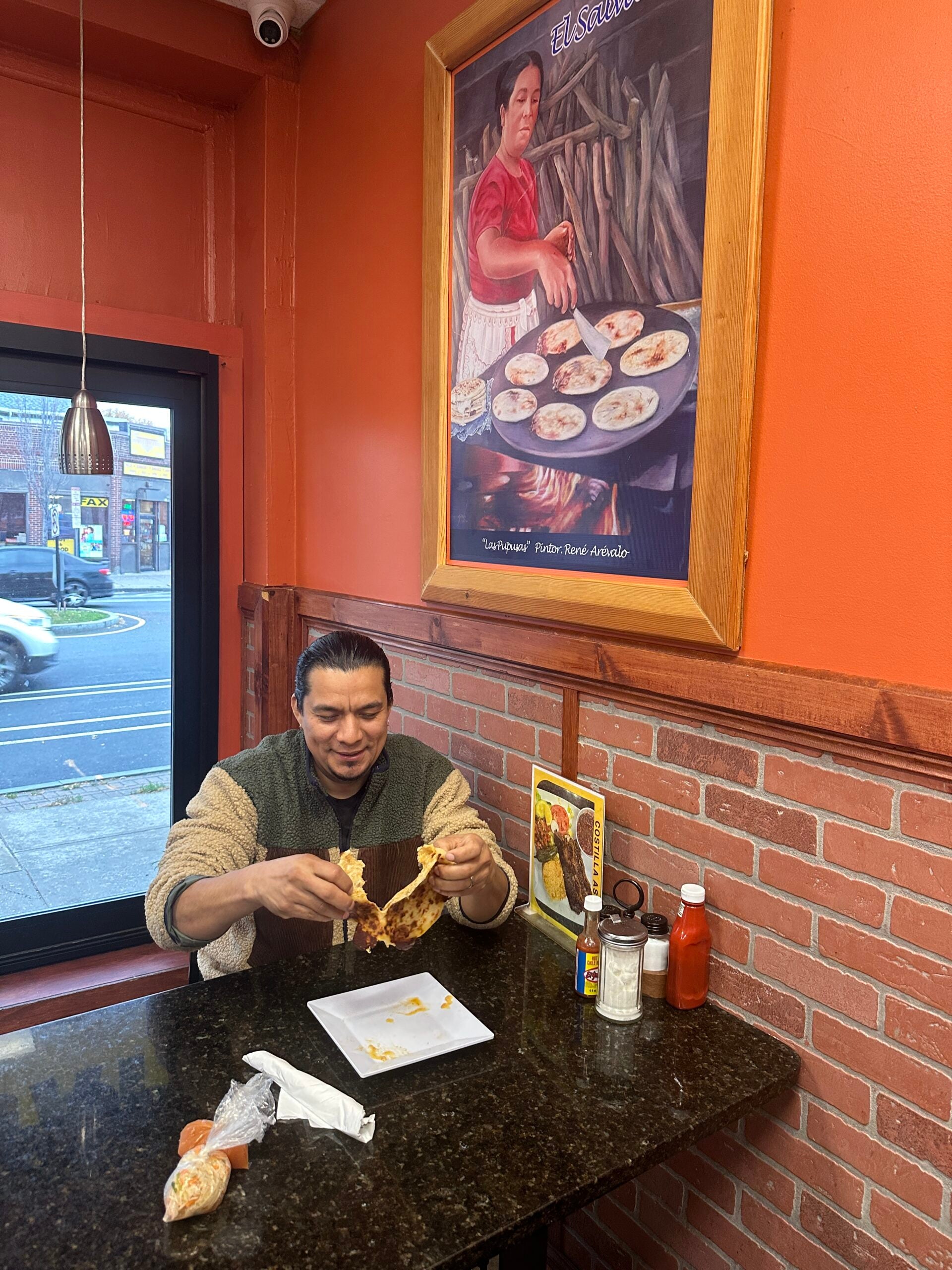
At Montecristo, a painting on the wall shows a woman doing exactly that — cooking pupusas atop a smooth, black comal similar to how he learned to make them.
He orders a chicharrón pupusa ($3.50), filled with crispy pork, which he pulls apart with his hands, dips in thin salsa, and tops it with curtido, a Salvadoran fermented coleslaw.
“If I go to El Salvador, and I eat a pupusa with a fork,” he joked, “definitely everybody’s going to see me and be like, ‘What the hell?’”
A chef by trade, Orellana worked in Boston kitchens like Yvonne’s and Posto before the pandemic led him to rediscover his passion for pupusas. That same year, Dos Manos was born.
It took about six months to convince customers at his Bow Market pop-up inside Nibble Kitchen that a corn cake stuffed with melted cheese and beans was a delicious idea for a meal, he said. Then one day, there was a line.
“Sometimes I had to open late because I was not ready with the [ingredients] to make enough,” he said.
Orellana went beyond the traditional fillings, experimenting with a corned beef and potato pupusa around St. Patrick’s Day, or slow-cooking and marinating meats before stuffing it into the masa cake.
At Maya Sol Mexican Grill, where pupusas are sold for $3.94, Orellana orders a bean and cheese version that is noticeably crispier — just how he prefers to cook them.
The salsa and curtido come in a cup, mixed together, unlike the usual way one is handed pupusa toppings, in plastic bags secured in a tight knot.
Orellana points out the small details in each pupusa order. His pupusa expertise makes him a dedicated teacher when it comes to the other part of his business. Through Dos Manos, he’s led cooking classes for companies and parties and visited area schools to introduce youth to Salvadoran food.
“Every kid in school knows about pizza and pasta,” Edwin said. “My goal is that pupusas should be a dish they [grow up] with, too.”
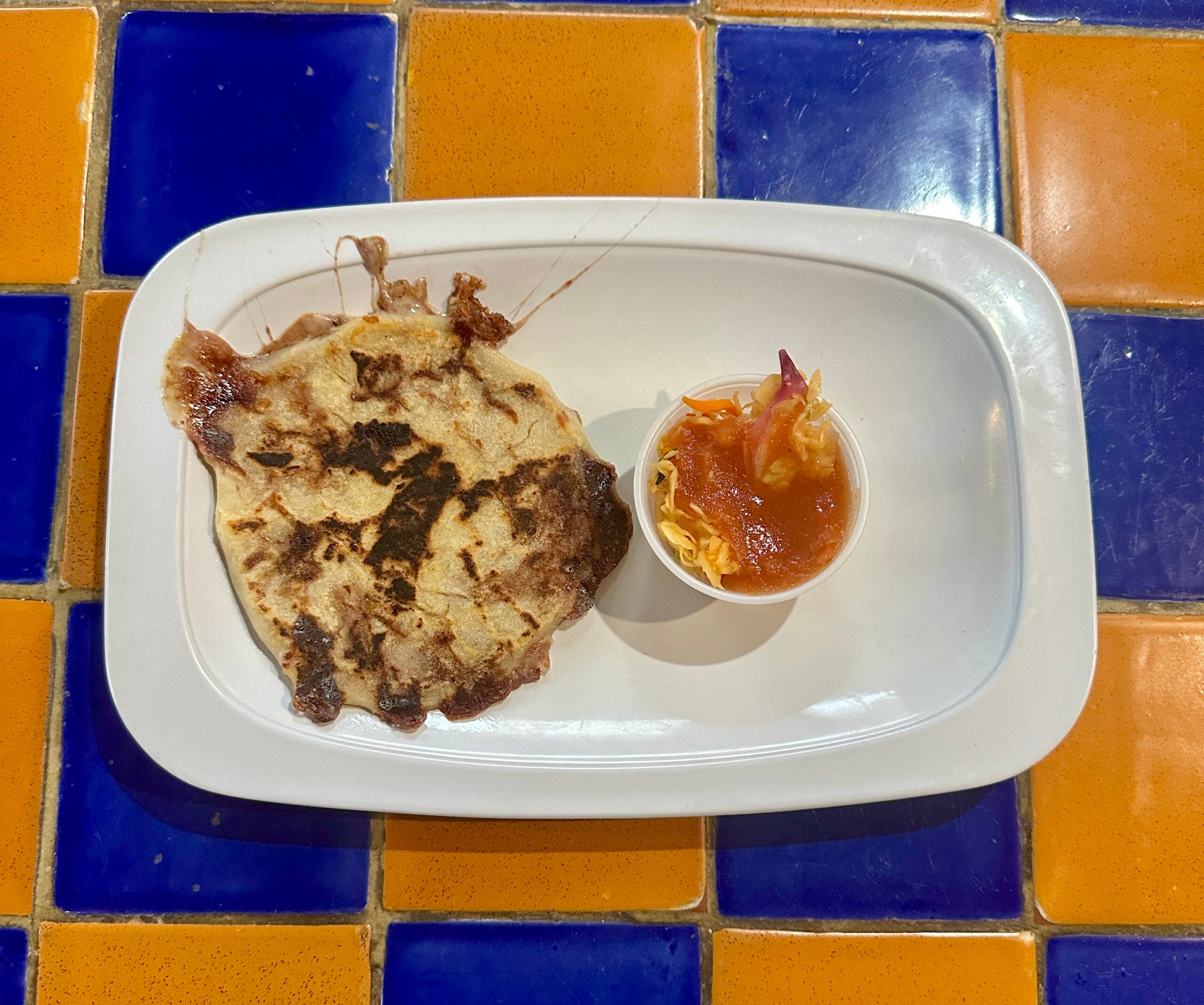
At the last stop in Magoun Square’s La Posada, Orellana recommends the birria pupusa — three corncakes for $18. It’s the sort of approachable yet atypical filling that Edwin hopes to serve in his own brick-and-mortar restaurant someday.
An employee at the restaurant overhears our conversation and shows us a video of a record-breaking 18-foot-wide pupusa from El Salvador’s Olocuilta Festival, held on National Pupusa Day in November. It’s a reminder for Orellana of why he started this journey.
“It reminds me of my mom and father,” he said, “the way my mom served them and the way my father grew the corn. It’s the reason I want to do more for pupusas.”

Stay up to date on the latest food and drink news from Boston.com.




To comment, please create a screen name in your profile
To comment, please verify your email address
Conversation
This discussion has ended. Please join elsewhere on Boston.com