
Sign up for The Dish
Stay up to date on the latest food and drink news from Boston.com.
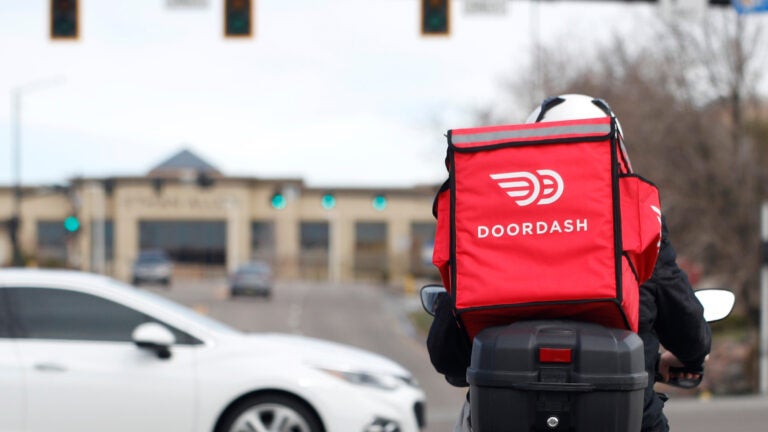
It’s a modern-day scenario: You get home late from work or school, the fridge is empty, and so is your desire to cook. Then your phone lights up with a notification from DoorDash promoting a deal on food delivered to your door.
Convenient? Yes. Cheap? Not really.
Ordering through third-party apps — like DoorDash, UberEats, and GrubHub — can cost diners at least 80% more than picking up takeout, and 600% more than cooking at home, according to a LendingTree report. Those higher prices affect not just Boston-area customers, but the restaurants, too.
The added expense isn’t just the fees notoriously associated with apps like UberEats and DoorDash. Diners have drivers to tip who scurry across town in Boston traffic with their edible cargo.
Less visible are the costs restaurants absorb.
Most restaurants pay delivery apps a 15% to 30% fee on each order. In response, some Boston area restaurants told Boston.com they have started to charge more for menu items on the apps compared to what they charge in the restaurant.
“You can’t really eat the cost of losing 15% or 30% of your sale. The margins are too tight,” said Marc Sheehan, chef and co-owner at Northern Spy in Canton.
Jason Santos, of Butterbird, Buttermilk & Bourbon, and Citrus & Salt, charges more on the apps. At Butterbird, fried chicken sandwiches can cost 50 cents to $1.50 more on DoorDash than on the restaurant’s website.
Stoked Pizza Company’s delivery menu is marked up by at least 20%, depending on the item, said co-founder Toirm Miller.
The apps are a “lose-lose” for customers and restaurants, said Daniel Roughan, owner of Source Restaurants in Cambridge. Yet he estimated that 80% of his takeout sales come from third-party apps.
“Unfortunately, it’s a necessary evil,” said Roughan, who added that customers have come to expect restaurants like Source to be on the apps.
In addition to commission fees, restaurants sometimes cough up marketing dollars to show up prominently on the delivery apps’ home page.
Katherine Bayle, who runs Shirley Eat More Sunshine, said she tried the apps for a free trial period last fall, but ultimately decided it wasn’t going to work for her business. To be competitive, she quickly noticed she would have to pay for visibility.
“The delivery apps show people who are paying a bunch of money to be on there, but maybe they’re not going to show you the place that’s right around the corner that you could just walk to and pick up,” Bayle said.
When asked for the cheapest way for diners to interact with their businesses, restaurants gave the same answer: pick up your food, or dine in.
Picking up takeout yourself eliminates delivery fees and driver tips, which can add several more dollars to a bill. Roughan said his customers can still call and place pick-up orders, while Miller at Stoked said he prefers pick-up orders going through Toast because it doesn’t charge the restaurant fees per order.
Dining in can be just as cheap, but restaurant owners said customers are are more likely to buy a cocktail or two, add on a pastry, and tip more when sitting down at a restaurant. Still, it’s the preferred option for restaurant owners.
“It’s so nice to see the space populated,” Miller said. “For me, the best way to experience a restaurant is always going to be dining in and [experiencing] everything the restaurant has to offer.”
Will Gilson, partner and executive chef at Cambridge Street Hospitality Group, said takeout and delivery can feel transactional and lacks hospitality.
“In these cases [with takeout], you’re just a name with an initial on a receipt,” said Gilson. “While we love getting our product out to as many people as possible, it’s always the one that feels the most robotic.”
Pickup and delivery also can mean customers leaving smaller tips for wait staff, Sheehan said.
There are quality concerns, too. Some dishes — like steak or fried calamari — don’t travel well. And restaurant staff have no control over how the food is handled by the delivery driver.
“[The food] is going to sit in a box for 45 minutes before it gets to you, and that’s going to influence the quality of the food you’re getting,” Sheehan said.
But sometimes on the rare or exceptionally tough day, convenience plays the most important role in dinner plans.
Carla Poulos, associate director of programs and advocacy at Boston-based Women’s Money Matters, works with low-income girls and women who don’t always have the time to cook. When they need to order delivery, she advises making one big order of food rather than multiple small ones.
“Order more at once so you’re not paying even more for delivery,” said Poulos, specifically emphasizing that this tip cuts down on fees and ensures there’s leftovers for later.
Another tip: Before ordering through the app, check the restaurant’s website or its Google card after clicking the “Order Online” button. Restaurants will typically link to their preferred delivery app — often the one that charges them lower fees, which could also be the cheapest for the customer.
Delivery isn’t going away any time soon, and it can still be helpful to people short on time or without easy access to food. Even restaurateurs say they use the apps themselves.
But Roughan said the convenience often isn’t worth the price.
“The apps will have you believe convenience is the prize,” Roughan said. “But you potentially get a questionable product, and you paid almost double.”

Stay up to date on the latest food and drink news from Boston.com.




To comment, please create a screen name in your profile
To comment, please verify your email address
Conversation
This discussion has ended. Please join elsewhere on Boston.com