
4 takeaways on reopening restaurants from a member of the Reopening Advisory Board
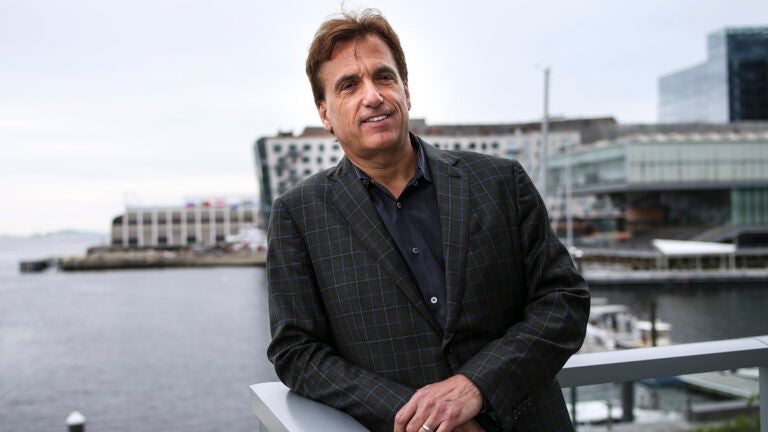
"We’re not going to make people open," said Steve DiFillippo, owner of Davio's.
Related Links
-
COVID
‘I think it’s probably going to be June’: Davio’s owner Steve DiFillippo predicts that Mass. restaurants will open this summer
-
Restaurants
The coronavirus has devastated restaurants. So what will happen when they reopen?
-
Restaurants
Video: Boston chefs and restaurateurs share how their world has changed during the pandemic
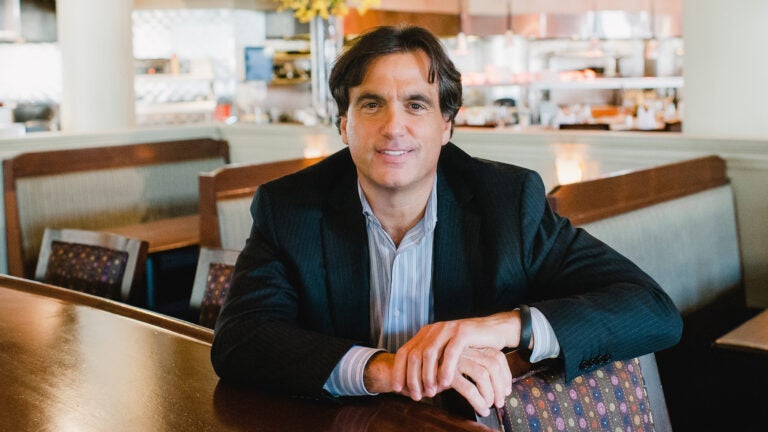
In late April, Gov. Charlie Baker announced the formation of a Reopening Advisory Board, a selection of leaders representing multiple industries that would advise Baker’s administration on how to safely reopen the state. Among those board members is Steve DiFillippo, the owner of local Italian steakhouse chain, Davio’s, who told WGBH that he believes restaurants will be able to reopen in June.
In a recent interview with the restaurateur, DiFillippo told Boston.com that June was “just a guess,” and that the real indication that the state is ready to reopen will be determined by a decline in COVID-19 deaths and ICU patients. And while he said that he was unable to comment on any plans the advisory board has been workshopping, he did share some thoughts on general concerns among the board, how restaurants will need to operate after they open, and why businesses will ultimately need to decide for themselves whether reopening this summer is the right move.
Salt shakers and coat checks will be a thing of the past.
DiFillippo reiterated that restaurants have always been exceptional at keeping a clean environment, that they are held to high standards by the health department and that sanitation is nothing new to the industry. Still, he stressed that businesses will have to go above and beyond in the weeks and months following a reopening, with protocols that extend beyond wearing a mask.
“We need to have salt shakers off the table,” DiFillippo said. “When you come in and sit down, there’s nothing on the table. We bring over fresh silverware for you. You just have to think about what you touch — and if you do touch it, we need to be cleaning it. I don’t think we’ll be checking coats for a while.”
While he acknowledged that walking into a restaurant and seeing everyone wearing masks will be undeniably different, DiFillippo also believes that the public will have already become used to this new way of life.
“When you go to the store now, people have masks,” he said. “When you go outside, people have masks. By the time we open, which will maybe be a month from now, that won’t even be an issue. You won’t even notice it.”
Even if the state gives them the green light, restaurants don’t have to open.
In April, Texas Gov. Greg Abbott allowed restaurants to reopen for dine-in services at 25 percent capacity — yet many establishments made the decision to hold off. A similar scenario has played out in Georgia. DiFillippo said that same kind of autonomy will be respected in Massachusetts.
“I own a restaurant in Georgia,” he said. “I have a Davio’s in Atlanta. I’m not open [there] because I don’t think it’s safe. Just because the state tells you that you’re allowed to open doesn’t mean you have to open.”
For most restaurants, operating at 25 percent — or even 50 percent — capacity does more harm than good, as the cost of keeping a restaurant open and running to serve dine-in customers far exceeds the profit coming in from such low turnover. DiFillippo said that, ultimately, the decision is in the owner’s hands.
“If you’re not ready, I don’t think you should open,” he said. “We’re not going to make people open. You can continue with takeout and delivery and then maybe you add [service] inside. I think everyone is going to make their own decisions on that.”
Everyone on the Reopening Advisory Board is concerned about PPE.
Industries represented on the Reopening Advisory Board run the gamut, from transportation and health care to manufacturing and technology. Everyone, DiFillippo shared, is worried about securing enough personal protective equipment, or PPE.
“It’s very, very expensive, it’s very hard to get, and everybody is concerned,” he said. “We’re all worried about it. And childcare! We’re worried about our kids. So those are two big issues.”
Another shared concern that the board has discussed is MBTA safety and how the public will get back to work once the state reopens — all the “common sense things,” DiFillippo said, that everyone is going through. Even after a reopening plan is released and put into practice, life won’t change overnight.
“It’s not like [the plan is] going to come out and everybody is going to go crazy,” DiFillippo said. “It’s going to take a little time, and I think everyone knows that. We closed everything very quickly, but it’s going to be a lot different reopening.”
Nobody knows how long the recovery will take.
Ask anyone in the restaurant industry — or any industry for that matter — how long it might take before we start to see a semblance of normality again, and you might be met with a shrug. DiFillippo is no exception.
“So many things have to happen to get back to normal,” he said, stressing that a vaccine is one of the key factors in providing a renewed sense of stability. “It might take a year, I don’t know. That’s why I think a lot of restaurants are nervous — every business is nervous — because they know it’s not going to be the summer. That’s really the scary part, is that we really don’t know.”
Still, the restaurateur, a self-proclaimed optimist, continuously stressed that he envisions a lot of restaurants coming back. He views the coronavirus pandemic as just another tough problem that restaurants will be able to overcome.
“I’ve been around a long time, I’ve been through a lot of things,” he said. “Does this look like the worst one? Yes, it always looks like the worst one when you’re in it.”
He hopes that as restaurants begin to recover and reopen — “some might come back in different sizes” — the industry will be able to learn from the pandemic.
“Right now we’re all in the bunker, but we’re going to come out— and we’re going to come out strong,” he said.



To comment, please create a screen name in your profile
To comment, please verify your email address
Conversation
This discussion has ended. Please join elsewhere on Boston.com