
Sign up for The Dish
Stay up to date on the latest food and drink news from Boston.com.
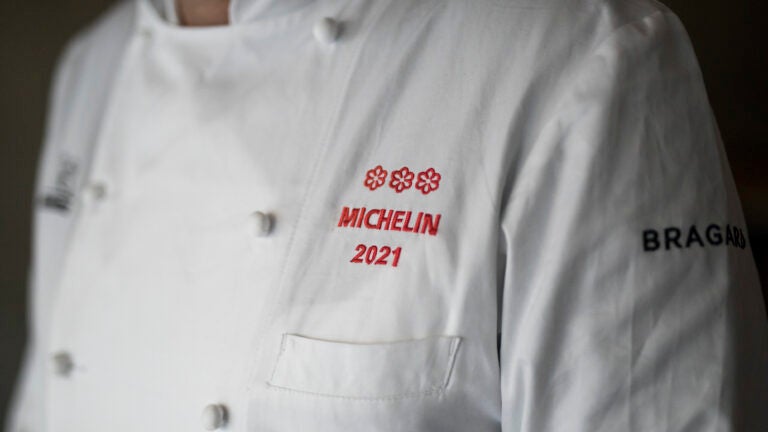
The Boston dining scene is in for a transformation, to some degree, as soon as the Michelin Guide drops today.
Chefs and restaurant insiders say its arrival could spur everything from menu overhauls and new concepts to increased competition, talent reshuffling, possibly some hurt feelings, and maybe even more restaurants.
You might be wondering: All that just because of a best restaurant guide?
Well, this is no ordinary list. Despite increased competition from guides like The World’s 50 Best, Michelin remains, for many industry folks and diners, the most prestigious gastronomy award out there. A Michelin star can draw culinary tourism, reshaping a city’s food identity, a phenomenon that’s prompted studies into the growth of Michelin.
But there are negatives to the guide as well. Research shows that Michelin-star restaurants are more likely to close than other highly-acclaimed restaurants without a star, raising questions about the pressure that comes with the prestige.
With the stakes so high, Boston.com spoke with local chefs who have worked inside Michelin kitchens. Their experiences—many from years or even decades ago, well before MeToo and COVID-19 reshaped the industry—offer a window into what life behind the stars was really like.
Gilson is chef/partner at Cambridge Street Hospitality Group, which runs restaurants like Puritan & Company, Gepetto, and Amba.
When I was in college, I was lucky enough to work in three different Michelin star kitchens — very bottom rung. You’re there cleaning vegetables and scrubbing things and generally just being the grunt workforce of those types of kitchens. But the thing that’s really exciting about them is that they bring a level of talent to the kitchens that’s really hard to find elsewhere. There was also a period of time, probably back when I was in it, where you were largely there for free. You’re putting it on your resume for experience. And those restaurants benefited from essentially having free labor. That pendulum has simply swung the other way.
One of the more memorable places was [a restaurant in France], and it was run by these twin brothers. The first day, all I did was scrub floors. The goal there was to always have the kitchen be so spotless that you could eat off the floor at any given time. Some of this stuff is the way you think of how the military operates. You’ve got to be clean shaven, and you’ve got to have your uniform looking a certain way. You have to ensure that there are very high standards in every single thing you do for the whole thing to be successful. After you get through the cleaning portion, you’re picking herbs. They all need to be the same size, and they all need to go into a container. That container needs to be put into the refrigerator with a label, and that label has straight sides on the tape. A lot of these things get glorified when you watch “The Bear” — they’ll show people doing things that look a bit insane to the average person. But when you think about it as a whole, it’s making sure everybody understands the process, the routine. That’s paramount to it all being successful.
McGee is chef at The Dubliner and McGonagle’s.
I worked at Foliage, one star. Heston Blumentha’s Dinner had two stars. I got a little bit of stage — what we call working for free — experience working at three star Fat Duck. I was also involved in a restaurant called Launceston Place, which had a Michelin star at that time. They were all in London. For me, I’ve had good experiences working in them. I think it’s evolved a lot. The stigma of those kinds of restaurants is aggressive [and bullying], and a lot of that is obviously true. But working in those restaurants, for me, it’s a huge accolade to get that kind of recognition. It showcases quality and a standard, and it helps your business, without a shadow of a doubt. It quadruples your bookings. You become a destination place. It’s global — like I would use it if I was going to New York. There might be a few places I go via social media, but the Michelin app is amazing for me and consistent.
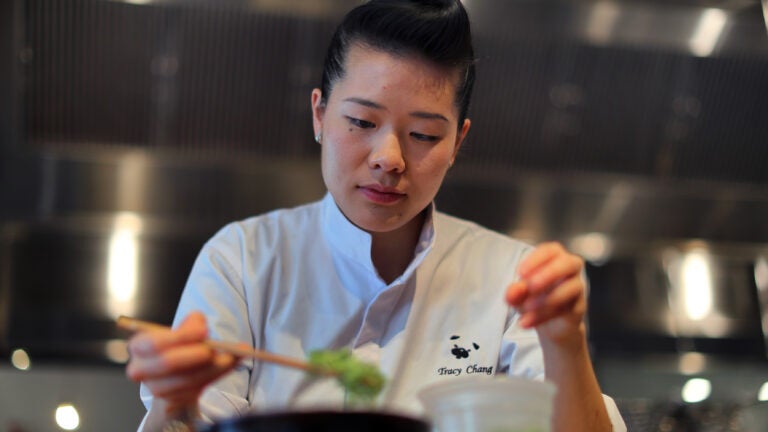
Chang is chef/owner at PAGU.
It was all kinds of interesting every day [at three-star Restaurante Martín Berasategui]. It was a very fast-moving environment. It was a quiet and a loud environment, meaning you don’t work with music on. You’re in a big kitchen with multiple kitchens full of 60 people back then, and everyone is from a different place. It was very exigent. You had to work hard, you had to clean hard, you had to be on all the time. You couldn’t suddenly have a snack and take a break. It was like the military in some ways. I’ve never been in the military, but I would speculate. The San Sebastian area is also one of the densest Michelin areas in the world. That’s one of the reasons I was originally drawn to the area. I definitely saw prices of menus go up at other places once they got a star or got another star. I never met an inspector, so I can’t really say what people were looking for to go from one to two or zero to one star. But you would see these minute changes, like in the dining room. They now print their menu on thicker card stock. Now everyone has updated front-of-the-house uniforms. Some places with three-star service, they wore white gloves, and that was something in 2011 you would still see. Now, maybe not. Back then when I went to a few that was something I noticed was the white glove service, which of course in the U.S. is not the same standard.

Stay up to date on the latest food and drink news from Boston.com.


To comment, please create a screen name in your profile
To comment, please verify your email address
Conversation
This discussion has ended. Please join elsewhere on Boston.com