
Sign up for The Dish
Stay up to date on the latest food and drink news from Boston.com.
Boston as a food city had long been described as safe. It was, and in many ways still is, a seafood and steakhouse town. The city’s vibrant Asian food culture was often tucked into immigrant-run enclaves like Chinatown, Dorchester’s Little Saigon, and Allston’s Koreatown, where dishes were often adapted for an American palate.
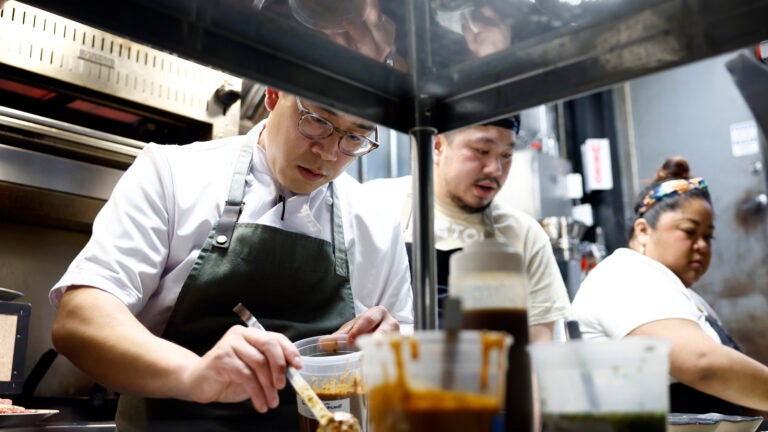
But now a new wave of chefs and restaurateurs are making a name for themselves serving creative, unapologetically authentic dishes that reflect their roots.
From Thai and Cantonese to Filipino, Japanese, and beyond, the rise of reimagined Asian cuisine may be the city’s most exciting independent restaurant boom in the shaky, post-pandemic dining landscape.
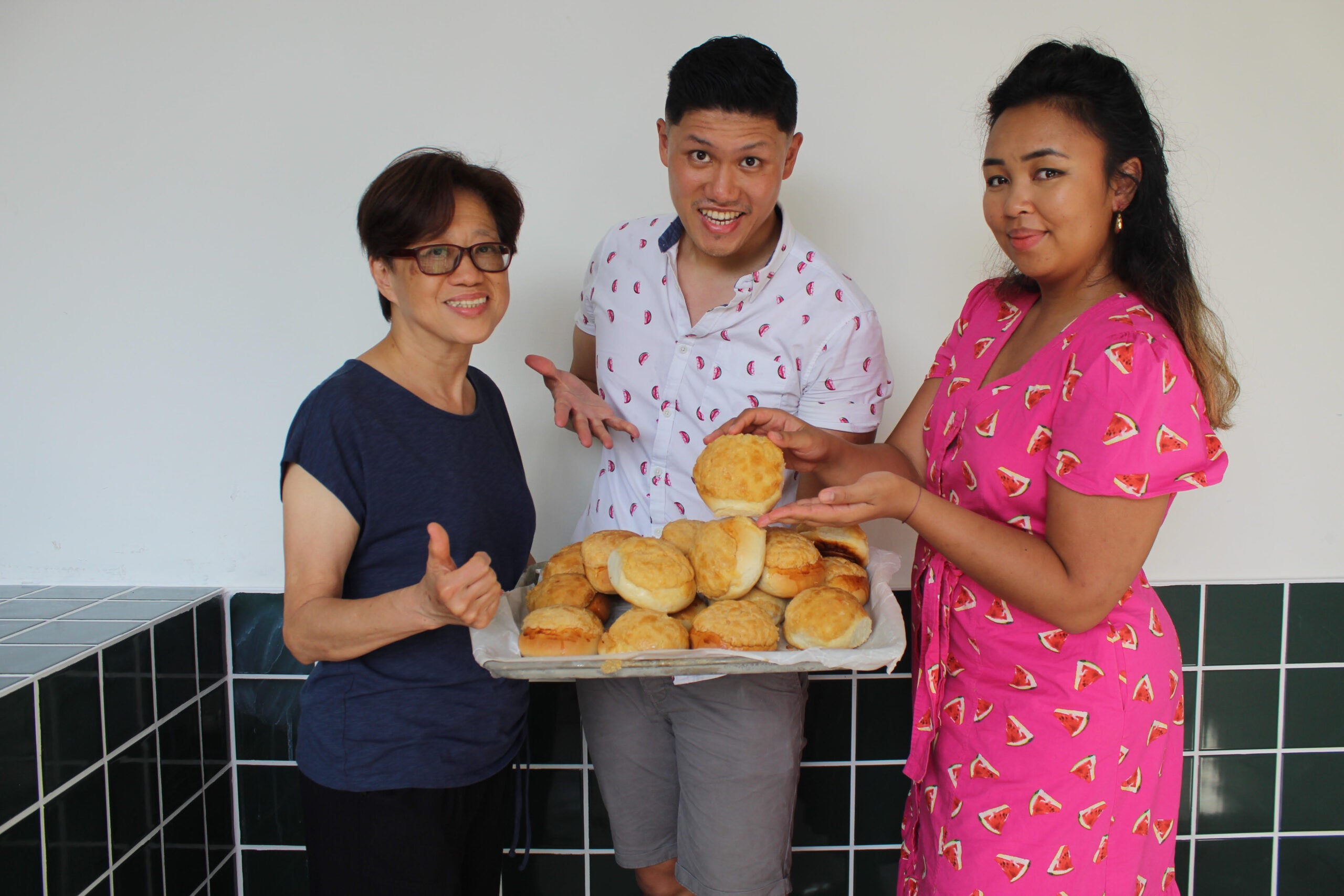
Laurence Louie, a chef who opened Rubato in 2023, is just one example.
He once resisted taking over his mother’s beloved Cantonese bakery, Contempo, in Quincy. Louie, who cooked in kitchens like Oleana in Cambridge and London’s Oklava, envisioned his restaurant would have a $250 tasting menu, putting “Chinese food on the map in a fine dining way.”
“I quickly realized this is not what Quincy needs,” Louie recalled.
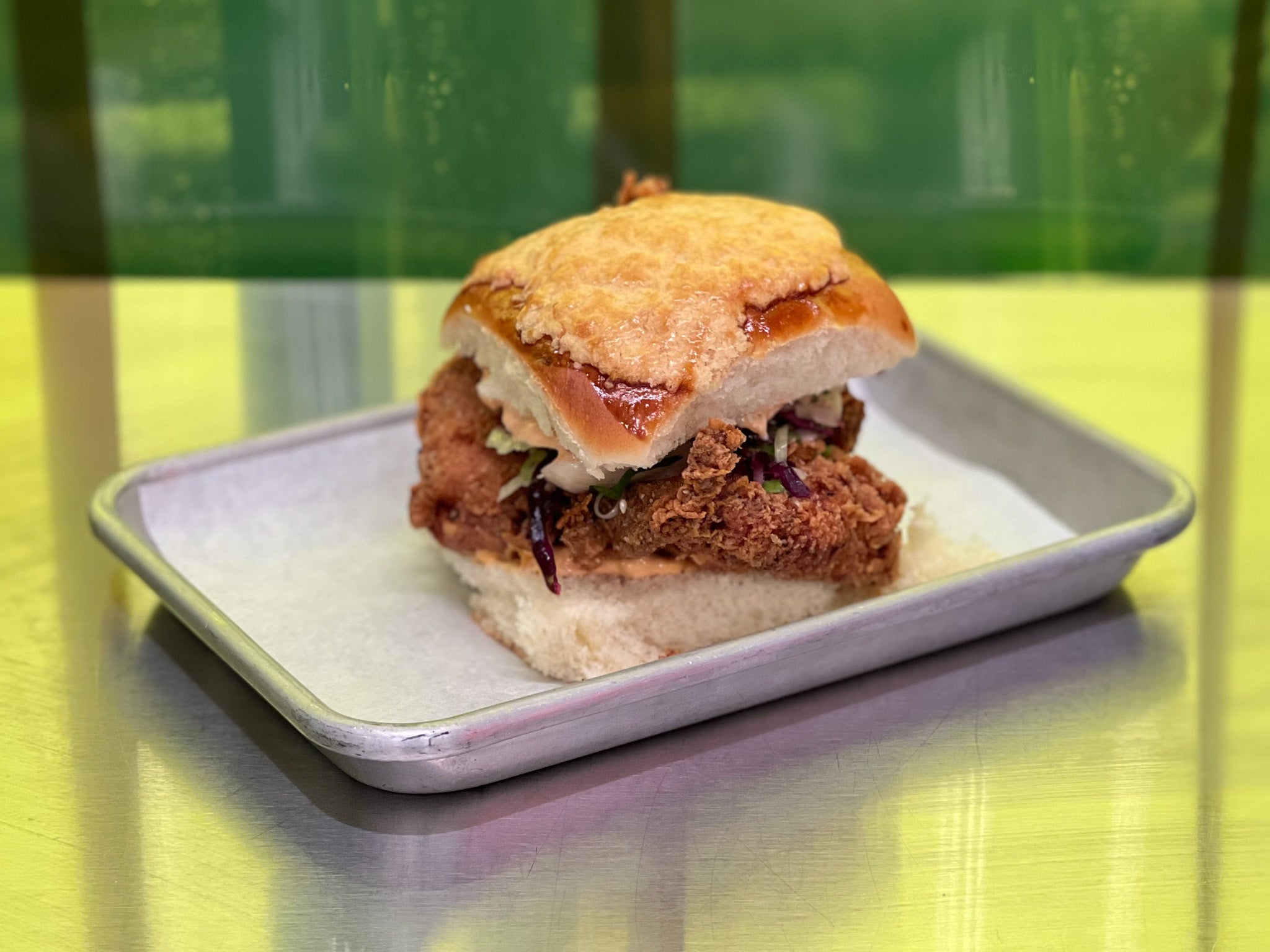
Drawing on his own experiences as a trained chef who grew up on American and Cantonese comfort food, Louie reimagined the brick-and-mortar space, something hard to come by in Boston, as a Hong Kong-style cafe. Rubato builds on his mother’s bakery legacy, serving traditional Cantonese staples like congee for the neighborhood’s working-class immigrant population — while reinventing classics, like turning a bolo bao into a sweet, crunchy-topped fried chicken sandwich.
The playful menu has garnered attention from Eater Boston and Bon Appétit, securing Rubato’s place in Greater Boston’s dining scene.
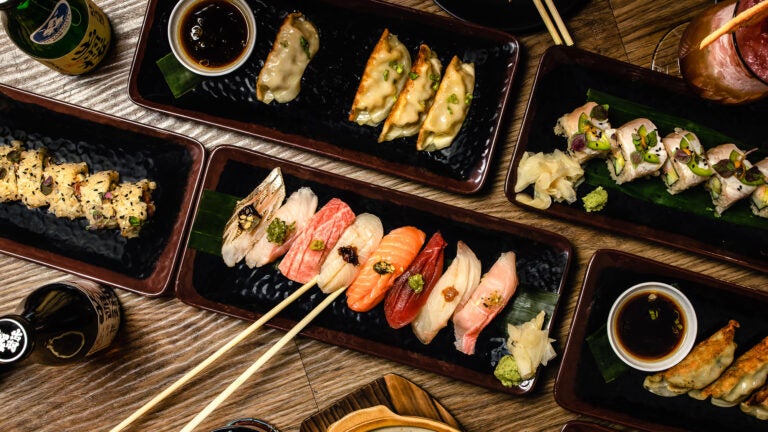
For Thai food, the exciting duo of restaurants Mahaniyom and Merai are consistently the city’s top-ranked restaurants. The omakase and sushi scene is booming, with new additions like Wa Shin, Sushi @ Temple Records, and 311. You can drink at trendy sake bars, try Laotian pop-ups, or enjoy Korean street food.
Peter Nguyen leads the kitchen at the revamped Pho Linh — now Lê Madeline — in Quincy, which transformed its menu in 2024. Growing up in Greater Boston in the ‘90s, he remembers when Asian cuisine was confined to Dorchester’s Little Saigon and Chinatown. The food was great, Nguyen said — you could get banh mi for $3 — but restaurants tended to play it safe.
His business partner, Lê Madeline owner Tam Le, also inherited Pho Linh from his family. They kept lunchtime staples like pho and vermicelli bowls to honor the spot’s history, but at night, Nguyen showcases the skills he’s honed in kitchens in Boston and Houston’s acclaimed Riel.
That includes his Cua Rang Me-inspired lobster roll, a tamarind-dressed fried lobster with scallion aioli and tobiko in a brioche bun. In just one year, Nguyen’s reimagined lobster roll has drawn comparisons to the city’s most iconic versions, proving that the region’s new wave of chefs can rival — and redefine — local classics.
Across the river, husband-and-wife duo Vincenzo Le and Duong Huynh are challenging the notion of what Vietnamese food can be at their three businesses Cicada Coffee, Saigon Babylon, and The Eaves. Le said blending traditional flavors with modern techniques on their menus doesn’t diminish the authenticity of Vietnamese culture.
“A lot of people from [Vietnam] come here, and they say the food is different,” Le said. But to him, that’s the point. “The soul is so Vietnamese and so authentic because that’s who I am,” he said. His menus reflect where he’s been: coming of age in Vietnam, working as a tour guide in Cambodia, and studying architecture in New York.
Veteran chef Jamie Bissonnette has seen Boston diners’ tastes evolve firsthand.
“Even 20 years ago, Boston didn’t have much to offer for ramen shops,” Bissonnette said. “There weren’t a lot of places to get Japanese food.”
After leading acclaimed restaurants like Toro and Coppa with Ken Oringer, Bissonnette had a feeling that diners wanted something different. That instinct led to a trio of concepts in Downtown Boston: Somaek, inspired by his Korean mother-in-law’s cooking; a Tokyo-style listening lounge at Temple Records; and the minimalist sushi counter Sushi @ Temple Records, run by Chef Kenta Katagai.
For Bissonnette, the boom in Asian-inspired dining reflects a broader willingness among Boston diners to try new food — one that’s allowing chefs to experiment with and expand the definition of Asian cuisine.
Ashley Lujares, who runs her own Filipino-American food pop-up Mango Tao and teaches occasional cooking classes at Tracy Chang’s Pagu, the movement is also about reclaiming creative agency.
“We’re just tired of cooking other people’s food,” Lujares said.
She’s banded together with like-minded Asian American chefs — including Louie of Rubato, Nguyen of Lê Madeline, and Veo Robert who runs the Phaeng & Phiu pop-up centered on Laotian food — to host one-night-only collaborations at each other’s restaurants or spaces. Menus might blend Lujares’ Filipino-American dishes with Louie’s Hong Kong-style cafe fare, or bring Laotian flavors to Lê Madeline’s kitchen.
It’s a community bond that goes beyond the crew of four chefs. For example, Chang frequently hosts chefs in her kitchen or at events. Others have teamed up with Irene Li of Mei Mei Dumplings for a dumpling collaboration, and The Eaves team has welcomed the Thai supper club Gaaeng for a noodle pop-up.
“It’s this amazing community of people, and we’re all kind of in the same boat,” Louie said. “We all have different, nuanced goals within what we’re trying to do, but ultimately, everyone’s just trying to put their name on their version of food and out into the world.”

Stay up to date on the latest food and drink news from Boston.com.



To comment, please create a screen name in your profile
To comment, please verify your email address
Conversation
This discussion has ended. Please join elsewhere on Boston.com