
Sign up for The Dish
Stay up to date on the latest food and drink news from Boston.com.
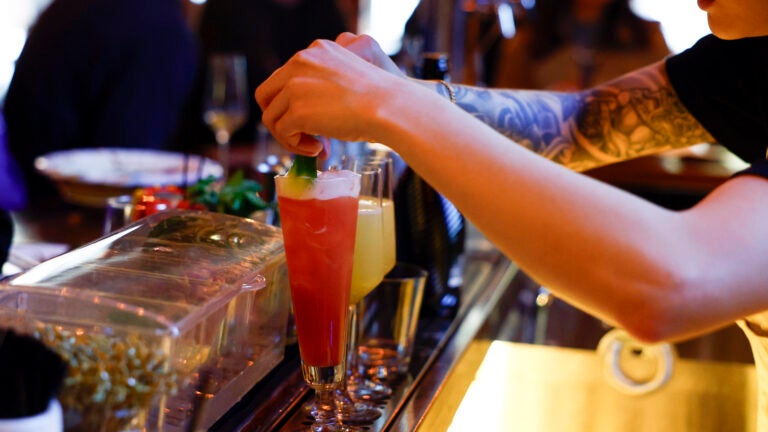
Getting a coveted all-liquor license may become easier for Boston restaurants due to a provision in the state’s passed budget bill.
A small section in the $60.9 billion state budget for fiscal year 2026 would let municipalities grant restaurants an upgrade from a beer and wine license to a license that would allow them to serve spirits as well. The provision was inserted by state Rep. Aaron Michlewitz, a North End Democrat, according to The Boston Globe.
This change is especially big news in Boston, where both types of liquor licenses are capped by the state. The City Council is currently in the process of discussing the provision in order to allow Boston restaurants to trade in their licenses per an approval process, according to a press release from Mayor Michelle Wu’s office.
“These new, upgraded liquor licenses will help strengthen our economy and support the local businesses that anchor our neighborhoods,” Wu said.
First municipalities have to decide whether or not they want to adopt the provision, which Boston seems poised to do soon.
The City Council met Wednesday and referred the order to a committee. Possible approval of the provision could happen within a month, officials said.
If and when it gets the green light in Boston, the provision states that the beer, wine, or cordial licensee would have to accept a non-transferable all-alcohol license.
In Boston, that means the license can’t be sold on the private market if the business no longer needs the liquor license. It would have to be returned to the Licensing Board.
Each municipality may also charge a fee for these licenses — as is typical when cities approve licenses — and can “establish additional requirements” for the trade-in process. Boston’s Licensing Board already has a system in place in approving liquor licenses that asks applicants to prove the “public need” of their concept.
The provision also doesn’t allow for an increase in the total number of liquor licenses available, meaning the beer, wine, and cordial licenses that get traded in do not become licenses that are now up for grabs for a new applicant.
Because the number of liquor licenses are regulated by state lawmakers — a cap that has existed since post-Prohibition — it’s rare that the city’s Licensing Board has any liquor licenses available for new businesses.
More often than not, restaurant owners have to snag one on the private market, where the going rate for an all-alcohol license can cost $600,000. Beer and wine licenses are often significantly cheaper, though still hundreds of thousands of dollars.
That could mean that a business, either through the city or through the private market, takes a beer and wine license just because it’s what’s available or slightly more budget-friendly instead of waiting for an even less accessible all-alcohol license.
The provision also coincides with a major bill passed last year that would add 225 liquor licenses in Boston. Most of the licenses are zip code-restricted, favoring Boston’s underserved neighborhoods that have far fewer restaurants that serve alcohol due to the limit on licenses and the price tag on the private market.
“We’ve already started seeing the benefits of adding 225 new zip code-restricted licenses last year, and this upgrade of 300 more will further help our small business owners, add jobs, and spark business growth in our neighborhoods,” City Councilor Brian Worrell said in a statement.

Stay up to date on the latest food and drink news from Boston.com.





To comment, please create a screen name in your profile
To comment, please verify your email address
Conversation
This discussion has ended. Please join elsewhere on Boston.com