
Sign up for The Dish
Stay up to date on the latest food and drink news from Boston.com.
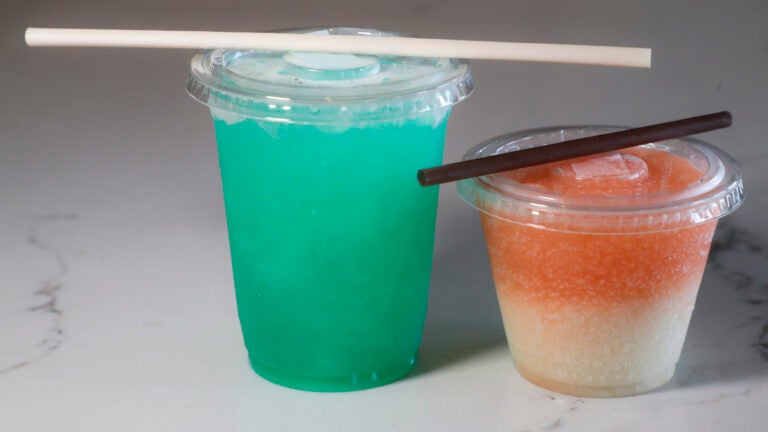
The permanence of to-go cocktails or drinks, a pandemic-era policy that kept restaurants afloat during lockdown and has since been extended several times in Massachusetts, is coming down to the wire as state lawmakers decide its fate.
Following 2020, when the policy was temporarily adopted, lawmakers extended it each year on April 1. As the deadline once again approaches, lawmakers are asking a different question: should the policy stay permanently, or should legislators sunset it?
The answer varies depending on who one asks. In years past, as lawmakers mulled over extending the allowance of to-go cocktails, Boston.com asked readers their thoughts on the issue. While the majority had no problem with the policy staying — either for another year or permanently — some respondents disagreed with the proposal for varying reasons.
Outside of public opinion, the issue has also divided two industries, whose leaders have delivered testimonies at the State House.
Here’s what we know — and don’t know — ahead of the imminent deadline for to-go cocktails.
Customers can purchase 64 ounces of a mixed cocktail, 192 ounces of beer, or 1.5 liters of wine to go, either by picking it up from the restaurant or through takeout delivery services.
That translates to about eight cups of mixed drinks, a 12-pack of beer, and two bottles of wine, and all must leave the property of the restaurant selling them sealed.
The rule applies the same if a customer picks it up from the restaurant, if the restaurant delivers the alcohol to a customer, or if a third-party delivery service brings the to-go drink from the restaurant to the customer. Whoever delivers the drink is supposed to verify that the person receiving the takeout beverage is 21 or older, and the customer must also purchase a food item with the to-go drink.
The alcohol also must be sold at the same price it would be for purchase if consumed at the restaurant, meaning these products are often more expensive than what customers would find at a liquor store.
The only change being made to the rule at this time is to make it permanent.
For restaurant owners like Stan Hilbert of Forage and wine shop Satellite Bottle Shop, takeout was a necessity during the pandemic.
“It helped tremendously during COVID,” said Hilbert, who added that takeout dinners and wine continue to help them out, and not extending the policy for restaurants would be like removing a leg from a chair.
That’s why the Massachusetts Restaurant Association is fighting to keep the policy alive. Jessica Muradian, the organization’s director of government affairs, said the allowance of to-go cocktails isn’t a major revenue boost for restaurants, but it helps some, especially given the rising costs burdening the industry.
She also argued that customers have become accustomed to takeout because of COVID-19.
“The pandemic really shined a light on people getting delivery food, and that is a practice that has continued,” Muradian said. “There are customers that love the convenience of getting a restaurant quality drink with food orders.”
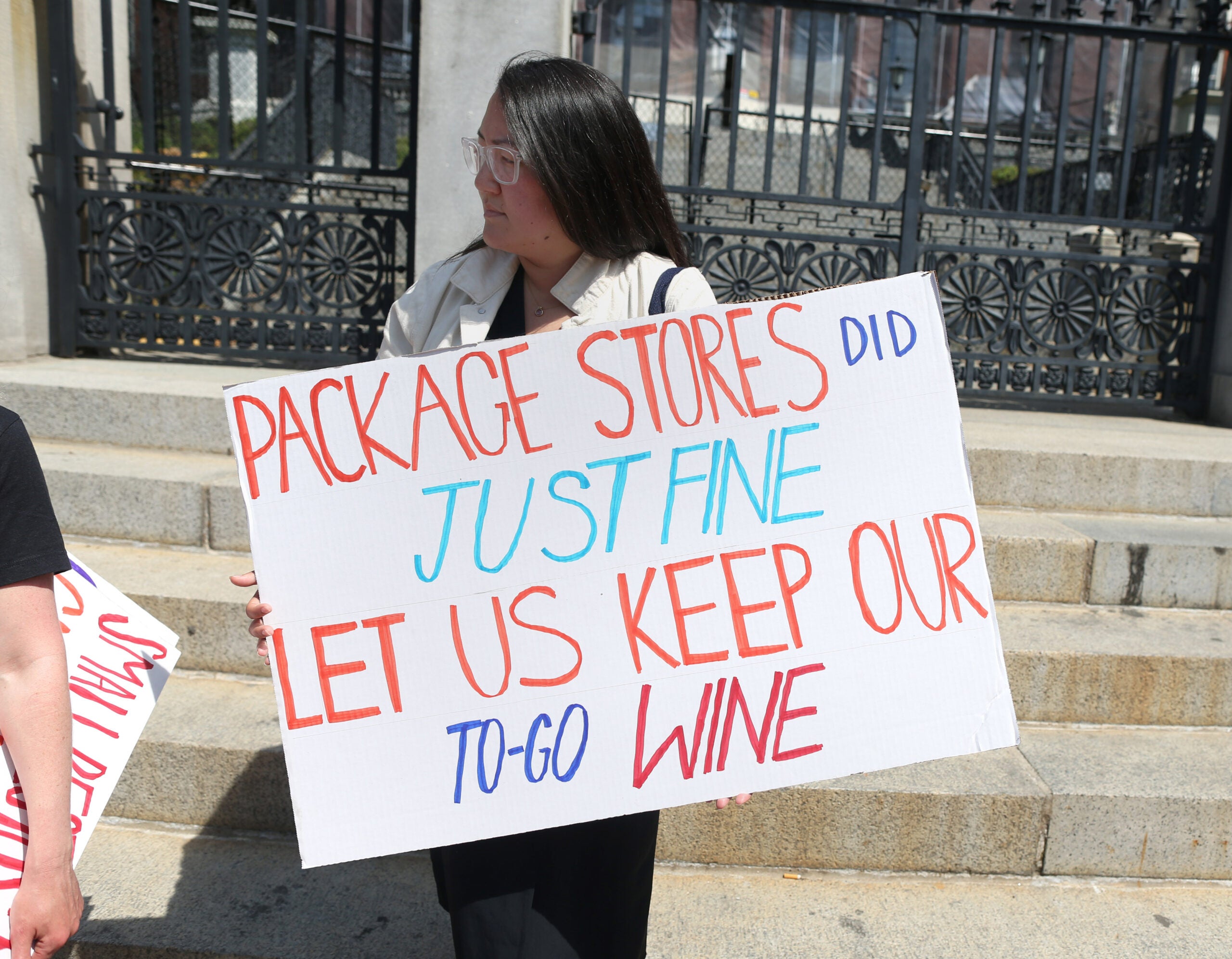
But the rule is running into strong opposition from another seller of alcohol: liquor stores, who have also tried fighting the extensions in the past.
Robert Mellion, executive director of the Massachusetts Package Stores Association, argued that the help for restaurants is at the expense of liquor stores, which he said have already taken big hits from the statewide flavored tobacco ban, the mini liquor bottle bans in select towns, and the threat of the online lottery.
Issues the Package Store Association brought up in the weeks of fighting off to-go cocktails were the excessive amount of alcohol restaurants were allowed to sell for takeout, as well as the lack of regulation when it comes to delivery drivers not carding customers.
He also said it was unfair to allow restaurants to sell alcohol for on-premise and off-premise consumption, while liquor stores are only allowed to do the latter.
“The restaurants are trying to be liquor stores and restaurants at the same time due to what happened during the pandemic. They’re taking advantage of a situation,” Mellion said. “If it was just about a Mai Tai, it would just be one drink, not 64 ounces and 192 ounces of beer and two bottles of wine.”
When we asked readers ahead of last year’s to-go drink extension, a combined 69% said they supported making it permanent or extending it, mainly citing its benefit to small, independent restaurants.
“Extending to-go cocktails benefits local independent restaurants, which have a tough time staying alive, without any noticeable harm to the community through excess alcohol consumption (due to the high prices) or to local retailers,” Steven S., of Medford, said.
Those respondents with concerns, 30%, said they worried about how the service could be abused.
“I think the risk of abuse is too high,” said Stan from Jamaica Plain. “We can’t keep changing the rules just to save the restaurant industry.”
The measure was just an amendment in a bigger supplemental budget bill that contained other pandemic changes, like a policy that freed up outdoor dining, but it mostly concerned laws surrounding the state’s shelter system, reports WBUR.
Both the House and Senate held sessions for their own versions of the bill, but only the House passed a version that would make COVID-19 restaurant policies like the to-go cocktails permanent.
It doesn’t mean that to-go drinks are dead, but the House and Senate will have to negotiate on this amendment, as well as others that both chambers didn’t agree in passing.
It isn’t immediately clear when a committee will meet to discuss a consensus, despite the fact that the previously extended policy would expire next week.
It also isn’t certain that the House and Senate will agree to keep the amendment. The Boston Globe reports that the Senate similarly left to-go drinks out of its version of the supplemental budget last year.
What is possibly more certain is Gov. Maura Healey’s feelings on the issue. To-go drinks was one of the many policies wrapped into the governor’s Municipal Empowerment Act in January, so a signature from her desk would seem likely — if it gets there.
We want to know: How often do you purchase to-go cocktails? How do you feel about takeout drinks from restaurants becoming permanently allowed in Mass.? Share with us in the survey below or e-mail us at [email protected]. Your response may be used in an upcoming Boston.com article and/or its social media channels.

Stay up to date on the latest food and drink news from Boston.com.




To comment, please create a screen name in your profile
To comment, please verify your email address
Conversation
This discussion has ended. Please join elsewhere on Boston.com