
Sign up for Scenic Six
Navigate the endless possibilities of New England travel with Boston.com.
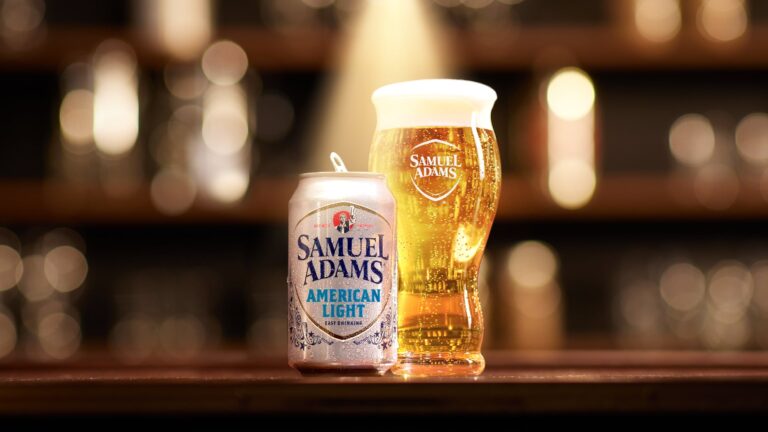
It’s reassuring to know that Jim Koch tastes beer the way you’d expect him to.
Koch, the Boston Beer Co. chairman and walking embodiment of the craft beer movement for anyone who owned a television or read a magazine in the ‘90s and early 2000s, gets into it.
During a recent visit with Koch at the Samuel Adams Boston taproom in Faneuil Hall, Koch points to the etchings on the bottom of a Sam Adams branded pint glass.
“That’s on purpose,” he says, noting the trail of bubbles floating up from the uneven surface, releasing aroma for the drinker.

Next, Koch puts his whole nose into his glass, inhaling deeply. Another whiff and Koch is identifying the smell of red fruits like cherries and apples, which he attributes to Samuel Adams’ lager yeast. Inhaling further, Koch begins to talk hops, American specifically, which give him tropical notes of mango and pineapple. Holding his beer up to the sunlight (it should be noted that it’s late morning), Koch identifies a slight haze as the product of extra protein naturally occurring in this particular beer’s barley, which is grown in Montana.
Koch is not responsible for brewing Samuel Adams’ beer, but he still talks like both a brewer and an executive, weaving in and out of his passion for beer and the corporate speak that has made his company successful. In a recent interview discussing Boston Beer’s newest big release, Samuel Adams American Light, Koch touched on his previous forays into light beer, making lots of products like seltzer and hard tea, and more.
This interview was lightly edited for length and clarity.
It took two years. It’s the lightest beer we make. It’s a light craft light beer, and we brought to it the values, the mentality, the approach that you have as a craft brewer to make beers with higher level of care and attention, and with a higher level of ingredients. In this beer we used only Montana barley, and that’s a higher quality barley than some of the other growing areas. Montana is a kind of Napa Valley of two-row barley. It’s dry and the soil is very rich, so it’s often irrigated, and so you control the amount of water in it and you get more protein. You get a richer mouth feel.
Our yeast has an identifiable fruitiness to it. It’s not like what you get from a really dry German pils. And Samuel Adams is technically a pilsner, but it’s not a dry German Pilsner. I get red fruit, a little cherry, strawberry, and raspberry. And then I’m getting American hops. The one I’m smelling is a new American variety called vista, and it gives some tropical fruit, primarily pineapple.
I’ve tried in the past. My second beer ever was called Samuel Adams Lightship. And this was 1986 or 1987.
It’s pretty simple, we discontinue a beer when there’s not enough demand to keep it fresh. You know, when I’m finding stale beer all over. And then we actually had another one (called Samuel Adams Light) maybe in 2001. I tried a different approach, which was like 119 calories and a darker color, to see if there was an opportunity for that. And that beer we had for, I don’t know, 10 years or something.
So this is a third version. There are a lot of craft beer drinkers now, whereas 20 years ago there weren’t. And the idea here is there are people that want that extra level of flavor, and want to taste quality ingredients. They don’t want to drink Bud Light or Mich Ultra, it’s just too watery.
I’m encouraged, because a little over a month ago we entered it in the World Beer Awards, and [Samuel Adams American Light] got picked as the best light beer in America. I have high expectations, but we’re happy with how it turned out.
People have shied away from our biggest beers. One of my favorite beers that we’ve made for a long time was cream stout, and that to me is a wonderful style. Honey Porter, also one of my favorite beers. Maybe the saddest one was Boston Ale, our first ale that we made and the first beer we brewed when we opened our Boston brewery. Even that lost a following.
Yeah, it was kind of depressing. I agreed with all of it, though. My gloss on it would be that as somebody who was here 40 years ago, the nearest craft brewery was in Albany. And after that I think you had to go all the way to Boulder, Colo., to find another craft brewery. So my gloss or my 40-year perspective is, guess what? This is what the success that we all dreamt about in our wildest dreams looks like. There’s 10,000 breweries, and we’re teaching the rest of the world how to make great beer. The best beers in the world come from here, and they’re accessible to everybody, no matter where you are in America. That’s what we should celebrate.
We wrote a mission statement in 1991 or 1992 and we haven’t changed a word of it, and that was to seek long-term profitable growth by offering the highest quality products to the US beer drinker. I believe back then, and I still believe to this day, that bringing the ethos of a craft brewer to other beverages will give consumers unique and wonderful things that they never had before.
There’s a moment in late February. It’s just after the pitchers and catchers report for spring training, and I get the first test batches of that year’s summer ale. And that’s like — I mean, we live in New England, yeah? I love the fact that we have four seasons, but at the end of February I’m ready for summer. The weather may still suck, but we’re over the hump.

Navigate the endless possibilities of New England travel with Boston.com.





To comment, please create a screen name in your profile
To comment, please verify your email address
Conversation
This discussion has ended. Please join elsewhere on Boston.com