
Sign up for The Queue
Discover the best movies and TV shows streaming now, with handpicked recommendations from Boston.com.
You’re reading The Queue, Boston.com’s guide to streaming. Sign up to get the latest industry news, free streaming movie and TV recommendations, and more in your inbox every week.
I didn’t expect to start The Queue off in 2026 with a slew of obituaries, but here we are.
Last week, I talked about James Van Der Beek and Bud Cort. Two weeks before that, I memorialized Catherine O’Hara. This week, we lost Robert Duvall, Eric Dane, and Frederick Wiseman.
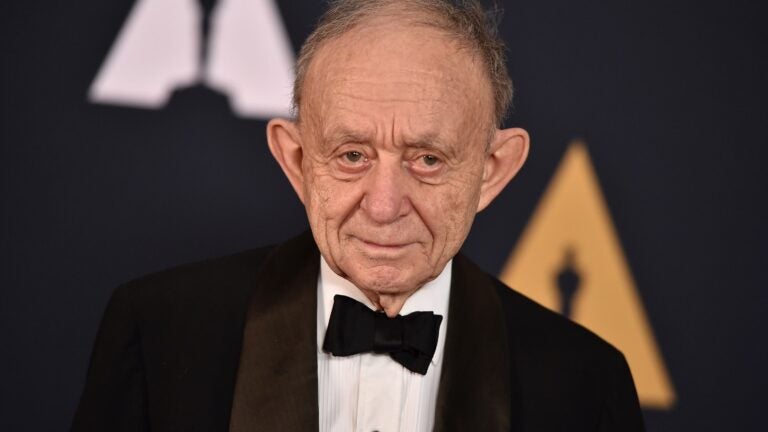
I’ll talk about Duvall more in the Play or Skip section. But today’s newsletter focuses on Wiseman, a lifelong Bostonian widely considered one of the best documentary filmmakers ever, whose breakthrough documentary was banned in Massachusetts for more than 20 years.

One needs only look at the headlines inspired by Wiseman, who passed away this week at 96, to understand his impact. Slate called him “America’s greatest living documentary filmmaker,” while The New Yorker went a bit farther, anointing him “the greatest documentary filmmaker ever.” And yet Wiseman was never a household name.
His films are completely different from what has become the industry standard. Where modern documentaries are slick productions filled with preconceived notions, embedded narratives, and tacit approval of their subjects, Wiseman’s work is slow, contemplative, and refreshingly slant-free.
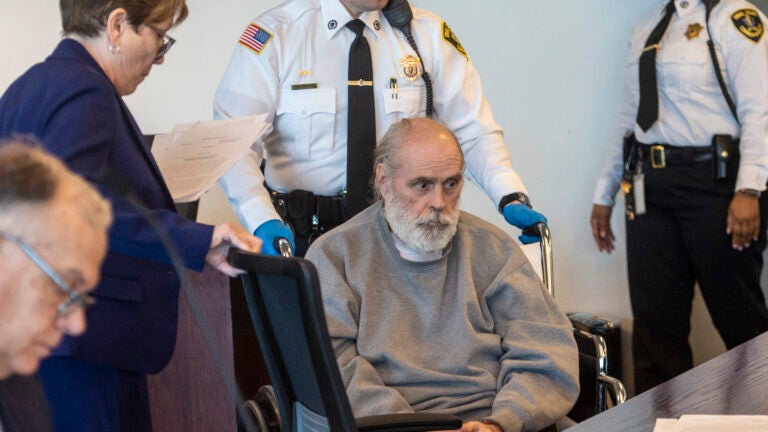
“Titicut Follies” (1967): Wiseman’s breakthrough work takes place at the Bridgewater State Hospital. By simply setting up his camera and capturing the daily reality of the state-run penitentiary, Wiseman embarrassed the Commonwealth by dispassionately showing the rampant abuse of its mentally unwell inmates. Banned by the state Supreme Court until 1991, it’s one of the great works of journalism of the 20th century. (Kanopy)
“Welfare” (1975): Wiseman’s films immerse you in the lives of everyday Americans. They feature no voiceovers, no talking heads, and no discernible narrative arc. Most of his films feature straightforward titles, so you can pick a topic you’re interested in (“Hospital,” “High School,” “Boxing Gym”) and jump in. One superlative example is “Welfare,” in which Wiseman sets up shop in the New York City welfare office, silently cataloguing the Kafka-esque system and all of its players. (Kanopy)
“City Hall” (2020): Wiseman traveled the world for his documentaries, but always returned to Boston (or Cambridge, where he lived in his later years). So it’s fitting that one of his final works was a sprawling 282-minute chronicling of the daily minutiae of Boston’s City Hall employees. If the film has a star (other than the Brutalist building itself), it’s probably former Mayor Marty Walsh, who pops up repeatedly. But what the film really showcases is the sheer volume of civil servants working in tandem to make our city run. (PBS)
Have a show you can’t stop watching? Email me about it at [email protected], and your recommendation may appear in a future edition of The Queue.
Based only on his collaborations with Francis Ford Coppola, Robert Duvall would be considered one of the great actors of his generation. But the actor, who passed away this week at age 95, had so much more to offer over a career that spanned eight decades.
Many of my favorites — including “To Kill A Mockingbird,” “Network,” and his Oscar-nominated turn in “The Great Santini” — aren’t available for streaming, but are certainly worth the price of a rental.
That’s a wrap on this edition of The Queue. If you’re a fan, please consider recommending this newsletter to your friends.
Until next time, good stream hunting, everyone!
— Kevin

Discover the best movies and TV shows streaming now, with handpicked recommendations from Boston.com.



To comment, please create a screen name in your profile
To comment, please verify your email address
Conversation
This discussion has ended. Please join elsewhere on Boston.com