
Mother’s Day: When you have a child, you become a character in someone else’s story
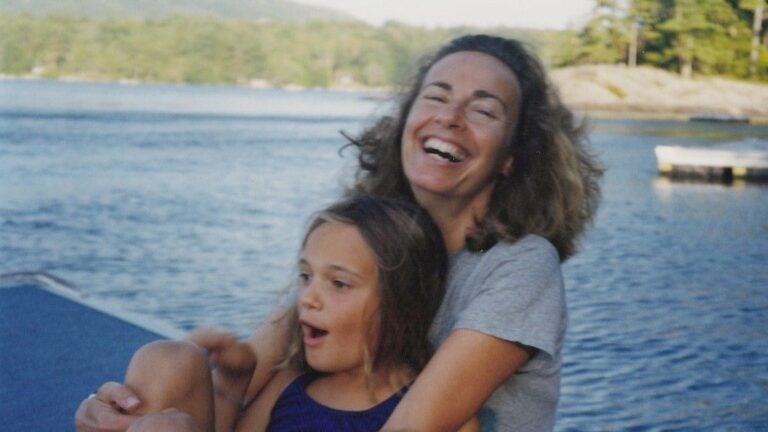
A mother and daughter tell the same story about a trip to Maine. Here’s the daughter’s perspective, the mother’s is below.
The first time I drove north last week, I texted my daughter Charlotte (with help from Siri) from the bridge over the Piscataqua River in Maine. I’ve been making this trip most of my life; she’s been doing it for all of hers. If we’re not together, we text each other when we cross the river.
I was on my way to take my 93-year-old mother home from the hospital. She had been in an accident that totaled her car and her beautiful face: Its upper left quadrant was the color of mashed blueberries topped with a hematoma the size of a plum. She was making a turn at an infamous intersection when a guy in a pickup truck plowed into her.
My mother is a great storyteller. “I was stopped. I crept forward, but I stopped behind that white line on the road. He veered around another car and hit me.’’ She embellishes, she invents, she has an instinct for detail. It was all the other guy’s fault.
Charlotte said once that her grandmother and her mother were both missing the fact/fiction gene. Most of the time, I admit it when I’m making something up. Especially to Charlotte: I am aware of how difficult it was to have a mother who insisted on her version of things—and her version of me. Since I tend to think everything’s a story (I am my mother’s daughter), when Charlotte was born I understood that I was going to make room for her point of view. Part of me was becoming a new character: a mother, an actor in my daughter’s drama.
Even looking like what she called a “Halloween mask,’’ my mother was feisty, charming, focused on details, critical of what I didn’t do her way: her usual self. She lives by herself in a house filled with elegant, dusty things. The kitchen smelled of rancid soup she’d left in a plastic tub: What had she been doing with that? I didn’t ask. Plastic bags stuffed with more plastic bags hung from the back and arms of a chair.
She cleaned out the tub of soup. We went to the supermarket, where she bought enough food for a month—and reproached me when I told the checkout person that we didn’t need plastic bags to carry the net bags of oranges. We emptied her wrecked car, and she bought a blouse to wear to my nephew’s wedding. I arranged for someone to drive her when she needed it, though she was skeptical. A couple of days later I left for Boston thinking how lucky she was: only bruises.
Two days later, her legs were inflamed, and she was in excruciating pain. Charlotte and I headed back; as I drove over the Piscataqua Bridge, Charlotte took an Instagram of the sign announcing “MAINE.’’ We spent the next few days, the first sweet, clear days of spring, trying to make things come out the way my mother wanted them to, trying to believe that the pain was from bruising, not infection, that her fluctuating heartbeat was a temporary response to trauma, that nothing would change, and she would live happily ever after.
On my mother’s last morning at home, she managed to get down the stairs by herself. “I’m fine,’’ she declared. “I’ve made myself coffee.’’ Two hours later she could not bear to stand on her feet. We had to call paramedics to lift her into the car to take her to the hospital. Charlotte organized the transfer, and I gathered my mother’s things and grabbed a couple of oranges in case she couldn’t get enough of the fresh fruit she loved.
One of them was already moldy. Of course. The perfect metaphor. I walked a ways down the hill and pitched the orange as hard as I could into the woods. When I was 10, my mother had gotten me a baseball glove. I went back to the car. My mother was installed in the front passenger seat. “I saw that,’’ Charlotte said. “Great throw.’’
“I didn’t think anybody was looking,’’ I said. I was embarrassed, and I thought: What will she, my daughter who has also inherited that fact/fiction mutation, write about this one day? And then I thought that our story is different. I got into the back seat, and Charlotte drove.



To comment, please create a screen name in your profile
To comment, please verify your email address
Conversation
This discussion has ended. Please join elsewhere on Boston.com