
7 questions about your child’s teeth
-

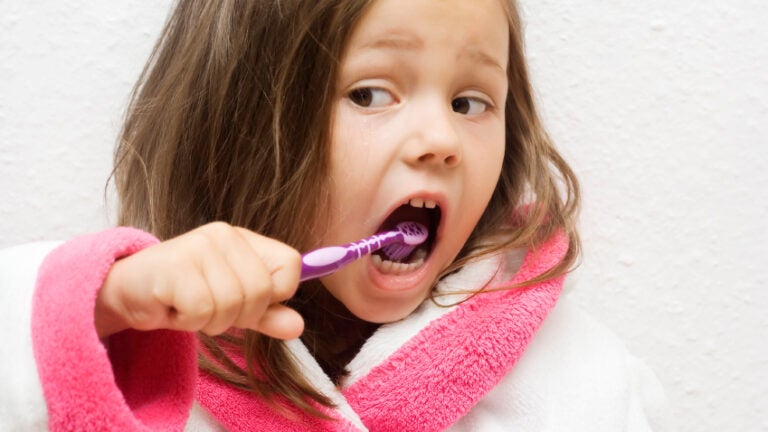
February is National Children’s Dental Health Month. Test your pediatric dental health knowledge by answering these seven questions about your kids’ teeth.
All answers provided by Dr. Linda Vidone of Delta Dental of Massachusetts
. -

<script type=”text/javascript” charset=”utf-8″ src=”http://static.polldaddy.com/p/7800449.js”></script> <noscript><a href=”http://polldaddy.com/poll/7800449/”>When should you schedule your child’s first dental check-up?</a></noscript>
-

The answer is B) At his or her first birthday or six months after the first tooth erupts.
When visiting the dentist by age one, the child and parent can establish a relationship with a dentist, receive oral health care advice, and set a foundation for good dental health care habits. Studies suggest that early preventive dental care like checkups and cleanings can not only save in future dental treatment costs, but may also alleviate the pain and suffering that can result from untreated oral health problems. — Dr. Linda Vidone of Delta Dental of Massachusetts
-

<script type=”text/javascript” charset=”utf-8″ src=”http://static.polldaddy.com/p/7800531.js”></script> <noscript><a href=”http://polldaddy.com/poll/7800531/”>How long and how often should you brush your child’s teeth?</a></noscript>
-

If you answered C) Brush for 2 minutes 2 times per day, you are correct!
Put on a song or check out the website 2min2x.org for fun videos to watch while brushing. – Dr. Linda Vidone of Delta Dental of Massachusetts
-

<script type=”text/javascript” charset=”utf-8″ src=”http://static.polldaddy.com/p/7800550.js”></script> <noscript><a href=”http://polldaddy.com/poll/7800550/”>When can your child start brushing without supervision?</a></noscript>
-

The answer is A) your children brush and floss their teeth until they are seven to eight years old.
When children reach the age of eight, they are more likely to have the developmental skills necessary to brush all their teeth effectively, and are less likely to accidentally swallow their toothpaste. But it is still good to check every now and then to be sure they are cleaning all their teeth. — Dr. Linda Vidone of Delta Dental of Massachusetts
-

<script type=”text/javascript” charset=”utf-8″ src=”http://static.polldaddy.com/p/7800555.js”></script> <noscript><a href=”http://polldaddy.com/poll/7800555/”>If your child drops a pacifier on the floor, what is the best way to clean it?</a></noscript>
-

If you guessed A) Rinse it off with water, you got it right.
Parents often quickly put the pacifier in their own mouth to clean it, but this isn’t a good idea. Cavity-causing bacteria is transferred through saliva, so whatever is in your mouth can be passed on to your baby. Tasting your baby’s food, testing the bottle, cleaning off a pacifier in your mouth – these can all be transmitters. Make sure you wash off things that have been in your mouth before you give them to your child. — Dr. Linda Vidone of Delta Dental of Massachusetts
-

<script type=”text/javascript” charset=”utf-8″ src=”http://static.polldaddy.com/p/7800873.js”></script> <noscript><a href=”http://polldaddy.com/poll/7800873/”>What is the best drink to give your child before bedtime?</a></noscript>
-

The answer is C) Water.
Other drinks, even milk and juice, allow sugars to linger in your child’s mouth overnight. During this time, the sugars combine with bacteria and become acids that attack the enamel of the teeth, which may lead to cavities. In very young children, this is called Early Childhood Caries, or ECC. ECC can become an aggressive, infectious dental disease that can destroy the teeth of very young children and can lead to serious health problems throughout life. — Dr. Linda Vidone of Delta Dental of Massachusetts
-

<script type=”text/javascript” charset=”utf-8″ src=”http://static.polldaddy.com/p/7803225.js”></script> <noscript><a href=”http://polldaddy.com/poll/7803225/”>Which is the best candy for your child’s teeth?</a></noscript>
-

Yup, the answer is C) Gum.
Choose candy that doesn’t contain sugar because sugar can feed on bacteria in the mouth and produce decay-causing acids. Gum and candy with xylitol may actually protect teeth by reducing the acids produced by bacteria and increasing saliva to rinse away excess sugars and acids. Avoid sticky, chewy candy, like gummy bears and caramels or hard sugary candies (like lollipops) that stay in the mouth for a while. Sticky treats are particularly damaging because they are high in sugar, spend a prolonged amount of time stuck to teeth and are more difficult for saliva to break down.Also never bite into a hard candy or lollipop- you can easily fracture a tooth. It’s a good idea to rinse you mouth with plain water after enjoying your candy to help remove the last of the sugars. — Dr. Linda Vidone of Delta Dental of Massachusetts
-

<script type=”text/javascript” charset=”utf-8″ src=”http://static.polldaddy.com/p/7803217.js”></script> <noscript><a href=”http://polldaddy.com/poll/7803217/”>How often should you replace your family’s toothbrushes?</a></noscript>
-

The answer is A) Every three to four months.
Replace toothbrushes every three-four months, or once the bristles get worn out. You should also replace your toothbrush after you or your child has been sick to prevent the spread of germs. — Dr. Linda Vidone of Delta Dental of Massachusetts





To comment, please create a screen name in your profile
To comment, please verify your email address
Conversation
This discussion has ended. Please join elsewhere on Boston.com