
Make Your Own Wine at Boston Winery
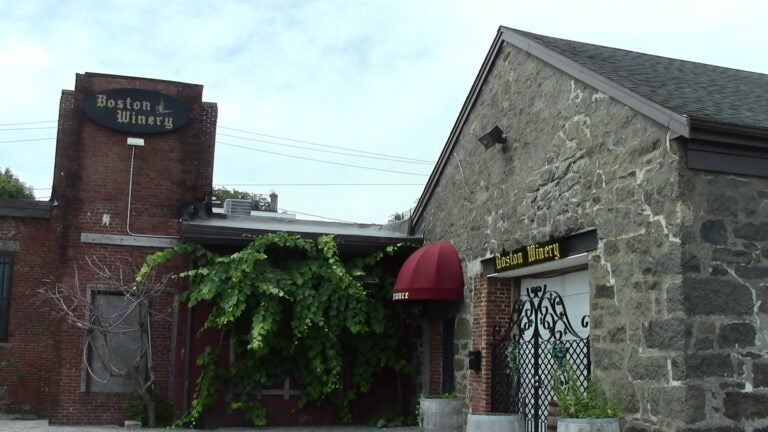
Inside the unassuming 194-year-old brick and stone building on the Neponset River in Dorchester, owner Ralph Bruno is making wine that impresses his native Italy.
“I took six bottles from Boston Winery to the winery in Abruzzi, Italy,’’ said Bruno. “Four of our bottles won first prize on a blind tasting. So that tells you what we’re doing in Boston.’’
Bruno takes California grapes and puts his own twist on them. Take, for example, his Boston Blend, a mixture of Syrah, Cabernet Sauvignon, and Merlot. Or his Mala Femmina (which means “Bad Woman’’ in Italian), a blend of Viognier and Sauvignon Blanc.
“If you’re not bad, after you drink it you will be,’’ said Bruno, with a chuckle.
Or perhaps you’d like to keep your reputation in tact by trying the winery’s Cabernet Sauvignon, Pinor Noir, or Chardonnay instead. See a complete list of Boston Winery’s wines.

Vintner Ralph Bruno at his winery.
If you’d rather be the vintner, you can make your own blend, give it a name, and label it during the winery’s popular new “Vintner of the Month’’ program on Thursday nights.
If one bottle isn’t enough for you, join the winery’s wine club and make an entire barrel of wine this year — that’s 288 bottles! You’ll just need patience, since your creation can take up to 10 months to complete, from grape to glass (though you may draw from your barrel earlier if you’d like). Wine club members pay between $950 to $3500 per year, depending on whether they want to make a quarter, half, or full barrel.
“The beauty part about making wine in the Boston Winery is you know what goes in that bottle,’’ said Bruno. “You actually put it in yourself.’’
Bruno takes pride in the fact that his wine is all natural and contains no added sulfites or preservatives. His winery currently houses 100 barrels of community-made wine. Club members can store their barrels for up to 20 months.
“People literally do everything from the crush to the bottling and we’re there to help them along the way,’’ said Ralph Bruno Jr., Bruno’s grandson and the winery’s brand ambassador.
“The crush’’ happens the first week of October, when the grapes arrive from California. It involves hand sorting the grapes by removing leaves and rocks and even the occassional frog (yes, that happened). It takes 36 pounds of grapes to make a barrel. After the crush, you’ll return to the winery for four more steps and then bottle your wine. The crush and bottling are what people enjoy doing most, said Brendan MacDermott, the winery’s manager.
There is a real community feel at Boston Winery, which is no surprise after you meet Bruno. He grew up watching his family make wine in Italy and opened Boston Winery eight years ago to continue the legacy. Bruno treats guests like friends and is quick to share a story or a photo of his childhood neighborhood in Abruzzi. MacDermott refers to his boss as the winery’s “true treasure.’’

The tasting bar at Boston Winery.
The winery hosts many events throughout the year such as art classes, car shows, and the winery’s annual Harvest of the Grapes Festival, taking place this year Oct. 12. The festival celebrates the new wine making season with an Italian feast and, yes, plenty of vino under the winery’s pergola overlooking the water. This year, said Bruno, his winery will produce more high end wines.
Said MacDermott, “We want to make wines of the world right here in Boston.’’
Where to go:
Boston Winery
26 Ericsson St.
Dorchester, MA
Cost:
Tastings Saturdays from 1 to 6 p.m.
$10 per person
Tours take place hourly and last 20 minutes
Private tastings by appointment Tuesday through Saturday for 10 people or more
What to drink:
For the wine snob: Red Zinfandel
For the adventurer: Syrah on Hungarian Oak
Pleasing to the masses: Brachetto
Boston.com favorite: Mala Femmina
Make a day of it!
What to do: A boat ride
Where to eat: Venezia Restaurant, 20 Ericsson St., Dorchester
(Recommendations by Ralph Bruno)

A barrel of wine at Boston Winery.
How to make a barrel of wine:
1. Remove the leaves and rocks from the grapes during “the crush.’’
2. Push the grapes down so the skin and seeds rise to the top and the wine is at the bottom (called punch downs).
3. Pump the must (unfermented juice) into the press, where it separates the juice from the skin.
4. The winery puts the juice into a stainless steel tank, where it sits for 3 weeks and then into an oak barrel or another steel tank (depending on what kind of wine you want to make). You customize your wine by, say, leaving it in the oak longer.
5. Time to bottle it! Fill your bottle using a bottle filler. Then cork it using a cork machine. Don’t forget your label!




To comment, please create a screen name in your profile
To comment, please verify your email address
Conversation
This discussion has ended. Please join elsewhere on Boston.com