
Explore Plimoth Plantation
-

At Plimoth Plantation, visitors can take a trip into the past by experiencing a living museum that showcases the very distinct lives of two cultures forced to come together during the 1600s. The interaction between guests and the current day Wampanoag and people playing the part of the original English colonists, provides keen insight into life in Plymouth during the times of early colonial life, and uneasy, yet respectful, relationship that existed between the colonists and the native Wampanoag.
-

Guests are first greeted by the “Mooflower’’ at the Plimoth Plantation Visitor Center. This work of art was the creation of artist Joseph Keen, originally intended for the CowParade Boston. At the Visitor’s Center, guests can catch an informative 14-minute film that details the early lives and cultural struggles between the colonists and the Wampanoag.
-

In the nearby Wampanoag Village, a Wampanoag splicing tree limbs for his hut shows the craft to his young son.
-

The living exhibit is named after a Wampanoag warrior-counselor, Hobbamock, who lived near the Pilgrims in the 17th century. Directed by the leader Massasoit, Hobbamock played a role as guide and ambassador to the colonists, while also keenly keeping a close eye on their new neighbors.
-

Local Wampanoags, dressed in traditional attire, engage with visitors to provide a modern point of view of their history.
-

The staff wearing traditional clothing are indeed native people, not role players. Many are Wampanoag, but some are from other nations.
-

In the village, visitors can speak with Wampanoags and watch them perform, and ask questions about their traditional skills.
-

Here, a Wampanoag displayed the act of burning out a tree trunk in order to create a canoe. The fire will remove the sap from the tree and create a hardened surface suitable for navigating the nearby waterways.
-

A short walk away is the 1627 English Village, where visitors can meet role players displaying the ways of life of the early colonists in the years following the Mayflower’s arrival.
-

Unlike in the Wapanoag Village, role players in the English Village express the viewpoints of the 17th century, and speak as original colonists would have spoken.
-

The village recreates some of the homes and gardens that would have existed in the original Plymouth town. Here, colonist role players rounded up some clay to be used in building a home’s foundation.
-

A colonist prepared vegetables for a traditional 17th-century-style dinner. The role players stay in character during your visit, even when modern-day technology enters the homes to document the museum.
-

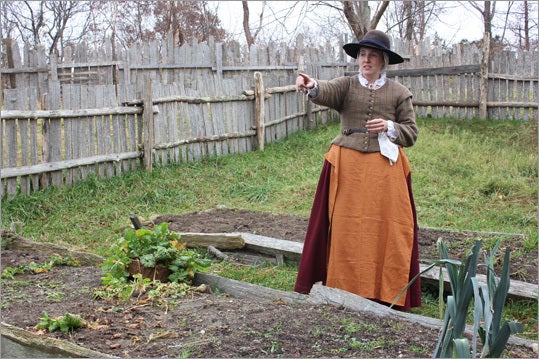
A colonist showed off her garden. Asking questions and discussing 1627 life in the village is an integral part of the learning experience at the museum.
-

No one is quite sure what the original village looked like exactly, but the Plimoth Plantation version is based on ongoing research. It is about one-third the size of the original village.
-

A colonist made bread pudding while answering questions from visitors who had entered her home.
-

At left, what a traditional eating area may have looked like inside one of the colonist homes.
-

At the crafts center, visitors can speak with modern day artisans who practice 17th century objects used in everyday life. Items made include furniture, native crafts, baskets, pottery, and clothing.
-

About 3 miles to the north of Plimoth Plantation, at the Plymouth waterfront, sits the Mayflower II, a 1957 recreation of the 1620 version. Like the original, the Mayflower II sailed across the Atlantic, from England, where she was built. The ship is still sailworthy and manages to leave the docks from time to time.
-

A colonist role player displayed how one might have steered the Mayflower from below deck.
-

A role player played a colonist passenger, and answered questions about her journey from visitors aboard the ship.
-

At left, what a typical sleeping quarters might have looked like on the original Mayflower.
-

The last record of the original Mayflower was in 1624, during an assessment of her value. No maritime record of the ship’s existence has emerged since.





To comment, please create a screen name in your profile
To comment, please verify your email address
Conversation
This discussion has ended. Please join elsewhere on Boston.com