
Fun facts about New England
-

Was the hamburger really born in New Haven, Conn., at Louis’ Lunch, not far from where many claim the pizza was created – at Frank Pepe Pizzeria (left)? While those two Connecticut claims to fame are widely disputed, they are just a couple of the fun facts that help define New England. Discover more historical tidbits and oddities from the region.
-

Massachusetts
<br>Forget the idea that they’re named after Sir Isaac, Fig Newtons were indeed named after the town of Newton by the Kennedy Biscuit Bakery when the forerunner to Nabisco introduced the cookies in 1891. In 1998, a Nabisco spokesperson told “The Straight Dope’s’’ Cecil Adams, “The Kennedy Biscuit Company named all their products after surrounding communities, including cookies and crackers called ‘Shrewsbury,’ ‘Harvard,’ ‘Beacon Hill,’ and so on. There is no doubt (in our minds) whatsoever that the Fig Newton is named for Newton, Massachusetts.’’ -

Massachusetts
<br>A link to one of Massachusetts’ oddest treasures remains locked in the Tufts University archives. While the ashes of P.T. Barnum’s famous elephant, Jumbo, a longtime Tufts mascot, remain in the athletic office as a source of good luck, Jumbo’s tail — saved following a 1975 fire at the university, where the pachyderm had been on display since 1885 — is neatly wrapped and kept in storage. -

Massachusetts
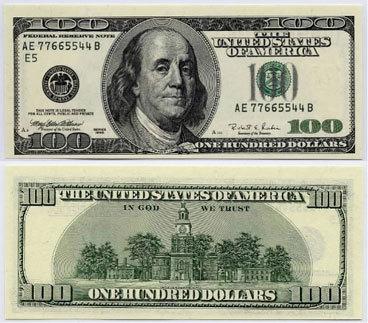
<br>One way or another, we’ve all come in contact with the Crane Paper Co. in Dalton. That’s because the paper company has provided the United States with currency paper since 1879. So on the next, rare occasion you pull out some cash instead of your debit card, know that the paper used to create it originated right around the corner. -

Rhode Island
<br>Speaking of dollar bills, just before the turn of the 19th century, American painter Gilbert Stuart, of Newport, R.I., had numerous sittings with President George Washington. Stuart finished two portraits of the president during this time. One, however, remained unfinished, only portraying Washington’s head and shoulders. Known as The Athenaeum, this unfinished work of art is now reproduced over 2 billion times a year by the Bureau of Engraving and Printing. -

Rhode Island
<br>The original version of the US Open golf tournament was played in Newport, R.I., on Oct. 4, 1895. Ten professional golfers and one amateur participated in the 36-hole tournament, which took place on a nine-hole course in a single day. Surprise winner Horace Rawlins, a 21-year old English professional, took home the top prize, consisting of $150, a gold medal, and custody of the Open Championship Cup for one year. -

Rhode Island
<br>Judge Darius Baker handed down the first ever jail sentence for speeding in an automobile in Newport, R.I., in August 1904. How fast was this criminal speeder driving, you ask? A blazing speed of 15 miles per hour. -

Vermont
<br>Despite what you may think, Dunkin’ Donuts hasn’t taken over the world yet (Good luck finding one West of Nebraska). However, when it comes to McDonald’s the same can’t be said. The fast food joint has a presence in every state capital in America. Except for one: Montpelier, Vt. The closest McDonald’s is in nearby Barre, but according to Montpelier Life, discussions about McDonald’s opening in a State Street location have taken place. If that happens, McDonald’s would be a perfect 50 for 50, but Montpelier would lose its distinction. -

Vermont
<br>Maple syrup. Milk. Sure, you expect Vermont to lead the way in production of those items. But beer too? Indeed. With 19 breweries and a 2008 population of 621,270, that makes one brewery for every 32,698 people, the most per capita in the country. Maine is fourth on the list. -

New Hampshire
<br>Blame Levi Hutchins. In 1787, the Concord, N.H., clockmaker created the first American alarm clock, using ideas that had already been implemented in Europe. More than 200 years later, millions curse his invention on a daily basis. -

New Hampshire
<br>The mystery of Stonehenge has baffled the world for hundreds of years, but one need not ship overseas to become part of the mystery. Salem, N.H., boasts its own man-made rock maze of rooms and walls. Dubbed “America’s Stonehenge,’’ It is thought to be the oldest man-made structure in the United States, some 4,000 years old. -

Maine
<br>We all know Maine is the largest state in New England, but it can be easy to forget just how big this state is. In fact, the state’s biggest and most northern region, Aroostook County, takes up an astounding 6,672 square miles. That stat marks Aroostook, known simply as “The County’’ by Mainers, as the most massive county east of the Mississippi River. To put that into perspective, this sparsely populated county on the Canadian border has more land area than the states of Connecticut (4,844 square miles) and Rhode Island (1,044 square miles) combined. -

Maine
<br>In 1848, John B. Curtis, of Bangor, Maine, cooked up his first batch of spruce chewing gum on the Franklin stove in his home. After labeling his new product as “State of Maine Pure Spruce Gum’’ Curtis traveled around New England, selling his gum as a wholesaler. His success, however, was not overwhelming because his gum apparently tasted too much like pure spruce. Eventually he moved his business to Portland and traded in the spruce for paraffin gum, which he was able to artificially flavor himself. -

Maine
<br>New England has its fair share of bizarre museums, such as a sardine museum in Maine and a garbage museum in Connecticut. Even with that competition, the World’s Only Umbrella Cover Museum, in Peak Island, Maine, remains the reigning champion of odd collections. Nancy Hoffman, the museum’s director and curator, started the museum in her kitchen in 1996. Within six years the museum outgrew its original home and moved to a larger location. Currently, the museum exhibits umbrella covers from 30 countries, including one made from bullet-proof Kevlar, which is sure to protect your umbrella from even the worst Northeaster. -

Maine
<br>In Georgia, it’s peaches. In Washington, it’s apples. And in Maine, they’ve got blueberries; lots and lots of blueberries. In fact, the state, which has 60,000 acres devoted to growing the tiny, plump fruit, produces roughly 98 percent of the wild blueberries in the United States. With 8,000 workers hired during the harvest period, the blueberry industry is estimated to take in $70 million a year. In return, Mainers have shown their unwavering love for their state fruit for the last 35 years at the Machias Wild Blueberry Festival. -

Connecticut
<br>Although they were originally made as breath mints in Vienna, the US company headquarters of PEZ Candy has resided in Orange, Conn., since 1974. PEZ is best known for its fun and creative collectable dispensers, which portray characters from Mickey Mouse to Darth Vader. Today, PEZ Candy comes in 14 different flavors and it is estimated that over 3 billion of these tiny brick candies are consumed in the United States alone. -

Connecticut
<br>Here’s another one to add to the food disputes of New Haven. Around 1908, George Smith of Connecticut decided to apply sticks to sugary, hard candies and coined the name lollipops. Smith claimed to have named the candy after his favorite race horse, Lolly Pop. While some find it hard to believe Smith’s claim, he did trademark the term in 1931, the only person ever to do so. However, other theories have the candy born in Wisconsin and Baltimore. So, much like the question of how many licks it takes to get to the center of a Tootsie Pop, the world may never know the truth.



To comment, please create a screen name in your profile
To comment, please verify your email address
Conversation
This discussion has ended. Please join elsewhere on Boston.com