
Newsletter Signup
Stay up to date on all the latest news from Boston.com
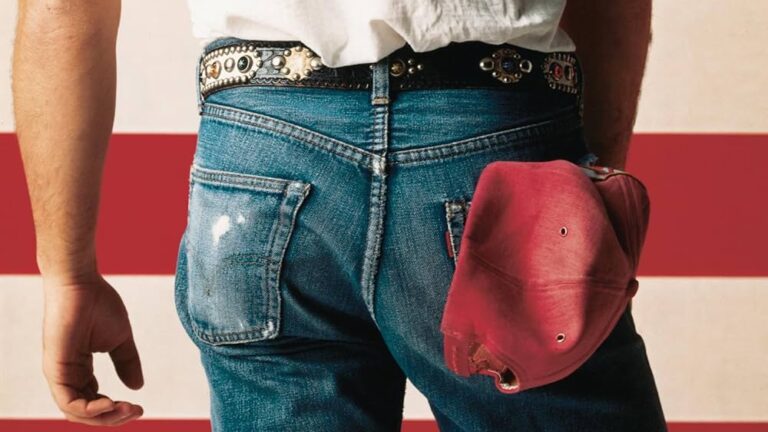

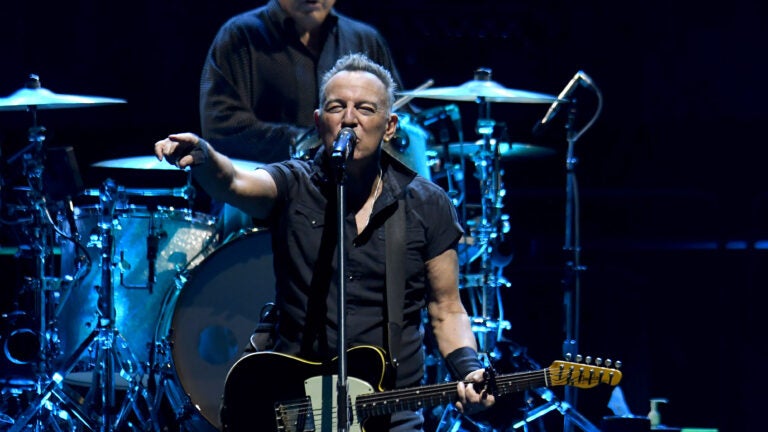
When Bruce Springsteen arrived in Worcester on Sept. 4, 1984 — exactly three months after the June 4 release of his latest album, “Born in the U.S.A.” — for the first of two shows at the Centrum, he was doing pretty well. The album was No. 2 on the Billboard 200 (behind Prince’s “Purple Rain”), and its second single, “Cover Me,” was sitting at No. 17 on the singles chart, up from No. 22. All in all, not a bad showing.
Then things exploded.
“Born in the U.S.A.” would go on to be the top selling album of 1985, eventually selling more than 30 million copies and launching Springsteen and his E Street Band into the stadium stratosphere. As for his relationship with Boston, he more than cemented it in the subsequent years, with (among many others) a triumphant five-night stand at the then-FleetCenter during the 1999 E Street reunion tour, and two nights at Fenway Park in 2003, the first rock act to play there.
But 40 years on, while there’s no denying that “Born in the U.S.A.” is Springsteen’s most successful album, and brought with it legions of new fans, it’s worth asking: Is it also his best? It’s a question Boston.com’s Peter Chianca posed in his book “Glory Days: Springsteen’s Greatest Albums,” whose chapter on “Born in the USA” appears below.
Released: June 4, 1984
Highest Chart Position: US 1 / UK 1
Track Listing:
1. Born in the USA
2. Cover Me
3. Darlington County
4. Working on the Highway
5. Downbound Train
6. I’m On Fire
7. No Surrender
8. Bobby Jean
9. I’m Goin’ Down
10. Glory Days
11. Dancing in the Dark
12. My Hometown
When Born in the USA was released in 1984, it wasn’t just that the world was ready for Bruce Springsteen. It was that Bruce Springsteen was ready for the world. Or at least for a bid at monumental, worldwide celebrity.
The album was, purposefully, Springsteen’s most commercial effort to that point – by a long shot. According to the Peter Ames Carlin’s Springsteen biography Bruce, he saw the possibility of superstardom as an opportunity to better represent the people he’d been singing about his whole career (think of them as “the luckless, the abandoned and forsaken,” to quote Bob Dylan from “Chimes of Freedom”). Or maybe the Elvis-fueled rock star dreams of his youth were finally just too close not to grab for.
Either way, Born in the USA succeeded beyond anyone’s wildest expectations, becoming the top-selling album of 1985 and eventually moving more than 30 million copies. It propelled Springsteen into stadiums around the world and elevated him to the status of cultural icon. It also became a sticking point for his longtime followers, many of whom felt that Springsteen had sold out his rock ’n’ roll principles – and attracted a new stripe of beer-chugging, bandanna-wearing fan they dread getting stuck next to at concerts to this day.
For anyone recalling the album strictly through hazy memories of mid-1980s top 40 radio – where the album’s seven top 10 singles lived alongside efforts by Culture Club and Wham! – it’s easy to overstate the album’s fluff factor, what with its surprising (for Springsteen) preponderance of synthesizers and pop-friendly beats and melodies. But listening to it today, it still holds its thematic own with the rest of his canon, and certainly deserves a place among any discussion of his best work.
The genius of Born in the USA, in fact, is the way it brought new fans into the Springsteen landscape through the back door. It’s deceiving in how it pairs a lively pop-rock sound with lyrics about discarded veterans, jailbirds, dying relationships, loneliness and ennui – not to mention sexual frustration. (It even fooled conservative columnist George Will, who famously declared, without irony, that Springsteen and his album proved that “There is still nothing quite like being born in the USA”).
The fact is, the themes that run through Born in the USA are the same ones Springsteen had been exploring at least since Darkness on the Edge of Town, but the newer album took the River formula – catchy rock ’n’ roll alongside darker meditations – and put it in a blender. With a few exceptions, most every song on USA finds dark and light inextricably intertwined. Masterfully, I might add.
That said, the album as a whole is imbued with irresistible rhythms, catchy hooks and sing-songy “sha-la-las” that fit in remarkably well with the bouncy pop landscape of the 1980s. Springsteen had always had a pop sensibility, but it usually reflected his earlier influences. While still a rock album, Born in The USA was (to the chagrin of some) on its surface unquestionably current and Top 40 radio-friendly.
As Springsteen himself has said, given the way many people digest pop music as simply that – music, with the lyrics often coming in a distant second in terms of a song’s emotional influence – it’s not surprising that many listeners didn’t seem to reach beneath the burnished surface of this particular batch. The title track in particular, with its bombastic synths and stadium-ready sing-along chorus, almost defies you to try to grasp its meaning on first listen.
Of course, listen more closely and its stinging indictment of a country willing to turn its back on its own citizens, even those that fought for it, becomes all too clear. That so many repeatedly failed to get it shows a willful ignorance that’s positively head-scratching. We can only presume that Ronald Reagan’s advisors only listened to the chorus before recommending The Gipper appropriate it for his conservative reelection message.
If “Born in the U.S.A.” is the only overtly sociopolitical song on the album, many of the others still delve deep into the politics of human relationships. It’s interesting how many of those songs use language usually reserved for the heat of battle: “Cover Me,” “I’m Goin’ Down,” even “I’m On Fire,” the catchy yet creepy ode to a “little girl” who can quench the desire of a tormented, sweat-stained wretch. Looking at it that way, it’s probably not surprising that it seems to have been covered by every depressed indie band of the last several decades.
“Cover Me” in particular is a perfect example of the album’s dual personality: Springsteen’s tone conveys urgent desperation (“come on in and cover me,” he pleads), even as his stinging guitar is matched with downright disco-friendly beats – it was originally written for Boston’s own Donna Summer, after all. Even “Dancing in the Dark,” remembered as Springsteen’s most disposable pop single, is actually a masterpiece of existential languor worthy of Samuel Beckett, but disguised as a giddy toe-tapper.
The few songs that are deeper and darker musically, like the haunting “Downbound Train” with its unremitting tale of loss and depression, still manage to co-exist easily with the more anthemic aspects of the album, like the driving “woah-oh-oh” of “No Surrender,” with its ode to friendship and three-minute records – not to mention the pop melancholia of “Bobby Jean,” and the honky-tonk pleasures of “Darlington County” and “Glory Days.”
But if there’s a song that best cements the album’s place in the Springsteen hierarchy, it’s the closing track, “My Hometown.” Nostalgic and realistic at the same time, it harkens back to both Born to Run’s dreams of escape – the narrator and his wife agonize over “getting out” – and Nebraska’s vision of a hardened landscape where jobs are scarce and violence is always as close as the back seat of a car. But it also shows a new maturity in its sensitivity to the importance of history and common ties: When the singer introduces his little boy to his hometown, eschewing another run through the chorus in favor of a haunting choral hum, the moment is hair-raisingly beautiful.
Bruce himself may have referred to the songs of Born in the USA as a “grab-bag,” but they sound far from haphazard; they’re tied together in their clear-headed realism – about life’s challenges, the fleeting nature of love and the lure and danger of nostalgia – even as they blur the boundary between driving, message-oriented rock and danceable (some might say disposable) pop.
The album may always be a victim of its own success, and there are fans (typically the ones who are older, grayer and crankier) who still head for the bathroom, or at least emit an audible groan, when “Bobby Jean” or “Glory Days” turn up in a concert encore. And there’s no denying that the album’s phenomenal success and subsequent backlash caused Springsteen to regroup, a soul-searching process that led him in several different directions in the subsequent years, both professionally and personally.
But if the overarching question of Born in the USA was whether Springsteen could bring his message to a vast worldwide audience without having to sacrifice its underlying meaning, the answer is a resounding yes. And beyond that: It’s catchy, and you can dance to it.
Note; A version of this post appeared originally on the Bruce Springsteen blog Blogness on the Edge of Town.

Stay up to date on all the latest news from Boston.com




To comment, please create a screen name in your profile
To comment, please verify your email address
Conversation
This discussion has ended. Please join elsewhere on Boston.com