
Sign up for Book Club
Stay up to date on local books news, events, and recommendations from Boston.com.
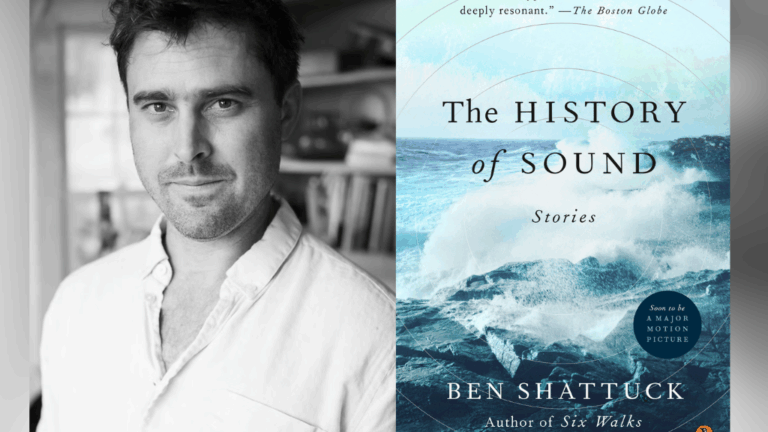
I’m not surprised to learn this at all: Ben Shattuck’s brilliant “History of Sound” just won the 2025 Mark Twain American Voice in Literature Award on Oct. 7.
“History” is at once a polyphonic paean to the natural world and analog human culture, with the satisfying eye-pop moments of a mystery novel.
It’s also his first try at fiction. The Twain announcement comes just days after Shattuck tells me about his new screenwriting venture, and project with Ben Stiller.
Massachusetts Renaissance man Shattuck tells me a creative life is like a river — he’s just paddling down tributaries as they come.
Put it this way: When I first interviewed Shattuck, over a decade ago, he was a painter, working at his family’s Westport gallery. The second time, he’d zigged to found the Cuttyhunk Island Writers’ Residency.
We talked when he zagged to publish his nonfiction “Six Walks”, about tracing Henry David Thoreau’s footsteps around Massachusetts. And when he zigged to become a general store owner, purchasing the oldest in America: Davoll’s in South Dartmouth, est. 1793.
He’s zagged again. Or maybe zigged. Either way I’m not surprised that while I’m calling to talk about his move into short fiction writing, with “The History of Sound,” we end up discussing another pivot into screenplay work — including a World War II movie with Ben Stiller set to direct, and Jeremy Allen White attached — and a first novel.
This is life on the Shattuck beat.
For South Dartmouth’s jack of all trades (and, oddly, master of many) tributaries branch out like leaf veins.
“You might think the creative life is like hiking a mountain, trying to get from one summit to the next. But it’s actually more river-like. You find an opportunity, take that tributary. You’re offered another opportunity, take that tributary,” Shattuck, 41, tells me.
“So I’ll just move through this tributary of screenwriting for now, and see what happens.”
The painter/writer/general store owner is talking from his Brooklyn home, where he, actor/writer wife Jenny Slate and daughter Ida, 4, live during the school year. They’ll return to Shattuck’s native South Dartmouth for the summer.
His mountain and river analogy is apt — but more than that, gets to something near Shattuck’s core. What makes him tick.
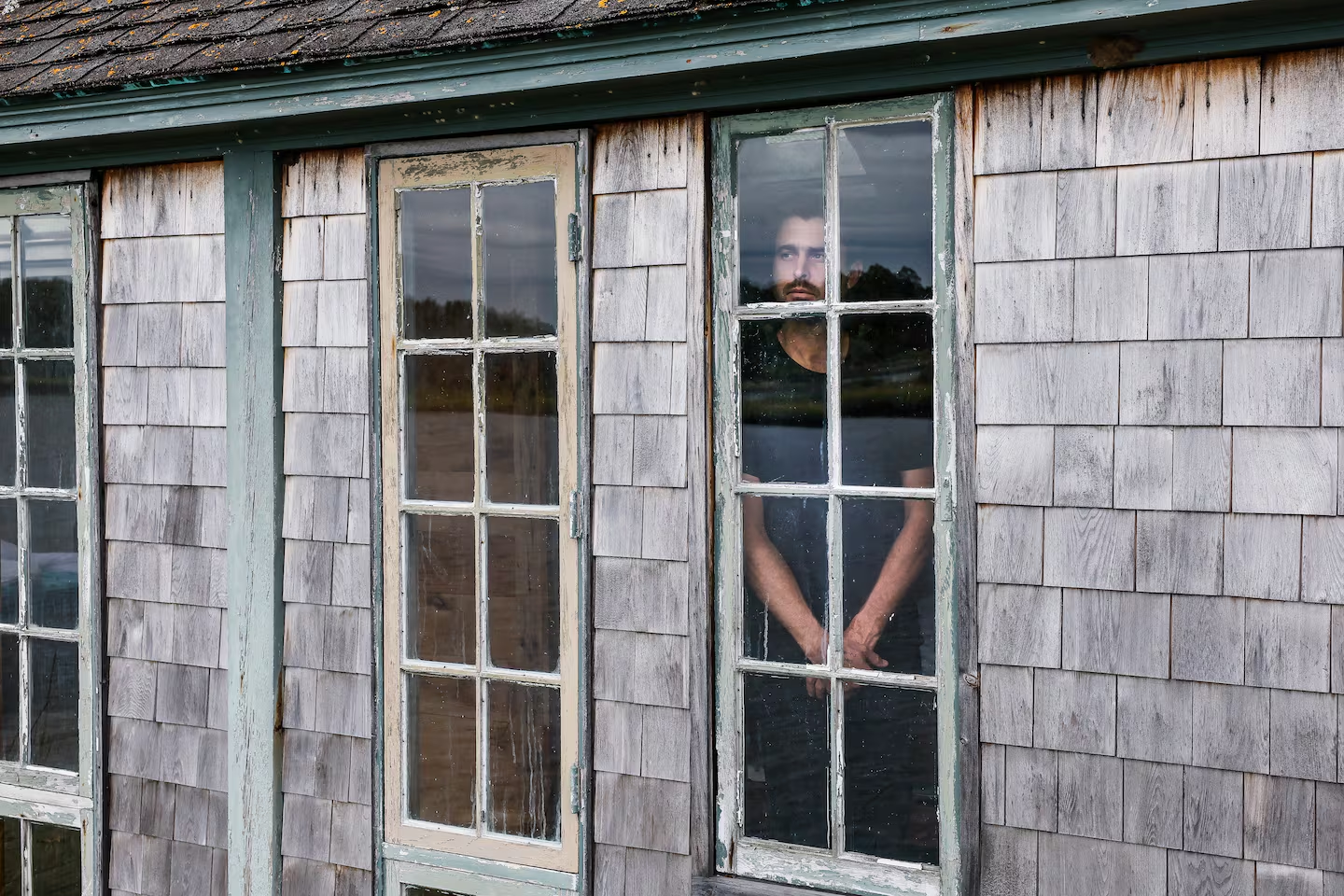
While Shattuck does have a cell phone, he gives off a land-liner vibe. A flannel, salt-stained shingles, and sandy-truck-floors vibe.
The natural world is his go-to language. Windswept Cape Cod beaches, icy Nantucket winters where wind bites through cracks of an old beach shack, dense pine forests in Western Mass., rocky, remote Maine coastlines, Massachusetts salt marshes. This is the world you enter in Shattuck’s work, both fiction and nonfiction — and, to a degree, his art.
You’ll find all these landscapes in the 12 short stories that make up “The History of Sound.”
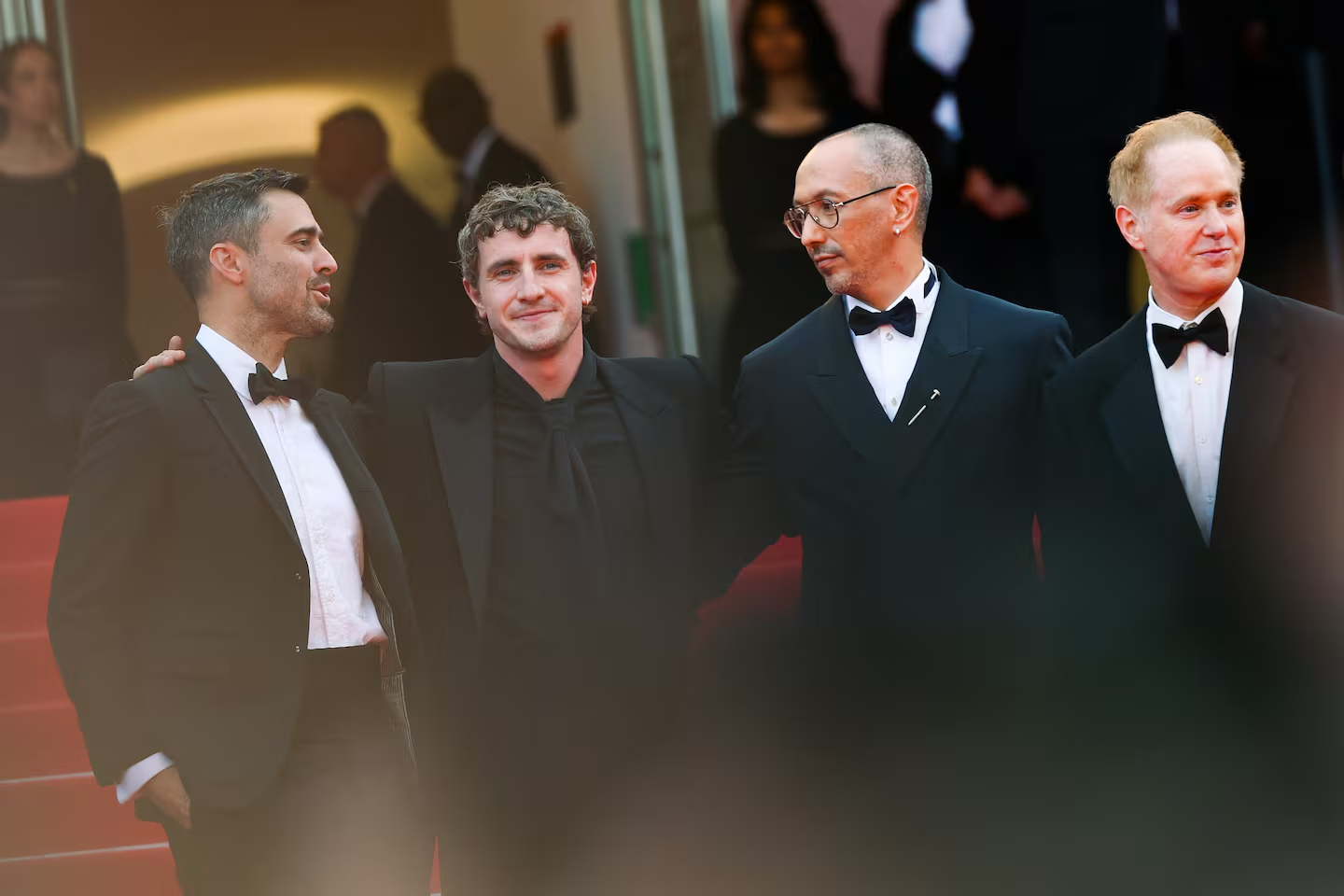
The titular story is now a movie from Oliver Hermanus, starring Paul Mescal as Lionel, Josh O’Connor as David, and Kingston’s Chris Cooper as the older Lionel.
Both movie and story are set in New England circa World War I. Two Boston Conservatory students, Lionel and David, fall in love, spend one summer together recording and preserving old folk tunes, ostensibly collecting the history of sound on phonograph tubes.
After debuting at Cannes Film Festival this year, the movie hit select theaters this month. It marks Shattuck’s foray into screenwriting.
I asked Oscar winner Cooper — who tells me he’s notoriously script-picky— what drew him to Shattuck’s script.
“Oh, my God. I— are you familiar with Ben Shattuck’s writings? I absolutely love his writing,” Cooper told me. “This is my kind of story. This is the kind of thing that got me interested in film in the first place. This is what I live for.”
Variety just named Shattuck “Variety’s Screenwriters to Watch for 2025,” noting that while the Cornell alum never took a screenwriting class, Ben Stiller asked him if he wanted to adapt the novel ‘The Lost Airman: A True Story of Escape From Nazi-Occupied France,’ a searing World War II drama.
He did. Now Jeremy Allen White is attached to the film, “Airman.”
The magic: Stories are paired. The first sets up a mystery, the next solves it. Easter egg objects — a painting, a cult leader’s bible — pop up in each, showing how lives are connected across time.
For example, in “August in the Forest” a trio in modern-day New Hampshire hear about a mysterious early 1900s mass murder in a remote logging camp and take a trip to the scene of the crime. In the next story, “The Journal of Thomas Thurber,” is the first-hand 1908 diary of one of the loggers, explaining the mass homicide and who did it.
“In a short story collection, each story is its own little universe,” Shattuck tells me. “So when something from one story is introduced in another, you get this magical feeling.”
Bingo.
While it’s reminiscent of Daniel Mason’s brilliant Massachusetts-set novel “North Woods,” “History” is its own thing.
I read it twice — to see how Shattuck did it, and for the pure escape of historical fiction, which hits here like an opiate. The bulk of the stories take place between the late 1600s and early 1900s, and make for powerful mind-trips away from screen-based iLives, into candle-lit worlds where characters spend hours staring as fires burn to ash, or sketch with charcoal chunks lifted from its embers. They plant tomatoes, write letters, hunt ducks by the marsh for dinner.
Even when Shattuck sets a story in the modern-day, characters might hold a lantern, walk creaky floorboards in weather-beaten homes, their windows warmed and shutters flapping in the wind. In almost every story, someone bakes fresh bread or eats freshly-baked bread.
Cooper summed it up well: “It’s just comfortable, comfortable reading. He’s like a writer from another time.”
That’s it. It’s peak New England-core. I want to live in these stories.
“I’ve heard from a lot of people who moved away from New England saying it felt nostalgic for them, reminding them of what it feels like to be here,” Shattuck says. “There’s a specific sensibility, landscape, character belief, character arc of a New Englander: how a hard winter affects somebody, how landscape affects somebody.”
I highly recommend the audiobook. Cooper narrates the titular story beautifully, along with an all-star cast of narrators including Mescal, Ed Helms, Nick Offerman, Slate and Shattuck.
It’s a busy time for Shattuck. Right before I called, he was writing. Right after we talk, he says he’s headed to meet with a director about adapting another story in this collection: the Cambridge-set “Graft.”
On Oct. 18, he heads to London for the UK premiere of “History.” Meanwhile the short story collection has been translated into French, Italian, Portuguese, Ukrainian, and German.
I called to talk about his story collection, foray into screenwriting, his upcoming adaptations — including a Cambridge-set movie.
Shattuck: I wrote the short story “The History of Sound” over 10 years ago, at the Iowa Writers Workshop. After that, I was painting, starting the Writers’ Residency program, writing nonfiction.
Then the Common Magazine published it. It won a Pushcart Prize in 2019, which I only say [as explanation] for how it got a wider readership. A producer read it, thought it might be a good film. Things moved pretty quickly.
So the film catalyzed the book. I told my agent I couldn’t imagine having a film out without that story in a collection. Half those stories are from years ago, and maybe half were written to fit that [paired] hook-and-chain model.
In “Edwin Chase of Nantucket,” one character, Will [a painter] leaves Edwin’s mother a painting. I just felt it was the equivalent of Chekhov’s gun— that phrase: If you introduce a gun in the first act, it goes off in the third. I felt that painting had to show up somewhere else.
I also had this desire to see historical fiction differently. I love historical fiction, but always feel there’s an explanation missing as to why I’m reading about a character from the deep past. This model gave something like an explanation: Everything you do now is somehow connected, both to the past and the future.
That one especially hits on a larger theme in the collection: how misunderstandings, rather than understandings, shape lives.
I forget who said: The most natural state of a movie is being unmade. I asked to write it without fear of: “If I write it as an unseasoned screenwriter, it won’t get made.” I figured, “This won’t get made for a billion reasons, so I’ll throw my hat in.”
I think that worked to my advantage. The screenplay [I wrote for] that Ben Stiller project — everybody involved said it wasn’t like a screenwriter’s screenplay.
That said, I’m still learning. It feels like architectural plans for a hallucination. Unlike prose, the writing is not the final product. It’s a highly collaborative process, and the director’s vision is really what the final art is. It’s almost like I’m making tubes of paint for the artist.
I’d read that Edison’s wax cylinders were one of the only inventions that worked almost in the moment of invention. He thought of the idea, drew it up, mocked one up, it worked. I also read that he never imagined them used for music, but for recorded messages.
I thought that was such a beautiful object to center a short story around, and a wonderful narrative device: a message comes from across time and affects somebody’s life and maybe punctures their identity. The characters came after that idea. I thought, Who would be handling these cylinders? Why?
That’s the pattern of the entire collection. Like the painting. I always start from an object.
[laughs] Exactly. They’re almost like dream objects. Very Jungian.
Yeah! Great close read. The entire collection also draws attention to fact-versus-fiction, how the line is constantly blurred. Like [the old New England religious cult in one story] is made up. People told me they went online looking for that. But the he’s-at-home is real.
Exactly!
I wrote an adaptation for “The Wind in the Willows.” I’m writing another adaptation from my story “Graft.” Then I’m doing some rewrites for other directors.
[laughs] Well, maybe. I don’t know. The film world needs a very large consensus— financing, production, actors, directors. But it’s all wonderful to imagine them.
I think the store and stories are informed by the same observation, which is: parts of our life and culture that might seem old-fashioned can be timeless and timelessly relevant. Like Davoll’s doesn’t have a TV, because sitting down with your friend and having a drink is a timelessly satisfying activity.
A lot of my fiction takes place in the past to strip down all the distractions of present-day, to allow for those timeless moments where people discover relationships or parts of themselves under nothing more than candlelight or a walk through the forest.
[laughs] True. There’s a lot of characters in my fiction that have that touch of nostalgia.
And that’s the other thing about setting stories in New England — so many of these old houses might have a lantern lying around, or wood-burning stoves. That’s not going to happen in a suburb of Cleveland, Ohio.
I loved it. There’s so many wonderful surprises — how Paul decides to act out a scene, or how Oliver frames a scene. When I’d visit set, the basic feeling was hallucination. It was thrilling.
I think “Radiolab” and “The Auk” could work with a time-jump. And I’ve always thought “The Journal of Thomas Thurber” could be a great play, because it all takes place in one room. But I don’t know how to write a play. Maybe that’ll be my next tributary.
Lauren Daley is a freelance culture writer. She can be reached at [email protected]. She tweets @laurendaley1, and Instagrams at @laurendaley1. Read more stories on Facebook here.
This story has been updated to correct the name of the award in the headline.
Stay up to date on local books news, events, and recommendations from Boston.com.





To comment, please create a screen name in your profile
To comment, please verify your email address
Conversation
This discussion has ended. Please join elsewhere on Boston.com