
Why Wet Hot American Summer is a ‘good representation of camp’
Six questions with Howard Salzberg, the director and owner of the camp that inspired .
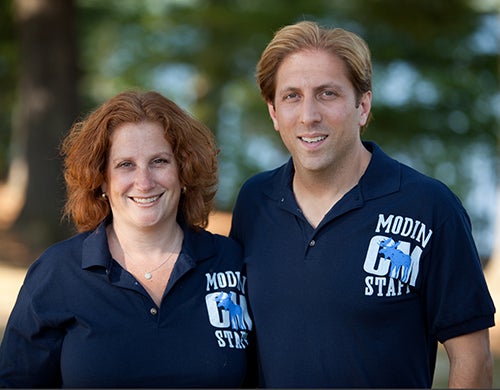
Wet Hot American Summer co-creator David Wain has said his absurdist, zany cult classic film and new Netflix series were loosely based on his time at Camp Modin, a Jewish summer camp in Waterville, Maine.
Howard Salzberg has been with Camp Modin almost his entire life, spending summers there as a camper, counselor, and, for about the past 25 years, as director and owner. He and Wain were fellow campers at Modin in earlier times, and the two remain in touch now. (Wain’s co-creator, Michael Showalter, attended Camp Mohawk in the Berkshires.)
Salzberg took time away from dealing with camp parents to speak with Boston.com about the stunning similarities between Wet Hot and real-life Camp Modin, why Wet Hot is a “good representation’’ of camp, and what David Wain’s talent show performances were like.
[fragment number=0]
Do you have any memories of Wain from back in the day? Here’s a quote from him and his co-creator Michael Showalter in a 2001 New York Times story: Camp was “where you did nothing but play and … try to make out.’’
[Laughs] I’m aware of the article. Somebody actually said to me the other day, “I heard that the movie is loosely based on Camp Modin,’’ and I said, “To be perfectly honest, it’s more ‘based’ than ‘loosely based’ on the camp experiences back in 1981.’’
Camp is fun, but the depiction of the camp experience in that movie, I think, was definitely accurate – it was somewhat accurate for the time. There were obviously extremes. I remember the scene in the movie about the staff in Waterville on the day off. [Ed note: The gang goes from eating ice cream to smoking cigarettes to full-on heroin addiction – all in a one-hour trip into town.] I don’t have any recollection of it being that out of [control]. Like anything in any movie, things are exaggerated.
[fragment number=1]
[Nowadays], there is a level of professionalism, training, supervision, and oversight. It’s totally different. We have driver training programs. The vehicle depicted in Wet Hot American Summerwith the counselor crashing the van? I think that was probably accurate for the time. Would that happen nowadays at summer camp? No way. It’s a long time ago. The world has changed.
Camps in general were probably very counselor-focused back in those days. And now the counselors are here for the kids. They’re here to make an amazing experience for the kids. They’re mentors, professional role models, and they’re caring individuals. Not that they weren’t back in the day, but they were there more to have a good time.
That worked in the ’80s, probably because our parents didn’t really know what was going on. They had no clue. Now with the Internet, and camps posting 30,000 photos a summer, everybody knows what’s going on at summer camp. I don’t think camps could get away with the stuff they used to back in the day.
Did you have any contact with the showmakers for this new Netflix remake?
We weren’t involved in it or anything like that. We’ve known about it. We do reunions periodically. David [Wain] was at [Camp Modin’s] 90th reunion five years ago, and many of his other bunkmates and people were there. I’ve stayed in touch with him. Even a couple weeks ago, I reached out to him, and he wrote back that he wanted to be on the “Din’’ team [for Modin’s Olympics-like color war], which is the blue team. He still remembers his fond recollections.

‘Wet Hot American Summer‘ creator David Wain, far right, spent his younger summers at Camp Modin.
We did show Wet Hot American Summer, the original movie, to our staff just for fun as part of our staff orientation training. People love it. They love it. Like I said, no camps are the same – nothing is the same.
I think it’s a good representation of camp. I was 9 years old the summer of 1981, so I don’t remember everything that was going on, I was on the younger side. But I think camp – it was a different time. But it was fun! It was fun. It was fun.
We just went to camp to have a good time and hang out and be ourselves and connect with other people and gain independence and grow and mature and just chill out. Now I think there’s a lot more outside pressure to do different things. There’s different expectations at summer camp today. I don’t know if that’s a better thing or a worse thing.
Do the campers and parents know about Camp Modin’s relationship with Wet Hot?
I’ve seen a couple of episodes of the new [Netflix series], just here and there, bits of it. I haven’t had time to watch the whole thing. It’s strange for me because the references are exactly the same. The names of bunks, buildings, even the graffiti on the walls in the new version. I’m like, “Oh, I know Marnie Berk.’’ “Oh, I know Laser Rosenberg.’’ For me, it’s a little strange.
I have to tell you that [Wain’s new character, an Israeli counselor] Yaron, that is the spitting image of my predecessor. That is David Adler, the predecessor of this camp, down to the jean shirt. It’s hard to watch because it’s so funny for me. Personally, I think it’s hysterical.

David Wain plays Israeli counselor “Yaron’’ in the new Netflix series.
As far as promoting it, we have to walk a fine line. Not everybody who goes to summer camp necessarily had a camp experience themselves. We have to walk a fine line in that we’re proud of the movie, [but] it’s not exactly the promotional video you want to send out to a prospective family that doesn’t understand the camp experience and never went themselves. We’re not saying, ‘Here’s the new promotional video showcasing Camp Modin’ because it’s not accurate.
But at the same time, we’re obviously proud of it because, despite the adult theme of the movie and the Netflix series, I do think that at the end of the day, the connection that the people in the movie have for their summer camp and their friends and their campers, I think that’s still very genuine. And it comes through.
Even the relationships where these kids are kids, the relationships they have with each other, the boys and girls. All of those social dynamics are still the same. They’re still interested in each other and hanging out. It’s just the way we help the kids navigate through those things are different today than back in the day. People are still social. They still want to hang out and spend time with each other, it’s just in a more supervised manner.
Kids got away with a lot more in 1981. We have security guards who patrol the camp at night and a state-of-the-art security system with 60 cameras. It’s much harder to get away with stuff than it was when David and I went to camp.
How is the health of Camp Modin and the Jewish camp movement in general? Is it doing okay?
It’s very strong. When I went to Modin and David went to Modin, it was very run-down, it was rustic, it was kind of dumpy, and we loved every minute of it and we made the fun for ourselves.

The layout and cabin style of Camp Modin today resembles Camp Firewood in ‘Wet Hot American Summer.’
Camp is an opportunity for kids to have an independent experience from their parents. I think that’s very important. It’s not an extension of home; it’s a break from home. That’s what’s so good about camp. Back in the day, our parents sent us off and that was the end of it.
I was talking to a parent just before I called you, and they were talking about the fact that their most profound memories are all from going to sleepaway camp. The best friends that they still have as adults are the people they went to camp [with]. I think that’s true for everyone, whether they went to camp in 1922 or 2015. I think the camp friendships are very intense and very strong. And that does, for me, come through in David’s work, as hilarious and silly as it is.
Even in the new [series], the choreographer. I really wanted to send David an email and say, “Who is she?’’ because I can’t quite place her but I know she was there [at Modin]. She’s the spitting image of one of the many theater directors or choreographers back in the day. To be honest, many of them are pretty spot on. It’s hysterical.
Are you represented in the movie or show?
No, that director is not me at all. I don’t wear khaki pants and white tube socks and sneakers. That’s not me. I’m not sure who he based the director character on.
Anything else you’d like to add?
The one thing that I loved most about David and the whole crew of them, they were very creative people. When we had skit night or talent shows or theater productions, it was always fun with them. You knew when you were with these guys that they were destined for greatness with this stuff. I just remember doing skits for talent shows with them, and just thinking this is hysterical. Just watching them write and work and come up with concepts when they were 15, 16, 18, they were hysterical. He was hysterical.
The humor that comes out of it is hysterical but is quintessential David Wain. It is the same humor that I remember when I went to summer camp with David back in the day. The fact that all these big name people came back to do this, they obviously see the same thing. If David Wain came back to Camp Modin and wanted to do a talent show, I’d be in. I’d have the same fun working with him as I’m sure they do.
This conversation has been lightly edited for clarity and length.
Gallery: 15 fantastic New England road trips
[bdc-gallery id=”114291″]



To comment, please create a screen name in your profile
To comment, please verify your email address
Conversation
This discussion has ended. Please join elsewhere on Boston.com