
‘The Hunting Ground’ Puts Focus on Campus Sexual Assault
Producer Amy Ziering talks about her new documentary that sheds light on the problem college campuses across the country have with addressing sexual assault.
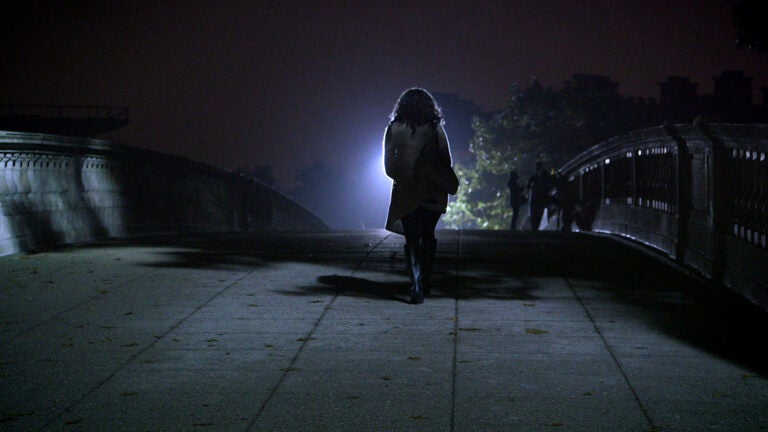
It’s hard not to get angry about sexual assault on college campuses when watching The Hunting Ground.
The latest documentary by director Kirby Dick and producer Amy Ziering uses statistic after statistic to illustrate how pervasive the problem is.
According to studies cited in the film, nearly 100,000 college students are sexually assaulted each year, and 1 in 5 women are assaulted at some point during their time at college. The film alleges apathy and neglect by school administrators responsible for protecting their students.
Early on in the documentary, one student Annie E. Clark, says the University of North Carolina at Chapel Hill failed her when she reported being raped before classes had even started her freshman year.
Clark says a school administrator compared her attack to a football game, coldly asking her, “If you look back, what would you have done differently?’’
The film’s production notes say that officials from UNC, Harvard, and other universities featured in The Hunting Ground declined to be interviewed for the documentary. However, a UNC representative did respond to Boston.com’s request for comment with an e-mail statement.
“While we are unable to comment on specific claims, Carolina has worked steadfastly over the past two years to increase awareness about resources and reporting options, so students know where to receive help when they need it and how to report violations,’’ said Felicia A. Washington, UNC’s vice chancellor for Workforce Strategy, Equity, and Engagement. “Our comprehensively revised policy that covers sexual violence now more clearly defines consent and outlines new investigation and hearing procedures. While much has been accomplished, we will continue to evaluate our progress and move forward.’’
The film argues that, from coast to coast, many college officials are more worried about protecting their schools’ public images than showing support and compassion to their students.
“I could not believe the reactions that administrators gave these students… I honestly couldn’t believe it,’’ Ziering told Boston.com. “I’m sitting in a position of hearing their story, so I am in the exact same position as an administrator or as a faculty member, and you as an audience member are in that position when you’re watching, you’re just hearing it too. I don’t know how you react that way when someone’s talking to you like this.’’
Ziering, who previously tackled the topic of sexual violence in the military with the 2012 documentary The Invisible War, said many administrators blame survivors or question their stories.
According to the National Center for the Prosecution of Violence Against Women, studies have shown that only 2 to 8 percent of rape reports are falsified, which is on par with any other crime. Particularly on college campuses, Ziering says, the stigma attached to reporting sexual assault is likely the reason why many survivors don’t come forward.
“As a society, we’re not alarmed or worried about or challenge people that come forward to report a robbery or a carjacking or any other kind of criminal infraction,’’ Ziering said. “So why do we automatically assume these rape reports are suspect or false or strange? [In] what other crime in our society is there a stigma attached to you if you come forward to report, other than rape?’’
Different Schools, the Same Problem

A map detailing campus sexual assault from The Hunting Ground.
Harvard is one of the first schools taken to task in The Hunting Ground, specifically over its handling of a case involving a former law student.
In the film, the student says she and her roommate were drugged and assaulted by another student. The student accused in the assault was initially expelled, but allowed to return to Harvard the following year, according to the film.
Harvard did not immediately respond to Boston.com’s requests for comment.
Ziering said the lack of “good investigation and adjudication processes’’ helps to foster an environment where these offenders can keep offending.
“These are serial predators, it’s a premeditated crime,’’ Ziering said. “If they are in places where they won’t get charged or have any sanctions meted, they can just keep committing them.’’
Ziering said that the film aims to highlight a “diverse range’’ of schools and demographics. It features all kinds of universities, from Ivy leagues to Catholic institutions to state schools.
But the stories all seem familiar.
“Every time we’ve shown it on a campus anywhere, it’s seamless,’’ Ziering said. “People go, ‘Oh, that’s the same story here,’ and that’s what’s amazing. It’s not like, ‘Oh that was rare and weird.’’’
Making A Difference

A scene from The Hunting Ground.
The filmmakers suggest that there is reason for hope.
Clark and Andrea Pino, another former UNC student profiled in the film, have become advocates against sexual assault. The Hunting Ground chronicles their journey to campuses across the country in order to file complaints against over 90 institutions under the Title IX provision, a federal law which prohibits sexual discrimination in education.
In addition to the grassroots efforts, Ziering praises members of Congress who are hoping to pass the Campus Accountability and Safety Act. The bill would levy serious fines against schools that don’t improve their processes for dealing with sexual violence.
Ziering also applauds university officials, like Amherst College President Biddy Martin, who are holding frank discussions about the issue.
“The will has to come from within, the leadership has to come from within,’’ Ziering said. “I’m hopeful that, like President Martin, other presidents will step up across the country and take that same stance.’’
But what about people who aren’t students, politicians, or university officials? What can they do to help survivors of sexual assault?
“On a micro-level, everybody can do this: You can believe the survivors,’’ Ziering said. “That right then and there, makes such a difference in their lives for the rest of their lives. If the first responders, second responders, third responders are empathic, are supportive, just try to help them and listen to them and not challenge them and doubt them, then their healing processes are a lot more successful.’’
The Hunting Ground is currently playing at the Kendall Square Cinema and will debut on CNN this fall.
[fragment number=0]




To comment, please create a screen name in your profile
To comment, please verify your email address
Conversation
This discussion has ended. Please join elsewhere on Boston.com