10 events that will make you smarter this month
Because you don't have to be a college student to learn something new.
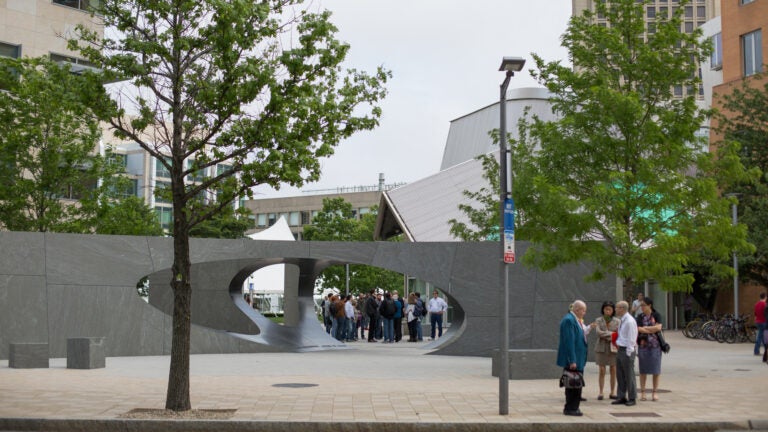
If you’re hoping to boost your intellect or expand your world view, look no further than Boston. The Greater Boston area is home to more than 40 colleges and universities – including prestigious institutions like Harvard and MIT – and boasts some of the nation’s best and brightest doctors, writers, and scientists.
Knowledge is all around us–and we should take advantage of it. However, it can be daunting to scroll through a seemingly endless list events to find the city’s best intellectual offerings. The goal of this list is to provide a more manageable calendar of lectures, workshops, and other programs designed to make you smarter.
Here are 10 events in March that will satiate the curious mind.
From Twain to Toni Morrison: A Literary Journey through America
Joseph Luzzi will lead a lecture that travels through the timeline of American literature. From Mark Twain’s Huckleberry Finn to Toni Morrison’s Beloved and everything in between, Luzzi will trace the evolution of character and conflict in some of America’s most famous literary works. (Thursday, March 2 from 6 p.m. to 7:30 p.m.; Boston Public Library; free; ages 13+)
Film Screening: 13th, A Documentary by Ava Duvernay
Even though the U.S. accounts for just 5 percent of the global population, it locks up 25 percent of the world’s prisoners. Ava Duvernay’s critically-acclaimed documentary, 13th, explores the dynamics of the American prison system in the context of the nation’s history of racial inequality. Following the film screening, a Q&A session will be held with Black Lives Matter organizer and Pan-African Studies professor Melina Abdullah, who was interviewed in 13th. (Friday, March 3 at 7 p.m., with pizza served at 6:30 p.m.; MIT List Visual Arts Center; free; all ages)
Sexual Harassment and Gender Equity in Science
In 2015, Buzzfeed News reporter Azeen Ghorayshi broke the story of astronomer Geoffrey Marcy’s long history of sexual harassment. After this report, other female scientists came forward to share their experiences of harassment and gender inequality within their fields. Ghorayshi will join a panel of female scientists and science journalists to discuss barriers women face in the sciences and the steps we can take to overcome them. (Thursday, March 9 from 5 p.m. to 7 p.m.; MIT Room 3-270; free; all ages)
How Emotions Are Made: The Secret Life of the Brain
Ever wonder about the science behind why you’re happy, sad, or angry? Join neuroscientist Lisa Feldman Barrett for a reading of her book, How Emotions Are Made: The Secret Life of the Brain, in which she examines the relationship between science and emotion and its implications on our everyday lives. (Thursday, March 9 at 7 p.m.; Brookline Booksmith; free; all ages)
Boston’s Journalism Trail
Boston served as the home to many milestones in American journalism–the first colonial newspaper, the first foreign language newspaper, and the first Roman Catholic and Jewish-American newspapers, to name a few. Manny Paraschos, professor of journalism and ethics at Emerson College, will explore some of these significant moments in journalism history and consider Boston’s impact in a broader journalistic context. (Monday, March 13 from 6 p.m. to 7 p.m.; Boston Athenaeum; free for members and $15 for non-members; all ages)
The Girl at the Baggage Claim: Explaining the East-West Culture Gap
Gish Jen, author of The Girl at the Baggage Claim: Explaining the East-West Culture Gap, integrates personal anecdotes with cultural psychology to study the differences in art, education, geopolitics, and business in Eastern and Western civilizations. Jen will be joined by Nancy Berliner to dive into the societal disparities that define the East-West culture gap. (Wednesday, March 15 from 7 p.m. to 8 p.m.; Museum of Fine Arts; $16 for members and $20 for non-members; all ages)
The Conservation of Devil Rays
Devil rays, whose gill plates are popular in Chinese medicines, are facing threats from target and bycatch fisheries. New England Aquarium Marine Conservation Action Fund Fellow Daniel Fernando will discuss his research efforts, which focus on the understanding and conservation of these sea creatures. (Thursday, March 16 from 7 p.m. to 9 p.m.; New England Aquarium, Simons IMAX Theatre; free; all ages)
Health Fair: Brain Works
Enjoy a hands-on exploration of the relationship between the human brain and technology. Guest scientists and engineers will join Museum of Science educators to discuss brain mapping and manipulation, and attendees will even have the opportunity to touch a real human brain. (Friday, March 17 from 9:30 a.m. to 12:30 p.m. and Saturday, March 18 from 10 a.m. to 3 p.m.; Museum of Science; free with Exhibit Halls admission; recommended for grades Pre-K-12 and adults)
Piltdown Man, the Missing Link: Exposing the Motives and Methods behind a 100-Year-Old Hoax
Piltdown Man was the name of the hominin discovered in Sussex, England that was believed to be the missing link between apes and humans–and turned out to be one of the most infamous scientific hoaxes of all time. Christopher Dean from University College London will discuss the history behind the hoax and its importance to scientific research today. (Monday, March 27 at 6 p.m.; Harvard Museum of Natural History Geological Lecture Hall; free; all ages)
The Mission of the Jamestown
The Jamestown was a naval ship that traveled from Boston to Ireland on a relief mission in the wake of the Irish Famine. Join Professor William Fowler Jr. from Northeastern University to learn more about the relief efforts on the 170th anniversary of the Jamestown’s voyage. Registration is required for this free event. (Monday, March 27 from 6 p.m. to 7 p.m., with a pre-talk reception at 5:30 p.m.; Massachusetts Historical Society; free; all ages)