
How to prepare for a virtual doctor visit
It's a good idea to take some vital signs before the meeting.
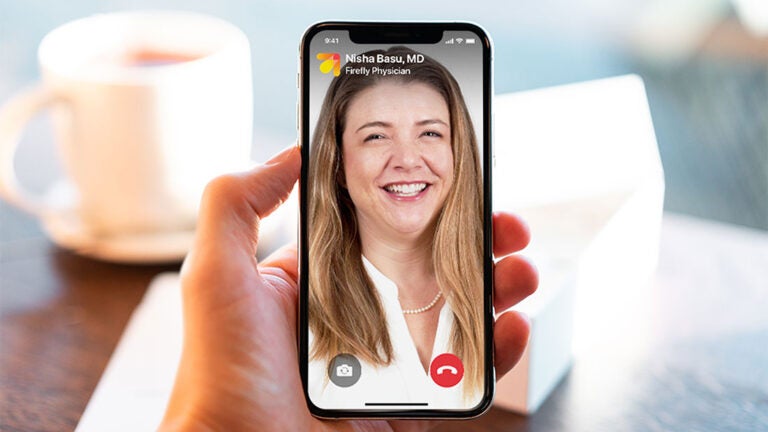
, a virtual primary care provider in Massachusetts since 2018, has seen membership increase amid the coronavirus pandemic.
“I did not realize when I came on as medical director over a year ago that we’d be designing something that would actually be very, very useful in a pandemic situation,” said Nisha Basu, medical director at Firefly Health. “It’s not anything I could have ever anticipated.”
More health care providers are offering telemedicine because of the pandemic, Basu said. Patients at Firefly Health receive a physician, nurse practitioner, and health guide and check in regularly through video visits, phone calls, and the app, she said. Patients concerned about symptoms of COVID-19 first complete a special questionnaire on the Firefly Health app, she said.
“We gather some more information about their symptoms, about their risk factors, about their level of exposure,” she said. “Then we’ll do a video visit and, at times, we’ll recommend they go for testing. And then, at times, it’s something else. So, specifically in those times where it’s something else, we’ve saved that person from exposing themselves by going to a testing facility or using testing materials that may not be useful.”
Basu offered the following tips for preparing for a virtual doctor visit.
1. Set an agenda.
As you would with an in-person doctor’s visit, you should go into your virtual visit with an agenda, Basu said.
“You want to make sure that at the top of your agenda is your most concerning question,” she said. “You don’t want to bring up in the last five minutes that you are having chest pain.”
You should also be prepared to discuss how you are taking your medicine and have it handy during the call, she said. Questions to think about: Have you been able to take all of your medication? Are you keeping up with your refills? Do you need a refill?
“Physicians know that patients have a hard time taking every pill every day,” she said. “We really want your honest assessment of how often you are taking your meds.”
2. Take some vital signs.
“If you have the ability, check your weight, your blood pressure, and your temperature,” Basu said. “Especially if you scheduled an appointment for one of those issues.”
The information will be collected at the meeting, she said.
“Checking blood pressure at home can sometimes be challenging if you don’t have a few tips,” Basu said. “If there’s any question about how you check your blood pressure, bring your cuff to the video visit so you can show your clinician how you check it and your clinician can give you some feedback on whether that’s the right way to check it or not.”
You can borrow a blood pressure cuff from someone, she said, but if you have a diagnosis of high blood pressure then you should own your own.
3. Prepare your environment.
Make sure your phone or computer is charged and on do not disturb, she said.
A cordless headphone with a mic is a good idea, Basu said.
“You’ll be able to hear better,” she said. “We can hear you better, also.”
Then find a quiet place for your virtual appointment, she said.
“A lot of our patients have been doing their visits in their cars because they are at home with a bunch of people, they don’t have a quiet place,” she said. “The car works really well, as long as you’re not driving.”
You’ll also want a method for taking notes.
“If it’s a more traditional practice that’s converting to video visits, you may need something to take notes with,” Basu said. “In our practice, you don’t need to do that because we put our recommendations directly in what’s called ‘Care Plan’ in our app, so patients are able to access those later.”
Also, though most places will check your insurance eligibility prior to your first appointment, Basu said, it’s a good idea to have your insurance card available.
4. Ask how you should follow up.
It’s a good idea to ask how you may access your doctor again before the meeting is through, Basu said.
“Especially if it is your first time, it may be a little overwhelming,” Basu said. “You may forget something. So it’s important to know how to reach that clinician afterwards if you have questions.”
This is especially important for urgent care telemedicine, she said, when you may not necessarily see that same doctor again.
5. Don’t panic if you lose your connection.
“Sometimes calls get dropped, especially in the age of, we’re all overusing our Wi-Fi,” she said. “Most places will give you some instruction at the beginning of what will happen if the call drops.”
Basu said her practice calls the patient if the problem persists.
“It does seem that connectivity has been more of a challenge with multiple people streaming on their Wi-Fi networks at home,” she said.




To comment, please create a screen name in your profile
To comment, please verify your email address
Conversation
This discussion has ended. Please join elsewhere on Boston.com