
Mass. Nurses Association Calls for Stronger Ebola Preparedness Plan
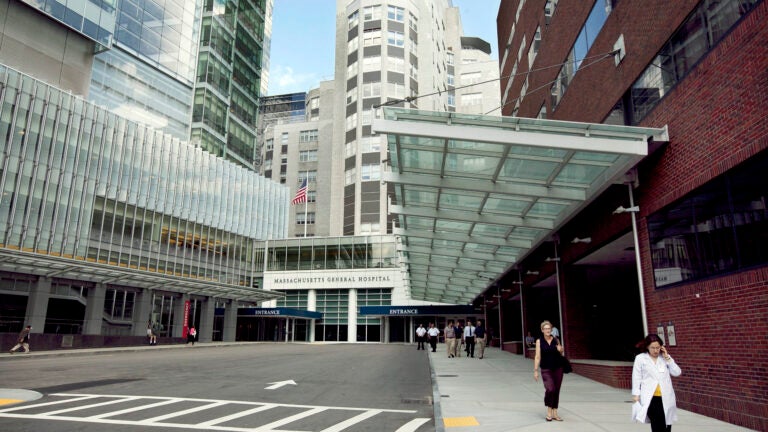
An unidentified patient was admitted to Massachusetts General Hospital for Ebola testing on Tuesday, but if the case had presented at a different hospital would staffs have been prepared?
The question has been plaguing the Massachusetts Nurses Association (MNA). Its members have been asking for statewide training and protocol to be put in place at Bay State hospitals for months.
David Schildmeier, the director of public communications for the MNA, acknowledged that several Massachusetts hospitals have been designated as Ebola treatment centers, but without “uniform and consistent training and preparation…there could be a break in the system that could cause exposure to a caregiver, or worse, to a community member.’’
On Oct. 31, the Massachusetts Department of Health and Human Services announced the formation of a collaborative system of hospitals — Baystate Medical Center, Beth Israel Deaconess Medical Center, Boston Medical Center, Brigham and Women’s Hospital, Massachusetts General Hospital, and Tufts Medical Center – which would treat a limited number of cases should the need arise.
“Hospitals are partnering with DPH to continually evaluate the specific needs and requirements to ensure an appropriate and coordinated system of care is available throughout the state,’’ according to a statement, but Schildmeier’s biggest concern is that the hospitals train staffs in different ways.
“The level of training differs from hospital to hospital and that’s our concern,’’ he said. “OSHA in California has dictated uniform protocols for handling Ebola and personal protective equipment for caregivers that are mandated for all hospitals. In our system we don’t have that and we need it.’’
Although the DPH is working with the hospitals and the Massachusetts Emergency Management Agency to prepare for Ebola cases, it is unable to enforce a set of rules across the state health spectrum.
“We have a system of private hospitals, either profit or non-profit, that operate independently and [the Massachusetts Department of Public Health] cannot force a hospital to adopt a certain policy or procedure or personal protective equipment,’’ Schildmeier said. “All they can do is offer guidelines, so that’s a problem.’’
Schildmeier also noted “the strong public system’’ in place in New York, where in October, New York Governor Andrew Cuomo designated eight of the state’s hospitals as treatment centers for potential Ebola patients.
New York’s Department of Health also issued a Commissioner’s Order requiring hospitals, diagnostic and treatment centers, and ambulance services to follow “protocols for identification, isolation and medical evaluation of patients requiring care.’’
Schildmeier believes Massachusetts hospitals must work with our own Department of Public Health to form a strong plan, similar to those in New York and California.
“I just think we all need to get together and we need to find a way to give authority to ensure that we have a uniform, consistent, well thought out, well prepared approach to this issue,’’ Schildmeier said. “Until we do, we’re still going to be at risk for making mistakes and we don’t want that to happen.’’





To comment, please create a screen name in your profile
To comment, please verify your email address
Conversation
This discussion has ended. Please join elsewhere on Boston.com