
Got Allergies? Thanks to Climate Change, Your Future Looks Pretty Sneezy
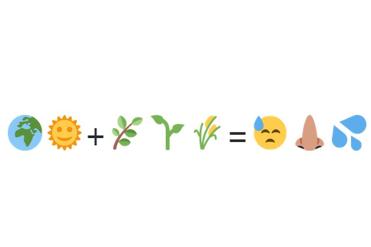
Though climate change policies might help reduce carbon emissions, new research suggests that increased carbon dioxide levels will make grass pollen allergies even more potent.
This month, researchers at the University of Massachusetts Amherst released a study predicting that an increase in carbon dioxide (CO2) levels from future climate change will elevate levels of grass pollen in the air by about 200 percent.
“I’m an allergy sufferer, and I am not looking forward to the future right now,’’ said Jennifer Albertine, a postdoctoral researcher in the Environmental Conservation department at UMass- Amherst, who worked on the research team. “I’m going to be exposed to more pollen, which I would assume means that I am going to have more symptoms.’’
To determine how plants will release their pollen in the air in the future, Albertine and her team potted grass plant seeds and stuck them in continuously-stirred tank reactors (CSTRs), which are used to expose plants to different gas concentration. The levels of Ozone (O3) and CO2 represented present and future levels of gas concentrations.

This undated image provided by NASA shows the ozone layer over the years, Sept. 17, 1979, top left, Oct. 7, 1989, top right, Oct. 9, 2006, lower left, and Oct. 1, 2010, lower right. As climate change continues to run its course, researchers have shown that grass pollen in the air will increase. (AP Photo/NASA)
When flowers emerged, researchers counted their pollen production and their protein content (Phl p5)–the devilish part of the plant for allergy sufferers.
Higher levels of O3, a known repressor of pollen and allergen production in Timothy grass, were no match against the massive amounts of pollen produced in the air. Elevated levels of CO2 increased the amount of grass pollen by approximately 50 percent per flower, regardless of ozone levels, according to the study published in PLOS One.
Albertine and her colleagues looked into grass as opposed to ragweed, which has been known as the poster child for allergies. She said grass can be found all over the world, while ragweed is only found in North America and Europe.
“Grasses are very important because more people in the world are exposed to grasses, so understanding how grass pollen production is going to change in the future is very important for getting a global assessment in changes in allergy response,’’ she said.
So what can be done for snifflers? Not much. Albertine said climate change and rising CO2 levels are inevitable.
“I think this is going to happen regardless of whether we want it to or not. I don’t know if we can even stop it at this point; it is irreversible,’’ she said.
Albertine encourages allergy sufferers like herself to understand that their symptoms could get worse, and to determine with their doctor the best methods to curb them.
“Be prepared… because we really can’t prevent it at this point,’’ she said.





To comment, please create a screen name in your profile
To comment, please verify your email address
Conversation
This discussion has ended. Please join elsewhere on Boston.com