
Sign up for the Today newsletter
Get everything you need to know to start your day, delivered right to your inbox every morning.
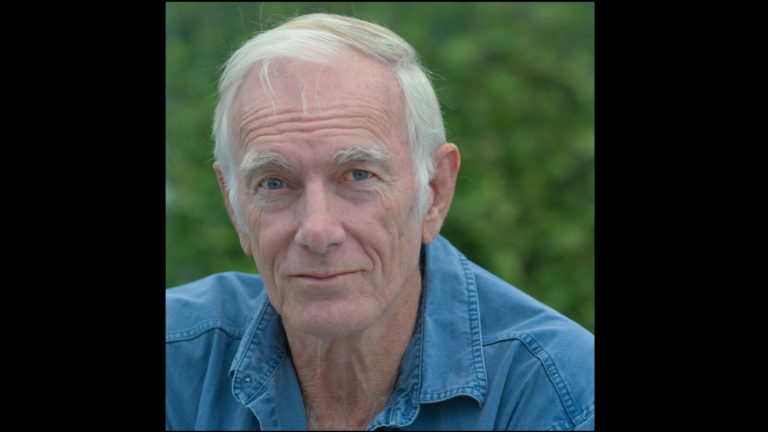
John Sayles has seen how the sausage is made.
After graduating from Williams College in Williamstown in 1972, the Oscar nominated screenwriter/director/novelist moved to East Boston and worked in a sausage factory in East Cambridge.
“It was a union job, so I was getting a whopping $4.40 an hour. And I was also sending out short stories,” Sayles, 75, tells me in our recent phone interview.
One submission to The Atlantic became his first novel, “Pride of the Bimbos” (1975). His second novel, the Boston-set “Union Dues” (1976), was a National Book Award Finalist for Fiction.
After “Bimbos” published, the East Boston sausage factory worker left for Santa Barbara, California to write screenplays. He’s been churning out novels, short stories, screenplays — often directing those screenplays — as a prolific idea factory ever since.
Case in point: I’m calling, ostensibly, to talk about his new novel, “Crucible,” on shelves now. The New Englander tells me he’s already written his next novel, “Gods of Gotham,” slated for a ‘27 release — and is currently writing yet another. (“I write pretty fast.”)
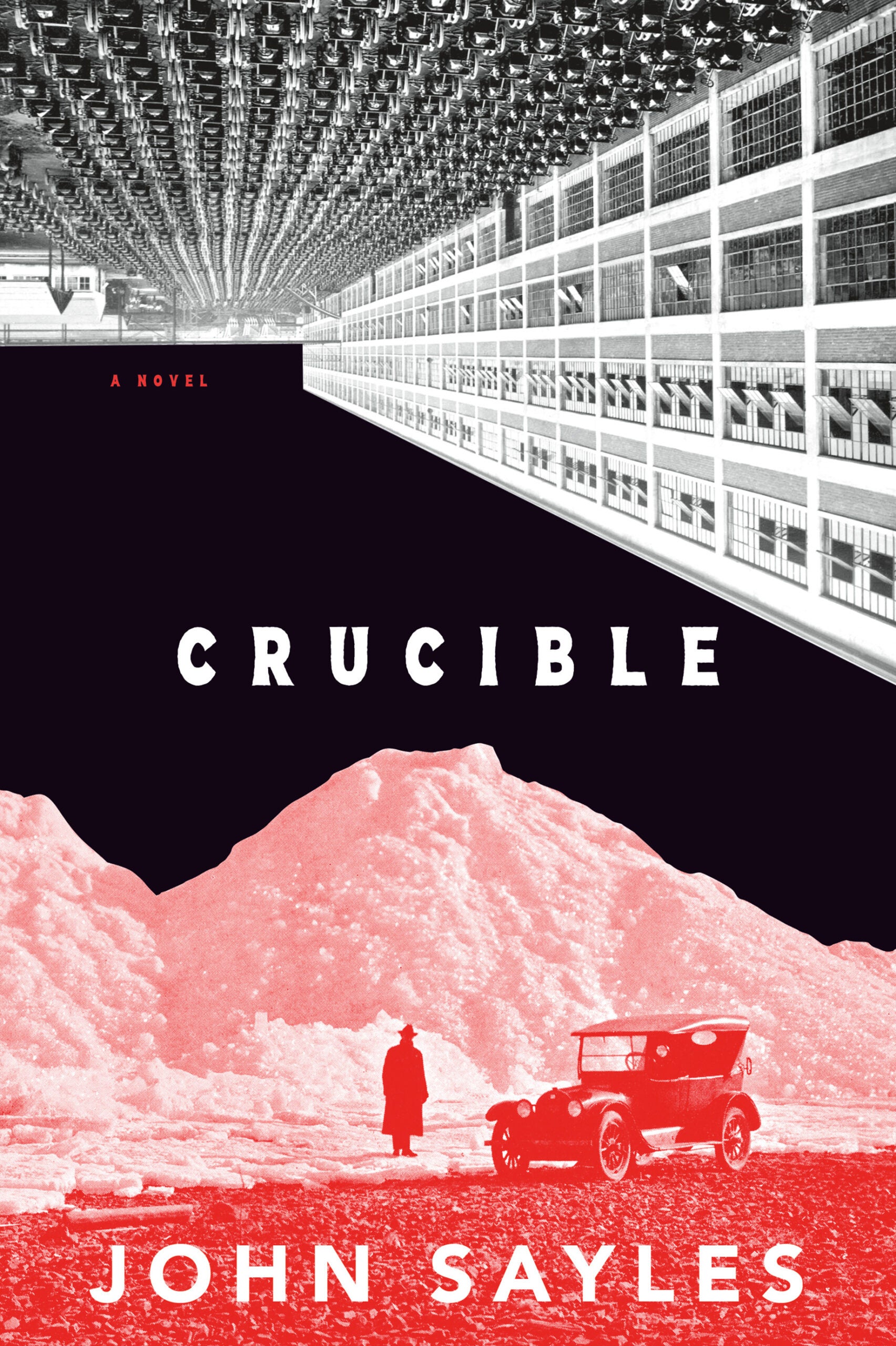
“Crucible,” his eighth novel, is a historical saga largely set in Detroit during Henry Ford’s reign. Nutshell: Already a gateway for manufactured Canadian liquor (“the good stuff,” Sayles tells me) during Prohibition, Detroit becomes a crucible for American class conflict as workers aim to unionize, and Black laborers migrate from the deep South to serve as strike insurance, per the publisher synopsis. Meanwhile, Ford bought a giant swath of Amazonian rainforest in Brazil to create his own city: Fordlandia. Sayles introduces us to a large and eclectic cast, including young radicals, Brazilian rubber tappers, event muralist Diego Rivera.
Now, if you’re an indie film buff, Sayles is a household name. He’s got a cult fanbase. Among his films: 1987’s “Matewan,” starring frequent Sayles collaborator Kingston’s Chris Cooper, James Earl Jones and Renzi; his 1996 Western “Lone Star” starring Cooper, Matthew McConaughey, Frances McDormand, and Kris Kristofferson; 2003’s “Casa de los Babys” starring Daryl Hannah, Maggie Gyllenhaal, and Mary Steenburgen.
“Boston is a very good place to talk about books. People still read books there. It’s still a good place to talk about movies. There’s still some good theaters there where you can see something not-mainstream,” Sayles tells me.
I called Sayles — who lives in Guilford, Conn. with his longtime partner and fellow Williams College alum Maggie Renzi — for a wide-ranging interview ahead of a string of upcoming events. Catch him Feb. 10 at Porter Square Books in Cambridge; Feb. 11 at Earfull at the Regattabar at the Charles Hotel; Feb. 12 at the Duxbury Senior Center and Book Love in Plymouth; and Feb. 14 at Jabberwocky in Newburyport.
The author/filmmaker took me inside his idea factory to see how the sausage is made. We talked Henry Ford, casting, why a story ends up on page vs. screen, streaming, the state of the film industry, and more.
John Sayles: You know, I’ve been thinking about writing something about Detroit for a long time. Growing up in the ’50s, Motor City was so iconic. That’s where American industry was centered. It was one of the first places where a factory worker could own a car and house, could have a middle-class American existence.
Then a lot of stuff happened, and it all started to fall apart. The auto industry had to deal with unionization. Henry Ford was the last of the robber barons. He always threatened, “If you guys vote for a union, I’ll close the factory down the next day.” In Detroit, a lot of things came into this crucible and got cooked together and sometimes created something useful, and sometimes exploded.
Then a couple of years ago, some producers optioned Greg Grandin’s [Pulitzer Prize-nominated] book “Fordlandia: The Rise and Fall of Henry Ford’s Forgotten Jungle City.” They asked me to go around and pitch it as a TV series — it would’ve made a good one, but we got no traction. But I [realized], Oh, here’s the imperialist part of the equation: Ford’s idea of “I’m going to control things down to the tiniest bolt in my empire. Why not create a city?”
It’s broad strokes at first. I read histories of the company, the Ford family. Then it moves to very specific stuff — how this particular car was manufactured in 1937. Two neighborhoods aren’t there anymore, so I got street maps from 1927, 1938 to see where my characters were walking.
An historical arc I can hang a good story on. The great thing about historical fiction is somebody’s written your over-plot and timeline for you. You can choose: What part of that has a tellable story? Once you find your characters, you think: What events do I want to be at? Which of my characters would have to be there? You get a feel for what the book might be, which characters might lead you in a direction you want to go.
Usually [a screenplay] is something where I feel: “This is a two-hour story.” If you’re making a TV series, it’s more of a question. But there are stories that fit into that two-hour slot, and others that are too big, where you need a novel or a TV series to tell it.
Sometimes it’s just a physical thing. For example, I’ve read a lot of Westerns. But something about horses crossing water — I’d rather see that on screen.
At least three of my novels — “A Moment in the Sun,” “Jamie MacGillivray,” and “To Save the Man” — started as screenplays. We weren’t able to raise the money to make them. They sit for 10, 15 years, and you feel: “God, that was such a good story. Maybe I can do something with it.”
Once it’s a novel, stories tend to expand because you don’t have to worry about whether you can afford something.
Well, for example, half my novel “A Moment in the Sun” (2011) is set during the Philippine-American war. You could spend a good four or five years [filming] that. When I made the movie, “Amigo” (2010), I took one incident [from the book]. So that’s an example of me having this big, big story and saying, “What aspect of it makes a good movie?”
Another example, “Matewan.” There’s a kid in my second novel, “Union Dues,” who’s telling these people in Boston a story about his grandfather. It’s three pages. I said, “That would make a good movie.” That grandfather is the kid in “Matewan.”
I haven’t seen it yet. [laughs] And it’s been so hard to raise money for movies. The last few years, [films] have fallen apart at the last minute a couple times. So if I write another screenplay, I’ll have to go: “What’s going to cost me the least amount of money?”
I always had to think of it. Right down to, “Can this scene be set during day instead of night?” Because night shootings are more expensive. Or, “Is there an actor who has four lines here, and then a week later, comes back for one line? Can we consolidate that, or should we give that line to a different actor so we don’t have to carry him for three weeks?”
I was living in East Boston, and submitted a story to The Atlantic. I got a notice saying: “It’s too long for a short story, but if you make it into a novel, we’ll read it.” I turned that into a novel [“Pride of the Bimbos”] and they published it. Then I got an agent. That book agency had a deal with a film agency — books were automatically considered for adaptation.
And they wanted a sample. I’d just read Eliot Asinof’s “Eight Men Out” and adapted it as an example of what I could do. A couple weeks later, I got a call from the head of the agency. He said, “Ah kid, you did a great job with this thing. Come out here and we’ll see what we can do with you.”
Yeah, just from the experience of having seen a lot of movies. Basically every human being is an AI machine. If you’ve seen dozens and dozens or hundreds of movies, you kind of [absorb] and know how a movie works.
I remember somebody sent me a screenplay for the first iteration of “The Stepford Wives” by William Goldman. It was very simple. I said, “God, if they’re paying people money, I can do this!” I read the book [by Ira Levin], saw how Goldman simplified things — he did a very good job. Now I knew the format — screen directions here, dialogue separate, don’t bogged down in technical things.
Chris was in a student movie made by Nancy Savoca, who was working as the production office coordinator on “Lianna.” She kept saying, “You gotta see this guy, Chris Cooper.” So he came in and read. He hadn’t been in anything, but he was intriguing. We felt — and this wouldn’t be the same today — that nobody’s telling us we have to hire a known actor, so we can cast [an unknown] as our lead.

I try not to. Actors — even ones who will work for scale [laughs] — may not be necessarily available, or they might’ve just played a similar role and not want to do it again. So I try to write a good part, then say, “Okay. Here’s a bunch of actors I’d like to work with again — is there anything for them here?”
No, we have a couple movies we’ve been trying to make for a long time. There’s a Western that Chris Cooper would have a big part in — that’s fallen apart at the last minute twice now. It’s a really hard time to get a standalone feature made. If it’s an independent movie and you don’t have Timothée Chalamet — which, he’s a good actor, and it would be a good thing to have him — but, he’ll get a movie made. There’s not that many people where they’ll just say, “If he’s in it, we’ll make it.”
Boy, if I can get the money to make a movie, I’d like to. But it’s: Stand in line. An awful lot of good directors I know haven’t directed in 5, 10, 15 years.
People in power [in the industry] are doing pretty much what they can to kill the theatrical market. But also just culture and life — I read an article that film professors are finding that students don’t have the attention span to watch a whole movie.
I’ve been hearing this from film professors for a long time. [It’s] going to be harder and harder to get people into a theater. And there are fewer screens that show off-Hollywood movies.
There was a golden age of streaming. A lot of young people got into the business that way. But it was a false economic situation. The streamers were looked at by Wall Street as: “These are skyrocketing. They’re expanding all the time.” What they weren’t doing was necessarily making a profit.
Then during and just before COVID, people started unsubscribing. Too much was getting made. They were signed up to three different streamers and realized: “It’s too expensive; I can’t watch all these shows.” So there was an end to it. All of a sudden, studios are making one-third of the product they used to. A lot of people are out of work.
I really liked “Hamnet.” It was a great example of the book author [Maggie O’Farrell] being asked for input, then taking a novel — that was very different in many ways — and getting the most out of it on screen.
Interview has been edited and condensed. Saylses will be at Porter Square Books in Cambridge Feb. 10; Earfull at the Regattabar at the Charles Hotel Feb. 11; Book Love in Plymouth Feb. 12; and Jabberwocky in Newburyport Feb. 14.
Lauren Daley is a freelance culture writer. She can be reached at [email protected]. She tweets @laurendaley1, and Instagrams at @laurendaley1. Read more stories on Facebook here.
Get everything you need to know to start your day, delivered right to your inbox every morning.



To comment, please create a screen name in your profile
To comment, please verify your email address
Conversation
This discussion has ended. Please join elsewhere on Boston.com