
Take a break from scrolling at New Bedford’s 25-hour ‘Moby-Dick’ marathon
Some 2,500 people are expected at the 30th annual marathon reading of Melville’s classic — a ritual organizers call “cathartic and communal.”
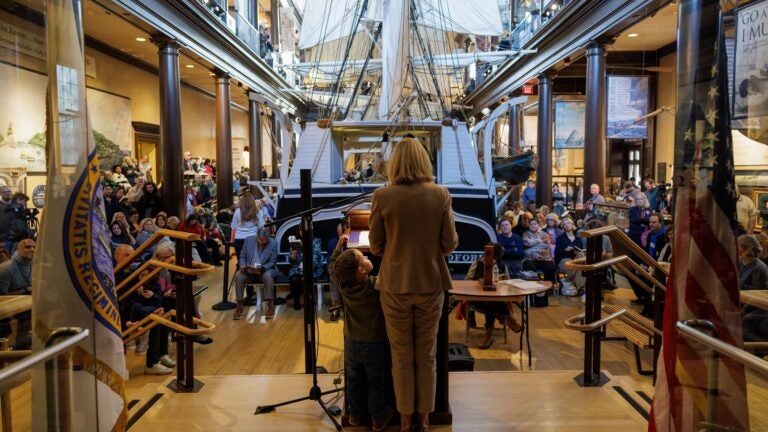
We live in an age of endless quick-scrolling, screens and flitting through bits and blurbs on social media without pause, a world where robots write essays.
If you need some reassurance that books still matter in 2026, that literacy is alive, that humans still gather for art, culture, and meaningful discussion in communal places, look no further than The New Bedford Whaling Museum this weekend.
“These days, everyone’s just scroll, scroll, scroll. You won’t see a lot of phones this weekend other than people taking pictures,” said Amanda McMullen, president and CEO of the museum. “It’s refreshing.”
Their 30th Annual “Moby-Dick” Marathon — in which some 250 volunteers take turns reading Herman Melville’s classic aloud, cover to cover, over the course of some 25 hours — kicks off Jan. 3 at noon, 185 years to the day that Melville left the port of New Bedford aboard the whaleship Acushnet.
That journey inspired his 1851 novel about Captain Ahab and the elusive white whale — and nearly two centuries later, its pull hasn’t faded.
McMullen calls the annual reading “cathartic and communal.”
The event is free. Come and go as you please. Listen for a chapter to two, or stay the whole night. Readings happen in a few different rooms, simulcast throughout the museum for folks to hear no matter where they are.
If you can’t be there, watch via livestream on the museum’s YouTube.
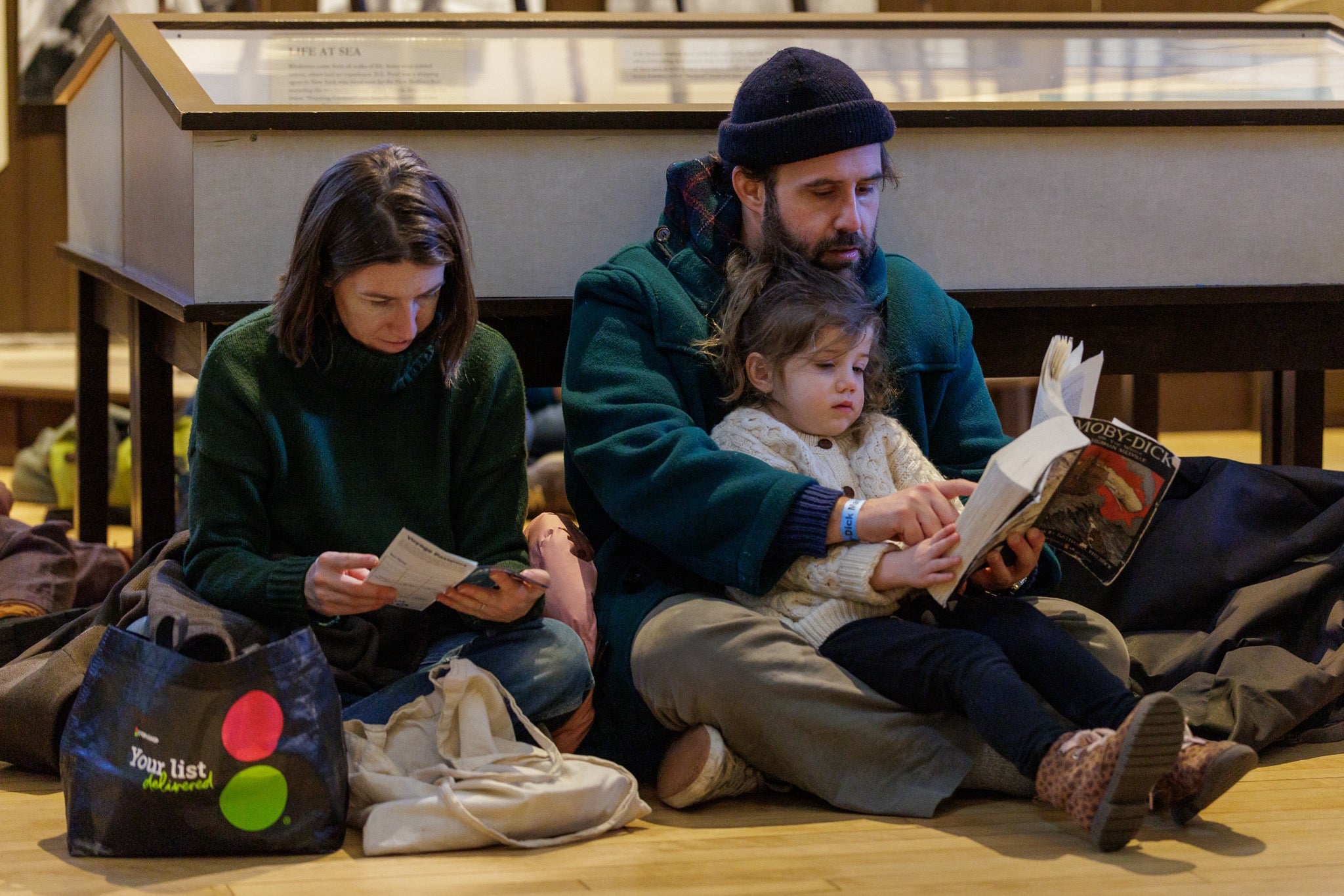
“People look at it as a moving party,” McMullen says. “Generally, there are 100, 150 people who stay the night. They might be reading at 2 or 3 a.m., or they just love it. We’ve had families camp out. There are hearty souls who listen to all 25 hours. But many come and go. It’s a progressive party.”
The party has humble roots. It began in 1997, on the suggestion of museum volunteer, the late Irwin Marks of Achushet.
Three decades on, it’s grown to boast scholar conversations, “Stump the Scholars” trivia game, live performances, a movie, activities, a pop-up cafe and a mini-marathon reading of the Portuguese adaptation of “Moby-Dick” by Tiago Patrício.
Mini-readings will start simultaneously in Lisbon, the Azores, Madeira and Cape Verde, McMullen said. Each site hosts its own reading. At 1:45 p.m. Massachusetts time, all sites will greet each other over Zoom. The feed then stays on, but each site turns down the volume, so readers can see their fellow readers across the globe.
Some 1,000 are pre-registered for New Bedford’s event, including a record-high 250 readers. But McMullen expects around 2,500 to attend — matching last year’s attendance.
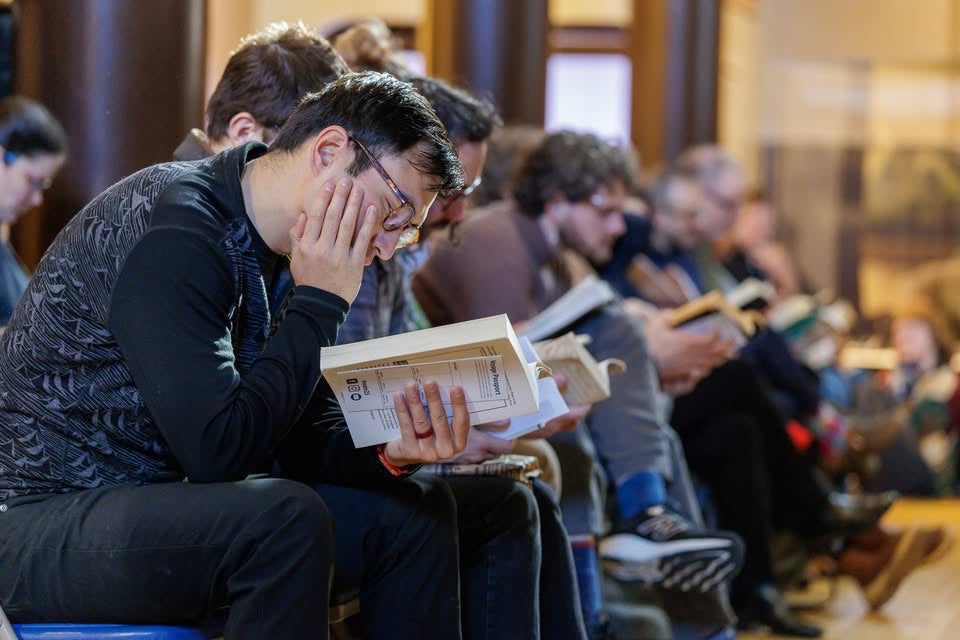
Massachusetts’s inaugural Poet Laureate Regie Gibson — an assistant professor at Berklee College of Music — will read the first passage and famous opening line: “Call me Ishmael.”
I had a wide-ranging interview with McMullen about what we can expect, why she loves the event, how “Moby-Dick” introduced her to her husband, and reading Melville to her dog.
Boston.com: So has anyone attended all 30 years?
McMullen: That’s a great question. The last time we did roll-call, we had a few people celebrating their 20th. We’ll see if anyone self-identifies as a 30-year attendee this year. Nothing would surprise me about this program.
You must get diehard returnees.
Absolutely. We did an interesting thing this fall, Lauren. We had a virtual “Moby-Dick” book club. Hundreds of people registered. There were definitely die-hards. What’s fun is that some people only know each other only through this marathon. So people were saying, “Oh, I can’t wait to see you again this year!” It’s like a family reunion.
Like summer camp. That’s great.
That’s what it’s become. But I also love when it’s someone’s first experience, it’s been on their bucket-list for years. They say, “I’ve meant to come to this forever.” They’re like a kid at Disney World with their eyes wide open.
[laughs] I love that. And you must get a lot of teachers and Melville disciples.
Yes. And we’ve partnered with the Melville Society Cultural Project scholars. They really help make this happen. I’ve always said, if you want to feel inadequate intellectually, hang out with the Melville scholars. [laughs] But they make the text so accessible and relatable — I think that’s why people respond to them so well.
Do people come from all over the country?
All over the world. Last year we had probably three dozen different states represented, and people from Australia, China, Brazil, Germany.
Why the Portuguese mini-marathon? Just because of New Bedford’s deep roots there?
Exactly. And because there’s such a global story, and so many relevant points from a Portuguese-language standpoint, the Lusophone world. But yes, because of New Bedford’s strong Portuguese connections and roots through whaling.
What do you love about the marthaton?
It’s exciting. It’s a happening. It’s such a great way to start the year. For me, it’s a clean slate. And I always hear the book differently depending on world conditions. It all washes over you differently.
And it’s communal. There are these great moments where you’ll see two people across the room smirk at the same line, or have a similar reaction. Strangers are in it together. There’s something community-centric about it that is so appealing.
You said you’ll read the epilogue.
I’m already practicing. [laughs] It’s very short compared to most passages, but Melville loved a run-on sentence. I really have to practice the cadence — where do I take a breath?
[laughs] I bet.
I recite it to my dog. She listens to me as I practice at night.
[laughs] I love it.
So it’s a little pressure-inducing, but it’s great. There’s nothing like that closing moment, when the room erupts in cheers and joy, laughter and clapping and sadness and happy tears. A range of every emotion. It’s beautiful. It’s communal.
You started at the Whaling Museum in 2018. Were you a Melville fan before that?
Truth be told, I struggled with Melville in high school. I think many people did. I don’t think I understood it.
That’s probably true for most people.
I do find there’s a humanity in “Moby-Dick” that’s appealing to me at my age now. He writes so beautifully about the human condition — particularly how we treat each other and make assumptions about each other.
But the funniest thing is, I have a connection to “Moby-Dick”: it’s how I met my husband, working on a cruise ship. In college, he read “Moby-Dick,” and thought, “ I’m going to go work at sea.” I’d been working a summer job on this cruise ship out of Warren, Rhode Island. So the back of our wedding program started with, “Call me Ishmael,” because if he didn’t read Melville, we never would’ve met.
No way. That’s amazing.
[laughs] So it’s a funny full-circle experience that I’m now running this museum, which has a great “Moby-Dick” program. Life happens in weird bends.
In our world of endless quick scrolling, I just love the idea of people logging off, slowing down to read a long 19th century novel together.
That’s one thing I love the most. You’ll see a lot of people knitting, crocheting, reading along with their own copies of the book— but you won’t see a lot of phones.
You start a journey with total strangers, but by Sunday, you end up running into people you’ve met. Celebrities develop throughout the weekend – readers who do certain voices. “Oh my god. Did you hear the guy who did chapter 22?”
That’s so cool.
There’s so much written about the loss of our third place. We’ve got work, we’ve got life, but we’re missing the community piece. So that’s what I love about it. Connecting with strangers under one roof. Museums fill that role of the third place significantly.
See a full schedule and all details here. Lauren Daley is a freelance culture writer. She can be reached at [email protected]. She tweets @laurendaley1, and Instagrams at @laurendaley1. Read more stories on Facebook here.
Sorry. This form is no longer available.





To comment, please create a screen name in your profile
To comment, please verify your email address
Conversation
This discussion has ended. Please join elsewhere on Boston.com