
Sign up for the Today newsletter
Get everything you need to know to start your day, delivered right to your inbox every morning.
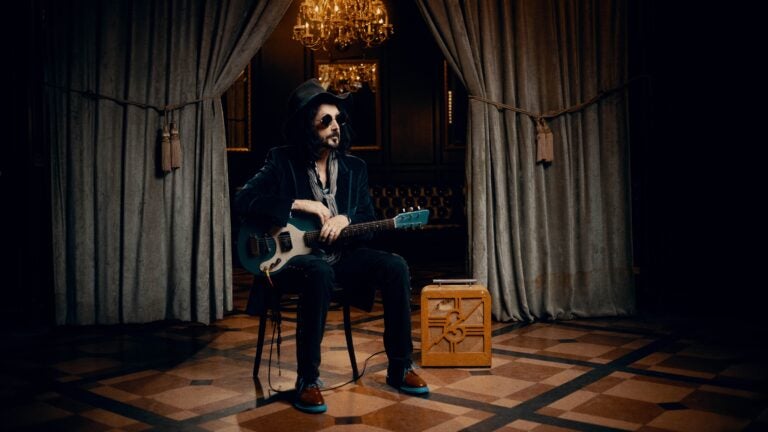
One Boston night in 1976, some new band called Tom Petty and the Heartbreakers opened for Somerville’s Al Kooper at Paul’s Mall.
Shy lead guitarist Mike Campbell turned away from the audience, head down, half-facing drummer Stan Lynch.
But Lynch wanted to make an impression here. He motioned to Campbell to face the Boston crowd: “You’re the lead guitarist, dumbass!”
So during a solo, Campbell threw his head back and raised his guitar in the air. It “went right through the thin drop ceiling … I yanked the neck out in a cloud of asbestos dust and a fat, gray rat fell through the hole. It splatted flat at my feet … Tom jumped like he was step-dancing as it ran past him. Stan howled with laughter.”
So writes Campbell in his illuminating new memoir and instant New York Times bestseller, “Heartbreaker.”
When I call Campbell to talk about the Heartbreakers and Boston, the Paul’s Mall rat is the first story he brings up.
“That pretty well sums up those days,” Campbell, 75, tells me with a laugh. “There’s a live bootleg of that Paul’s Mall gig out there somewhere. The band sounds good. We were just finding our feet, you know, but we were definitely a unit.”
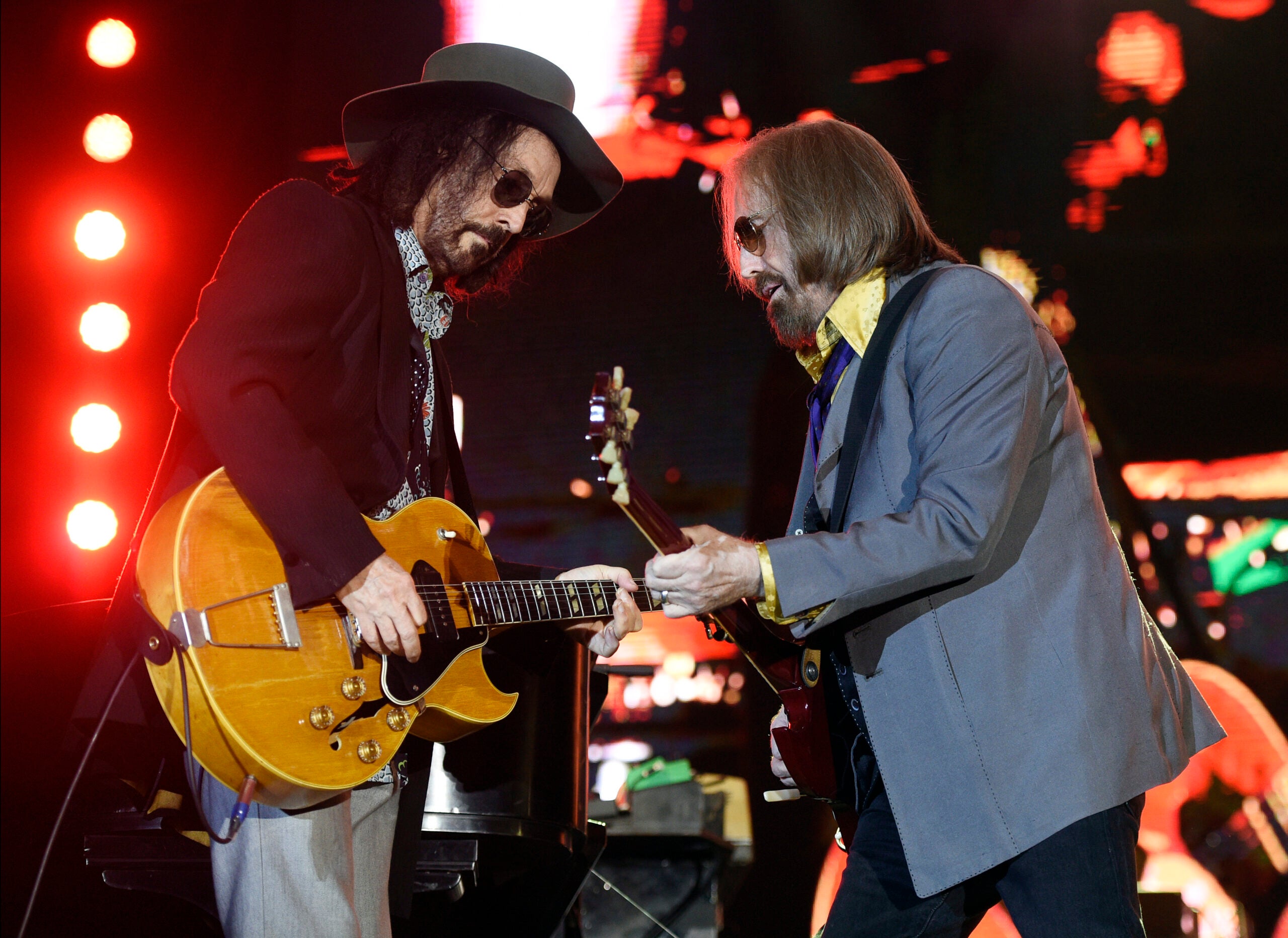
New England is all over this book, actually. Often as growth-marks notched on a wall, rings of a tree.
If the Paul’s Mall rat sums up their early days, then Boston’s WBCN — one of the first stations to give the band airtime — sums up their breaking through.
“God bless ’em,” Campbell tells me of Boston’s groundbreaking rock station.
We even feature in their pop-peak — their dream gig of playing the Super Bowl in ’07: “The Patriots led the Giants 7-3 at the half. It was time,” Campbell writes. “It felt like a dream. I thought, this is about as big as it gets…”
For Campbell, Boston was also a place of rebirth after losing Petty in 2017, and the Heartbreakers era ended. In 2019, he was touring with Fleetwood Mac when a record company approached him at TD Garden. Mike Campbell and the Dirty Knobs were born.
“Boston’s a musical place. I love that city. The fans are always great,” Campbell tells me. “I like the whole vibe. I’ve always loved going there. I like the bricks, I like the music. I like the Irish pubs. I love the Commons — that pond and the statues of the ducks. Shopping on Newbury Street — I love that spot,” says the Jacksonville, Florida native. “In fact, my secretary once said, ‘If you could live anywhere else, where else would you live?’ I said, ‘Well, maybe Boston, except it’s too cold in the winter.’”
I grew up with Tom Petty and The Heartbreakers.
Maybe you were there: All of us cheering wildly in Mansfield back when it was Tweeter Center, before that, Great Woods. Dancing to “Breakdown.” Shouting with something near glee, all of us meaning every word: You don’t know how it feels to be me.
But I didn’t know the band until now.
In his candid new memoir “Heartbreaker,” with co-writer/ Connecticut native Ari Surdoval, the prolific guitar hero Campbell, 75, peels back the curtain to shine a light on his “rags-to-riches” life, much of it spent with Petty.
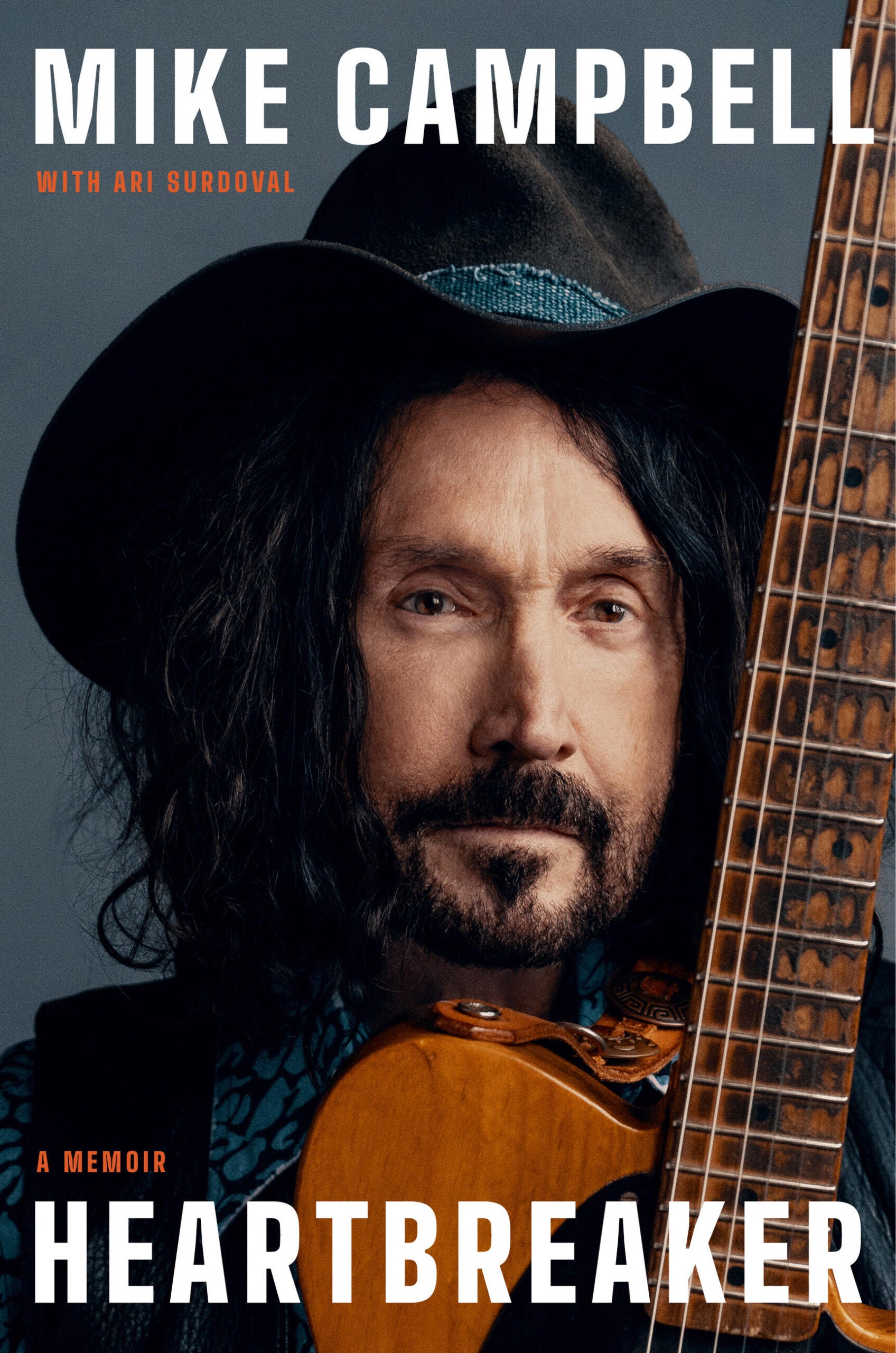
It reads like a diary, peppered with local references. There’s many a cameo from Somerville’s Kooper and Boston’s J. Geils Band. Among the photos included in the book: a polaroid of Campbell celebrating his 40th birthday in Providence, R.I.
A must-read for fans, I came away with new insights into a Who’s Who of 20th Century Rockers, from Bob Dylan to George Harrison to Stevie Nicks — and felt I finally met Petty and Campbell.
“This is the first time one of us has tried to tell our story … Nobody would ever have imagined it would be me, of all people,” Campbell writes. “I was never much of a talker.”
Growing up, Campbell was a quiet straight-A kid, the type who knew the answers but was too shy to raise his hand. He grew up poor, from a “broken home,” he says. A natural loner, his friends were his records and guitar.
In college in Gainesville, Florida, he met scrappy local Tom Petty. Petty comes to life as a charming, wily alley cat, constantly dodging fights, claws out, and with a laser focus on making it big. He convinces Campbell to drop out of college to join the band, even though it means Campbell might get drafted. Tom “told me not to worry about that. He’d waved it away like it was nothing.”
Later, the band gets sued by a record company and distributor over rights. “At a meeting in some big lawyer’s office in Century City, they laid out their case … Tom nodded … As he listened he pulled out that little jackknife he carried … When they finished he pointed the knife at them and matter-of-factly explained … ‘I’ll sell f—ing peanuts before I give in to you.’”
I laughed at so many anecdotes that reveal Petty’s balls-to-the-wall attitude and fearless humor:
Once, in Florida, a car-full of dudes saw Tom’s long blond hair waving from his car and started catcalling, thinking he was a woman. “Tom had a pair of those plastic vampire teeth on the dash. He popped them in his mouth, and when he stopped at a red light, the car pulled alongside him. Tom looked over and winked … smiled with the fangs in and gave them the finger. They chased him all the way [home] screaming he was a dead man.”
The band has strong New England roots via Benmont Tench. In fact, one could argue if not for Boston’s music scene, the Heartbreakers might’ve never existed.
The Heartbreakers’ keyboardist arrived at Phillips Exeter Academy in New Hampshire, as “a sweet, small piano prodigy from the South.”
Tench first heard the blues in his New Hampshire dorm and “it lit him up like a firefly. This was it. This was the stuff,” Campbell writes. “At Exeter he discovered MC5 and Led Zeppelin. He saw them live on a bill with Johnny Winter at the old Boston Garden. A kid down the hall in his dorm played him ‘Heroin’ by the Velvet Underground and it blew his mind. He couldn’t get enough of music — he wanted to play it, read about it, talk about it, live in it.”
Years later, it was the Exeter alum who would gather together what became the Heartbreakers one late night in LA. Campbell writes, “his little midnight demo session would change my life forever.”
I urge you to pop in earbuds for the audiobook. The best moments are hearing Campbell stifle his laughs — or even break into a laugh. (I love that they didn’t go back and re-record.) It’s organic. For example: when he’s narrating the awkward moment of realizing their first gig is in a strip club. “I turned to her but I didn’t know where to look,” he narrates, unable to suppress a laugh.
When he reads the chapter on Petty’s passing, Campbell’s voice gets noticeably shaky. His voice breaks completely when he reads about sitting by Petty’s hospital bed before they pull the plug: “I closed my eyes. I finally told him. ‘I love you, brother.’”
This book will bring back all kinds of memories — and shine new light on our connections — for Boston Heartbreakers fans. I had to call Campbell.
Mike Campbell: I never thought of it at all. A friend of mine, Jaan Uhelszki, who co-founded Creem Magazine back in the day, had an author friend [Ari Surdoval]. She said, “He’s got to do a book with you.” So she spearheaded the whole thing. I was just sitting here.
Oh man, thank you. That was the hardest part of the whole thing.
Cathartic is a good word. It was nostalgic and emotional at times as I remembered things in my life that were sad, here and there. But that’s all part of the process. I don’t typically like nostalgia — I like to think forward, but the book forced me to re-feel some things.
I didn’t know that until [working on this book]. I learned a lot about Randall doing this. He never mentioned it to us [at the time]. In interviews for this book, he came out with all the details of that incident, and it pretty well shocked me. I mean, the South could be pretty brutal in that way back in the day.
Yeah, if you could call it a tour [laughs]. I remember Kooper had a t-shirt with a woman’s body and his face on it. It said: “Al not Alan.”
He’s a good friend. He was there. He believed in us. He gave us a lot of support.
Well, it’s been a while. I’m not so close with anybody, really. [laughs] I don’t socialize much. I called him when the Super Sessions reissue came out — I was picking his brain about Mike Bloomfield’s guitar amp. He’s just a funny guy. I don’t talk to him a lot, but every time I do, he feels like a brother.
Yeah! They were a big influence on Tom. Watching Peter [Wolf’s] stage presence, I think Tom picked up some tips from him. They were a lot of fun to be on tour with. I remember Tom was going to give “Don’t Do Me Like That” to Peter because he thought they could have done it great.
I don’t know. With him you can never tell. I went “Oh, no, no, no! Don’t take them! Take us!” [laughs] He’s one of a kind, that guy. I love him.
Mr. Anarchy. [laughs] He loves stirring things up. We thought we were gonna get fired. [laughs] We were a little nervous. But Bob’s Bob. What can I say?
We don’t socialize, but I feel a brotherhood toward him. He’s not really open or friendly with anybody, but he likes musicians. He and I get along well.
Anything’s possible. But he’s busy. I’m busy. The Heartbreakers are busy. So I don’t see that happening again. That was probably the only time you’ll see that.
Bands are a marriage with five people. We assume our roles in the group, as brothers. Tom was the leader. I was sometimes a peacemaker and songwriter and guitar player. Stan was a loudmouth goof-off. Ben was a serious genius, and Ron was just a groover. So everybody has their own little turf, their personality that made the band the sum of the parts.
Maybe deep down, having my family fall apart as a kid scarred me to where I didn’t ever want to put anybody through that again. That may be part of my personality, I don’t know.
That’s brothers. [laughs] “I don’t like your jeans,” “Your haircut looks stupid.” That’s brothers.
But make no mistake, I’ve got plenty of ego. [laughs] I try to keep it in check.
I wrote a song this morning before we talked.
[laughs] I can barely keep up with my own songs I’m writing. He was overwhelmed. I just kept giving him all these ideas. He just kind of went, “Oh man, I can’t process all this stuff.” I understand.
If I had to pick one, probably “Here Comes My Girl.” I like the spirit of it, the heart of it. I had interesting chords, kind of suspended chords. Tom told me he was having trouble finding a melody, so he decided to just half-talk the verse— that’s how it came to life. That actually made it better. My mom always said that that was her favorite song. She thought it was about my daughter.
No, I didn’t. I was ignorant. I was insensitive. I thought, “If I can keep my s—it together, why can’t you? Just keep your s—t together.” I later [knew more] people that went through addiction, and got involved in their recovery. I learned a lot more about the disease. But I was just ignorant to the whole thing, pissed off. Like, “Stop f—g up.”
Yeah, the BMG record company came to that gig. They came backstage. I didn’t know them. They said “We thought you were one of the best things of the evening. Do you have any plans? If you want a record deal, let’s talk.” I said, Well, it’s funny you should mention it. I happen to have a band. It just fell on my lap. That’s the way my life has been. Things just fall on my lap.
I want to say something else about Boston. I really miss the old Boston Garden. When the Heartbreakers first broke big, we played the Garden. And the floor would vibrate. It would bounce with the bass. It was the coolest room. I miss it.
That was an amphitheater, right? It was called Great Woods?
Yeah, that was a great gig for us. We used to play there a lot because the money was good. But I prefer being indoors, like Boston Garden. There’s just more of a vibe.
Interview has been edited and condensed.
Lauren Daley is a freelance culture writer and regular Boston.com contributor. She can be reached at [email protected]. She tweets @laurendaley1, and Instagrams at @laurendaley1. Read more stories on Facebook here.
Get everything you need to know to start your day, delivered right to your inbox every morning.



To comment, please create a screen name in your profile
To comment, please verify your email address
Conversation
This discussion has ended. Please join elsewhere on Boston.com