
Sign up for Book Club
Stay up to date on local books news, events, and recommendations from Boston.com.
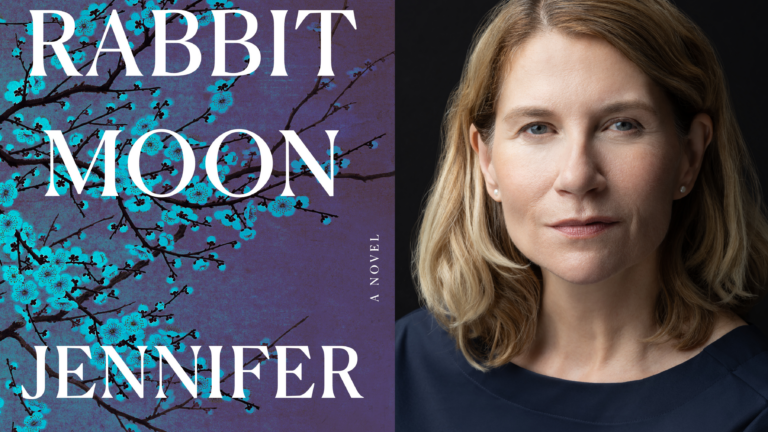
Growing up in a small coal-mining town in Appalachia, travel “wasn’t a thing,” Jennifer Haigh tells me in a recent phone interview from her Boston home.
“But I’ve wanted to go to China my whole life. Then this chance just fell out of the sky.”
That chance was a fellowship from the Shanghai Writers Association in 2016. Haigh applied and got it.
There, her wheels began turning when she witnessed the megacity’s traffic.
“Shanghai makes New York look like a cowtown. In 2016, it was one big traffic jam. I’d never seen anything like it. And for someone who’s lived in Boston for 20-something years, that’s saying something,” she tells me.
For Haigh — a New York Times bestselling author, Guggenheim fellow, and winner of the Mark Twain American Voice in Literature Award — all stories begin by asking one question: What if…?
“I don’t have an outline. I don’t think about plot. I think about causality,” Haigh tells me. “I make one thing happen and play out the consequence: What happened as a result of that? What did that lead to? And that?”
And in bustling Shanghai in 2016, Haigh asked, with anxiety: “What if I was hit by a car?”
“Rabbit Moon,” on shelves April 1, takes place in both New England and Shanghai. It opens with a traffic accident in Shanghai in 2016. Lindsey Litvak, a 22-year-old Newton native — who dropped out of Wesleyan to teach English in China — has been struck down in a Shanghai hit-and-run accident and is in a coma in a hospital. Authorities track down her divorced parents, Claire and Aaron, who rush to her bedside. They thought Lindsey was teaching English in Beijing — she’d actually been working as an escort in Shanghai.

Meanwhile, Lindsey’s 11-year-old sister Grace, who was adopted from China, is at a summer camp in New Hampshire, hoping her big sister is OK.
The meat of the story is the family baggage. We learn that when Lindsey was 16 (apparently, the age of consent in Massachusetts) she had an affair with married neighbor Dean Farrell, locally famous for his stint playing for the Red Sox. It’s a formative relationship for Lindsey. Married men behaving badly becomes an underlying theme here.
Book clubs, there’s a lot to unpack: the othering of East vs. West, #MeToo, Disney princesses, and far-reaching impacts of foreign adoption among other ripe-for-discussion topics.
A native of Barnesboro, Pennsylvania, Haigh has lived in Boston for some 23 years. She’ll launch “Rabbit Moon” April 2 by blending her two homes, in a sense. At Boston’s WBUR CitySpace, she’ll be in conversation with Pulitzer Prize winner Jayne Anne Phillips. ($20 GA admission, book sold separately.)
“This is a dream come true for me. Jayne Anne Phillips is an idol of mine. She’s from Appalachia as well, from West Virginia,” Haigh told me. “That she’s willing to get on stage with me and launch this book is so meaningful.”
I called Haigh, 56, to talk Shanghai, #MeToo, writing without a plan, her “uninteresting” divorce, changing book covers, and more.
Jennifer Haigh: I also have close friends and family members who adopted daughters from China, so that strand of the story is rooted in their experiences, too. I’ve heard a lot of different perspectives on that adoption question. Writing Grace completely draws on those experiences.
It’s really complicated. It’s complicated for adoptive parents, it’s complicated for adoptees. It’s also a hard thing to generalize because every adoption story is singular. No two families experience it the same way. My ex-partner — we were together for 10 years — was an adoptee. It was a transracial adoption, and he went through a process of making sense of that, figuring out who he was.
I was there with nine other international writers in a mixed-use apartment tower. The building where Lindsey lives is entirely modeled on that: On every floor, there are some apartments and some businesses — an acupuncture clinic, a hair salon, a dance studio. There was a lot of life coming and going. It was an interesting microcosm of the city at that point in time.
One thing I found striking is how quickly everything changes. You’d see buildings that looked brand new being torn down and replaced. The city was remodeling itself before your eyes. It was hard to get your bearings. It was dynamic in all ways, and I think this book reflects that. It’s so much faster-paced than anything I’ve ever written. That is absolutely a function of writing in Shanghai, where everything is moving at this accelerated pace.
Also, I love writing about divorced people. It’s one of my favorite subjects. I like writing about long relationships. Divorces are particularly interesting because the story of every divorced couple is implicitly the story of what went wrong.
Yes.
Not really.
[laughs] I had a starter marriage, I was married for five minutes when I was way too young. So it has none of the interesting hallmarks of the divorces I write about. We were kids, we were stupid. My divorce is actually the least interesting one I’ve ever been aware of.
Divorces like Aaron’s and Claire’s — where there are children and history — a whole story opens up for me. It’s about the moment after which nothing will ever be the same.
In “Rabbit Moon,” there are two such moments: One is when Lindsey gets hit by the car. The other is her affair with Dean Farrell, after which nothing is the same.
I guess the whole #MeToo moment, which was happening around that time. I know many women who’ve had such relationships. I myself had an experience — I was older than Lindsey — but I got involved with someone far too old for me. It was formative. Mine didn’t cause the destruction in my life that it causes in hers, but it could’ve. These stories are so common.
I know! That’s shocking.
Because she’s a blank slate when she gets involved with Dean Farrell, that creates this blueprint about how men are. It makes her distrust men for understandable reasons. You see her reenacting that same disastrous story with Shen, her client.
It was just suggested by observation. In this building where I was living, there were a lot of young women coming and going, very dressed up. Do I know they were sex workers? I don’t know, but I do kind of know.
At first, I thought maybe she was on her junior year abroad. The whole romance of the junior year abroad hangs over this book. But after I knew about Lindsey’s past with Dean Farrell, I felt it would be very challenging to get through four years. It felt truer that she’d drop out. The escort part came as I got further into writing.
[laughs] In her mind, this is the worst of American culture. Oh, my God, it’s here. In 2016, Shanghai Disney had just opened. So there was a real Disney presence in the city. That was disorienting, to see Mickey there. And, of course, Disney is such a North Star for Lindsay and [her friend] Johnny, for a lot of kids growing up. And it was just the hallmark of the openness of the moment — there was this receptivity to Western culture, to European culture, American culture.
It was completely intuitive. It’s hard to know sometimes why you make a narrative choice, or even that it was a choice. It felt right. Grace’s voice was so clear in my head. Part of it, I think, is because I first wrote her as a child. I just aged that voice. I imagined who she might’ve grown up to be.
No, I found out once I got there. The ending is always anxiety-producing for me because I never know how I’m going to land the plane. To take the pilot metaphor a little further, no one cares how good the takeoff was, if you crash the landing.
It has to do with the sisters. At one point, Grace looks at the moon at camp in New Hampshire and remembers when Lindsey told her this Chinese legend about rabbit ears in the moon. Grace feels that however far away Lindsey is, they’re looking at the same moon. It’s about the bond between these two sisters. I loved writing that relationship, and it was challenging because they’re never on stage together.
I grew up in a tiny coal-mining town in Appalachia. Both my grandfathers and six of my uncles were miners. There was nothing else to be.
My father was slightly different in that he was a schoolteacher. He went to college on the GI Bill, as did my mother. My mother was a high school librarian. I was lucky that I grew up with books in the house. That was not so common in that time and place. None of the kids I played with grew up with a dictionary in the house — I would swear to that. That in itself, was fairly extraordinary. We were 70 miles from a bookstore. I’ve always felt that if I grew up in the house next door, I’d be doing hair right now.
It was totally random. I had been here a couple times, passing through to the Cape. But I didn’t know anybody here. I didn’t have a job [or] boyfriend. I just liked it. And as it turns out, that’s a very good reason to move to a place.
The cover did change. It’s fairly typical, they try out different covers. I like the one they finally ended up with. The one with the Barbie-pink letters grew on me, too. It was spooky because that’s what Lindsey looks like in my head. I don’t even know how that painting existed in the world.
Yeah. It was weird. I was a little freaked out by that. Actually, that is very much how she looks in my head. But I like the one they went with.
It’s a mystery to me. They always ask me what I think — if said “I hate this,” they wouldn’t run it. But I can’t say “Do this instead.” That’s completely beyond my pay grade.
It’s very much a novel about the experience of travel — the isolation of it, the thrill, what’s disorienting, what feels dangerous. I grew up in Appalachia, and we never went anywhere. Nobody I knew went anywhere. Nobody had any money. So being able to travel is a surprise gift of my adulthood. It’s something, growing up, I wouldn’t have imagined I’d have done. I really feel like this book was a gift of travel. It’s a gift that was given to me.
This interview has been edited and condensed. Lauren Daley is a freelance culture writer and regular Boston.com contributor. She can be reached at [email protected]. She tweets @laurendaley1, and Instagrams at @laurendaley1. Read more stories on Facebook here.
Stay up to date on local books news, events, and recommendations from Boston.com.



To comment, please create a screen name in your profile
To comment, please verify your email address
Conversation
This discussion has ended. Please join elsewhere on Boston.com