
Sign up for the Today newsletter
Get everything you need to know to start your day, delivered right to your inbox every morning.
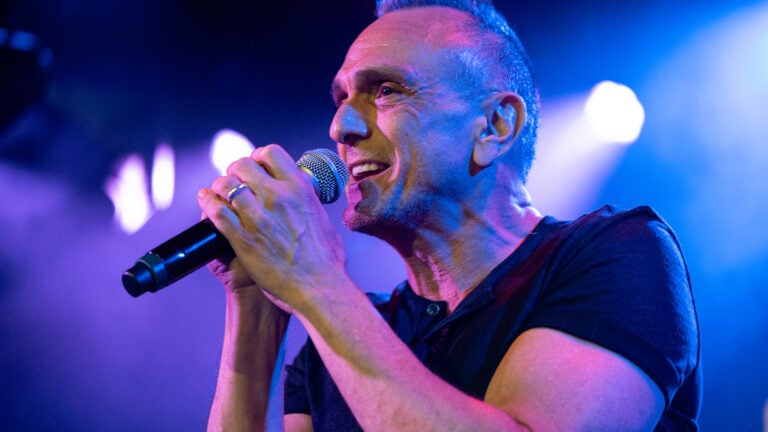
Hank Azaria voices a chunk of the population of Springfield.
Turns out he can voice Springsteen, too.
Almost eerily so.
In fact, I’m going to do something I’ve never done before, and ask you to stop reading for a few seconds to click on the video below, volume cranked, to hear how uncannily Azaria sounds like Springsteen.
… OK, come back. Yeah … Jeremy Allen White, you have competition.
The Emmy-winning Tufts alum/“The Simpsons” voice-actor/character actor can do such a dead-on Boss, that when Springsteen’s dentist showed him a video, Springsteen sent Azaria a message immediately.
“Bruce sent me a video from the dentist’s chair saying, ‘Hank, I just saw your “Prove it All Night,” I gotta say you nailed it!’ Literally made my life, Lauren. I can stop living now.”
I happen to call Azaria, 61, the day he was nominated for his 17th Emmy (Outstanding Character Voice-Over Performance) for his work voicing Springfield’s favorite bartender, Moe Szyslak.
But if fans approach the character actor on the street, it might be for anything from “Friends” to “Godzilla,” he said. “Mostly I’m the person where people say, ‘I know I know you. I just don’t know from where…’ Now I say: ‘I’m George Clooney. I just look awful in person.’”
The former Tufts drama student brings his EZ Street Band to East Greenwich, Rhode Island July 19 and — I couldn’t have asked for a better hook — to West Springfield’s Big E Fair Sept. 22 and 23. (Insert your own Simpsons hometown and/or E Street Band joke here. My head is whirring with them.)
In a wide-ranging interview, we talked Tufts, Conan, Boston, “Thunder Road,” sobriety, Matthew Perry, the problem with Apu, Springsteen, and more.
Hank Azaria: I turned 60 and was feeling a certain way about that, as the kids say. I got this crazy idea of doing a reverse-surprise party. Most of my friends are Springsteen fans like me, so I told everyone I had this Springsteen cover band coming to my party. But I didn’t tell them I’d been working for months to front it, and in fact, created this band.
I had no idea whether I’d sing one song or 12. Mostly it became a way to give myself a project, and distract myself from turning 60. I just got obsessed with it. I loved [working on the] imitation of Bruce’s voice so much that I actually tricked myself into learning to sing.
Several months, but I’m still perfecting it, Lauren. I feel like I get 8 percent better every week. My key has come up. I sing a little lower than Bruce, my voice a bit deeper, but I’m now close to Bruce’s key, which makes the impression better. I’m still refining it. It’s only in the last few months I feel I unlocked it, where it would pass muster if I were hired to play Bruce in a movie or on stage.
Oh, yeah. Beyond passion. I discovered the “Born to Run” album when I was 12 at summer camp. I love classic rock, like most men from that era. Bruce was the ultimate.
At the time, I didn’t know. I just loved the music. But looking back, two main things. One: Bruce’s ability to play a movie in your head, that storyteller aspect. In the show [breaks into Springsteen voice] I talk like Bruce, too. And I share some of the movies that play in my head based on the songs he’s singing.
[In regular voice] The other is Bruce’s ability to make you feel like he’s speaking directly to you. We all feel like Bruce is singing directly to us, about us.
I started that a few years ago to give to a variety of organizations. Primarily education, social justice, human rights, and recovery. I’m a sober guy, a recovery guy, so health and wellness also is big for me. We’ll give all over the place.
We donated to Tufts a few years ago to create a substance-free dorm, Simpson House. We were racking our brains: How do we create a social life for kids who don’t want to drink? One really good way to do it is to have them just all live together.
I tee up “Darkness on the Edge of Town” by connecting it to my sober journey because that album — that song— spoke to me that way. That album is about loneliness and disassociation and just the awful feeling that I know drove me to drink. Over the last few years, I’ve found it valuable to share that publicly with folks. I’m writing a book. I’m working on a one-man show.
Oh yeah. I don’t know any alcoholic who’s on top of the world and hasn’t dealt with depression – either in connection with drinking or separately. Bruce’s one-man show and his autobiography is a lot about all that.
He brought me to my first AA meeting. I talk about Matthew a lot in my one-man show. I went to my first Al-Anon meeting based on trying to help Matthew through one of his near-death episodes, of which, unfortunately, there were many. Matthew writing his book inspired me to share my own story.
As early as I can remember. [Breaks into Bugs Bunny impression] At first it was, ehhh, Bugs Bunny, doc. [In regular voice] I was really raised by the TV. I had quite a lonely childhood. Now, almost all children are screen addicts because of phones. But whatever version you could accomplish in the 1970s, I did with a big stupid Zenith color TV with 13 channels. I’d imitate everything I saw. I’d record myself, trying to perfect these impressions.
I found that played well at school. It got me attention, like a class clown thing. I didn’t realize it was a marketable skill until after college. I’d caught the acting bug by then.
I didn’t know what I wanted to do. I ended up spending most of my time in the [Balch] Arena Theater at Tufts. By the time I graduated, I knew I’d regret it if I didn’t give acting a shot. I went to New York trying to do theater, but the first jobs I got were in television. So I went to LA, got TV pilots, and met Matthew Perry. We did a pilot together when I was 22. “The Simpsons” job came through my theatrical agent — a weird side-door. I was 22, 23, Lauren, when I got “The Simpsons.”
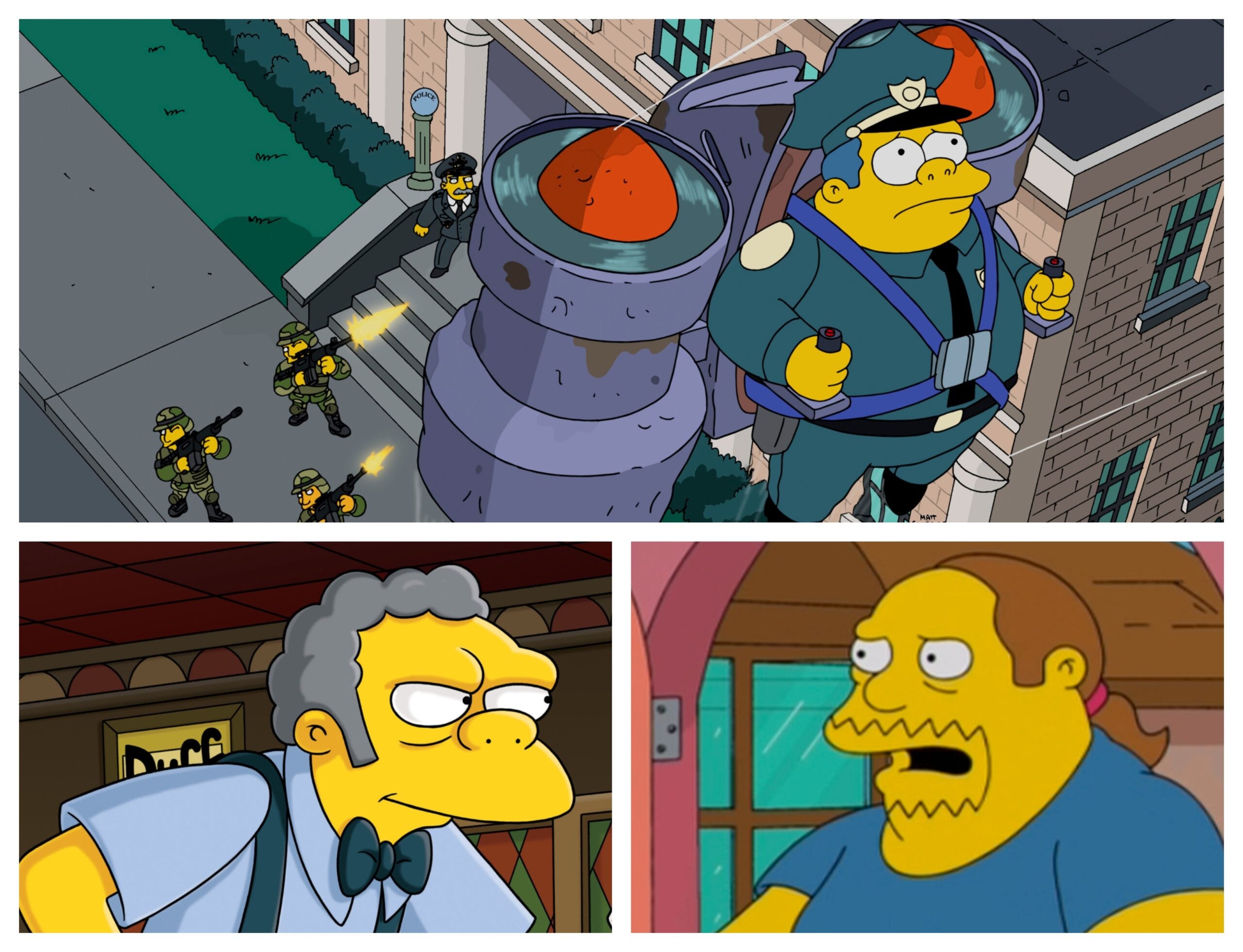
I’d done a voiceover for a cartoon, “Hollywood Dog” for FOX. The pilot never went anywhere. But the casting director at FOX knew me from that. Then [breaks into Moe the Bartender’s voice] originally I just did Moe da bahtendah. I auditioned, recorded it, and dat was dat.
Apu was third, and I spend a lot of the one-man show on how and why I stopped doing that voice. It’s almost like a TED talk. This whole journey I went on of discovering racial issues, social justice issues that I was totally oblivious to until 25 years into “The Simpsons” when somebody finally started saying, “This is actually not alright.” I get asked about this so much, in fact, that one reason I wanted to do the one-man show and write the book was to answer those questions.
I’m Jewish, my grandmother [had an accent] — once you lose the accent in America, if you’re white, you’re in the majority. But for a brown person, you can never fully assimilate. That’s where it goes from an insult or an annoyance to actually having teeth — it actually costs people of color. These stereotypes block folks from opportunity — from financial opportunity, from education, from really making their way and being included, and that is the difference.
When I looked into this, hate crimes, violence done against South Asian folks, often times when it was perpetrated, folks got called “Apu” and they’d be imitating my voice. That’s the difference. It’s obviously a lot more complicated than that. There’s tons of gray area, but that, in a nutshell, is the answer.
A lot. Dozens. Every sound I can possibly make has been mined by “The Simpsons.”
[In Moe voice] I love Moe. He’s da closest to my haaht. Sounds like he’s from Queens, where I growed up. Moe da bartender is probably my favorite of all.
Al Pacino is a hero of mine. [In Pacino voice] You take young Al Pacino, then make that voice gravelly, like Bruce Springsteen. [In Springsteen voice] Take Springsteen on one end [Pacino voice] and young Al Pacino on de udda end, [in Moe voice] in da middle deah is Moe da bah-tendendah. He’s a mash up of dem two.
A lot of my voices are impressions of family and friends. [breaks into Gargamel voice from “Smurfs” movie] Gargamel is a riff on my own mother. [Comic Book Guy voice] Comic Book Guy is a guy who lived next door to me freshman yeeearrr at Tufts.
[In Snake voice] Yes, my friend! Cliff from Tufts used to take a lot of substances and would report on the substances to me. He’d knock on my door and say, “Yo. Like, I’m totally seeing colors. I took some acid.” Then he’d come back an hour later: “Yeah, like, when I wave my hand in front of my face, it’s an after-image.”
[laughs] Yeah, I do those every few months to promote the band. People get a kick out of how quickly I can sort of change voices. So why not throw it out there.
“Cape Feare” [Season 5, episode 2] makes me laugh the hardest. I love a lot of Moe episodes. I love that over time, most of my characters started out as one-liners, eventually got episodes, then got whole story arcs.
Oh my God, yes. I love Conan. That was way before he was ever an on-camera personality. He wrote some of the greatest episodes of the show. That’s how I met Max Weinberg, Bruce’s drummer, from Conan’s show. My first public Bruce impression was on Conan. I invited Max to my 60th birthday party where we debuted this act. He played with us on “Thunder Road” and “Streets of Fire.”
My favorite growing up was “Jungleland” and kind of still is. I’d sit and look out my 14th floor window in Queens. I could see the whole Manhattan skyline. I would play that song over and over and over again. It’s cliche, but I’d dream of getting out of there. I love doing that song in our show.
As a vocal geek/mimic, I’m obsessed with working on this. As an older person who needed a passion project, as someone who never had motivation to learn to sing properly, this has gotten me to do that. As a way to express love for an artist who truly meant the world to me and inspired me, as a way to raise money for charity, as a way to perform in a totally brand new way — which I didn’t think was possible for me after 40 years of show business — as a way to sort of bypass a lot of BS of show biz and just have a joyful time as a performer and as a way to make these songs live for myself, and a way to recapture a piece of my youth — for all those reasons, I have so much joy in doing this.
Interview has been edited and condensed. Lauren Daley is a freelance culture writer and regular Boston.com contributor. She can be reached at [email protected]. She tweets @laurendaley1, and Instagrams at @laurendaley1. Read more stories on Facebook here.
Get everything you need to know to start your day, delivered right to your inbox every morning.




To comment, please create a screen name in your profile
To comment, please verify your email address
Conversation
This discussion has ended. Please join elsewhere on Boston.com