
This is Mayor Walsh’s five-point plan to put art at the center of Boston civic life
Mayor Walsh spoke at the Americans for the Arts convention currently being held in Boston.
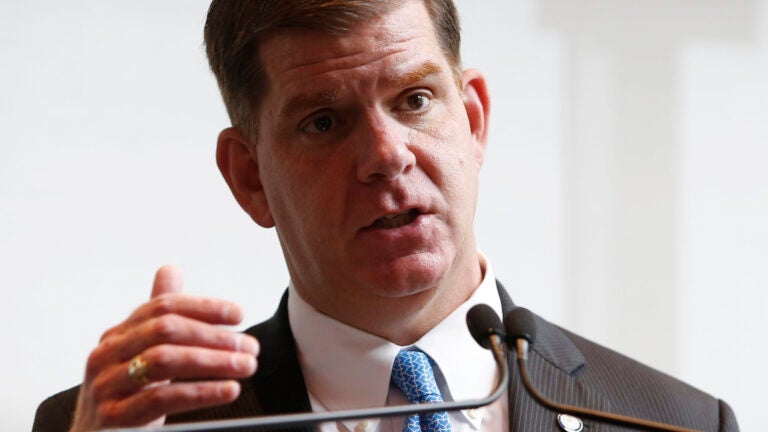
Mayor Marty Walsh wants the arts to be at the center of everything the city of Boston does.
Walsh officially launched the Boston Creates Cultural Plan, a 10-year effort to weave arts and culture “into the fabric of everyday life” in the city of Boston, during the Americans for the Arts Convention held at the Sheraton Hotel on Friday.
The plan identifies five goals to call for a “cultural shift” in the way city government and the private sector handle and prioritize arts and culture: create a fertile ground for a vibrant arts and cultural ecosystem; keep artists in Boston and attract new ones here; cultivate a city where “all cultural traditions and expressions are respected, promoted, and equitably resourced;” integrate arts and culture into all aspects of civic life; and to unite the public, private, and nonprofit sectors to generate resources for Boston’s arts and culture sector.
Walsh made the announcement during Americans for the Arts, an event that brings together leaders from around the country in arts, business, education, and government.
The convention is held in a different city every year, and this year’s event in Boston is the largest that the Americans for the Arts has seen in the past five years, Robert Lynch, Americans for the Arts CEO and president, said at the convention.
It’s the first time Boston has hosted the event since 1980.
Boston’s cultural makeup—its artists, performers, designers, and students—define the city’s public identity in many ways, Walsh said in a statement.
“The power of the arts — and their very real economic impact — runs through our great foundations, museums, theaters, and music venues, to our neighborhood nonprofits, to musicians and painters and performers on every block, to teachers and their students in every school,” Walsh said. “Arts and culture are part of our Boston’s storied past, but they are also at the heart of our contemporary identity, powerfully expressing who we have been, who we are, and who we hope to be.”
Last year, the city launched Boston Creates, a yearlong collaboration to come up with Boston’s first cultural plan in “many years,” Walsh said—the city’s Imagine 2030 plan is the first complete citywide planning process in more than 50 years.. The effort involved city officials listening to more than 5,000 people who participated in community conversations, town halls, focus groups, meetings, and surveys.
From those conversations, Walsh said, it became clear that Boston’s public, private, and nonprofit sectors need to work together by “better support[ing] local artists; breaking down walls that divide the cultural community; providing more and better spaces for art and artists; sharing cultural capital more widely and fairly; and fully recognizing our city’s diversity of creative and cultural identities.”
The Boston Creates plan includes embedding artists into city agencies from police departments to public health, setting aside public housing for low-income artists, incorporating a “percent for art” program into the budget by devoting one percent of annual borrowing to public art in major infrastructure projects, and infusing public art into the redesign projects of the Transportation and Public Works Department.
“We’re making the arts an integral part of city government because I believe art is an integral part of city life,” Walsh said to the more than 1,000 Americans for the Arts attendees at Friday’s keynote. “Art must be visible and accessible in the fabric of city life.”




To comment, please create a screen name in your profile
To comment, please verify your email address
Conversation
This discussion has ended. Please join elsewhere on Boston.com