
Sign up for the Today newsletter
Get everything you need to know to start your day, delivered right to your inbox every morning.
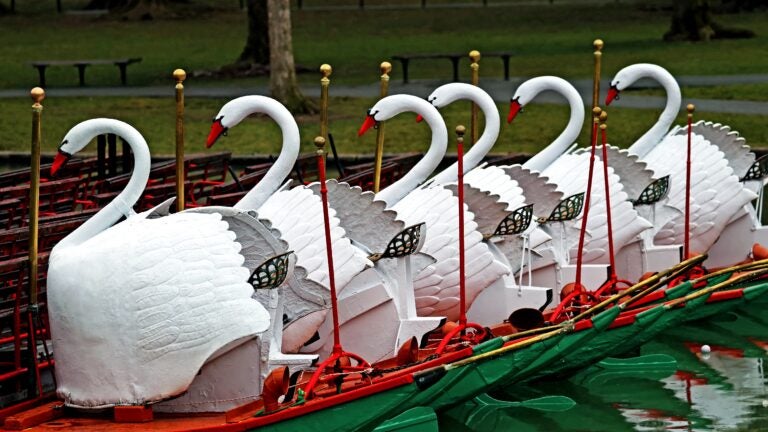
In the dead of winter, when the Public Garden lagoon is more gray slush than storybook scene, one of Boston’s most familiar sights is nowhere to be found: the Swan Boats.
Every year, in the off season, the same question comes up: Where to do the Swan Boats go in the winter?
The short answer: Not far.
The longer answer involves trucks, heavy pontoons, a private home — and a ritual that’s been passed down through one family for nearly 150 years.
If you’ve ever assumed the Swan Boats simply get hoisted out and parked somewhere, you’re not alone. But Lyn Paget — the great-granddaughter of Swan Boat founder Robert Paget and a current operator of the family business — says the seasonal switch is much more hands-on than most people realize.
“Most people are surprised to learn that to get the Swan Boats in and out of the park, the boats must be completely dismantled,” Paget said. “Unless you happen to walk through during those few days each spring and fall, you’d likely never think about it. But for almost 150 years, we’ve followed the same ritual: build the boats in spring, dismantle them in fall.”
The current fleet includes six boats, each one is essentially a custom-built puzzle.
“Each of our six boats consists of roughly 25 custom-made, non interchangeable parts,” Paget said.
When the season ends, the Swan Boats aren’t stored intact. Instead, they’re dismantled into dozens of labeled components, all marked for a precise reassembly in the spring.
The pieces are transported by truck to a storage location in Boston.
“It’s a personal home that I own,” Paget said.
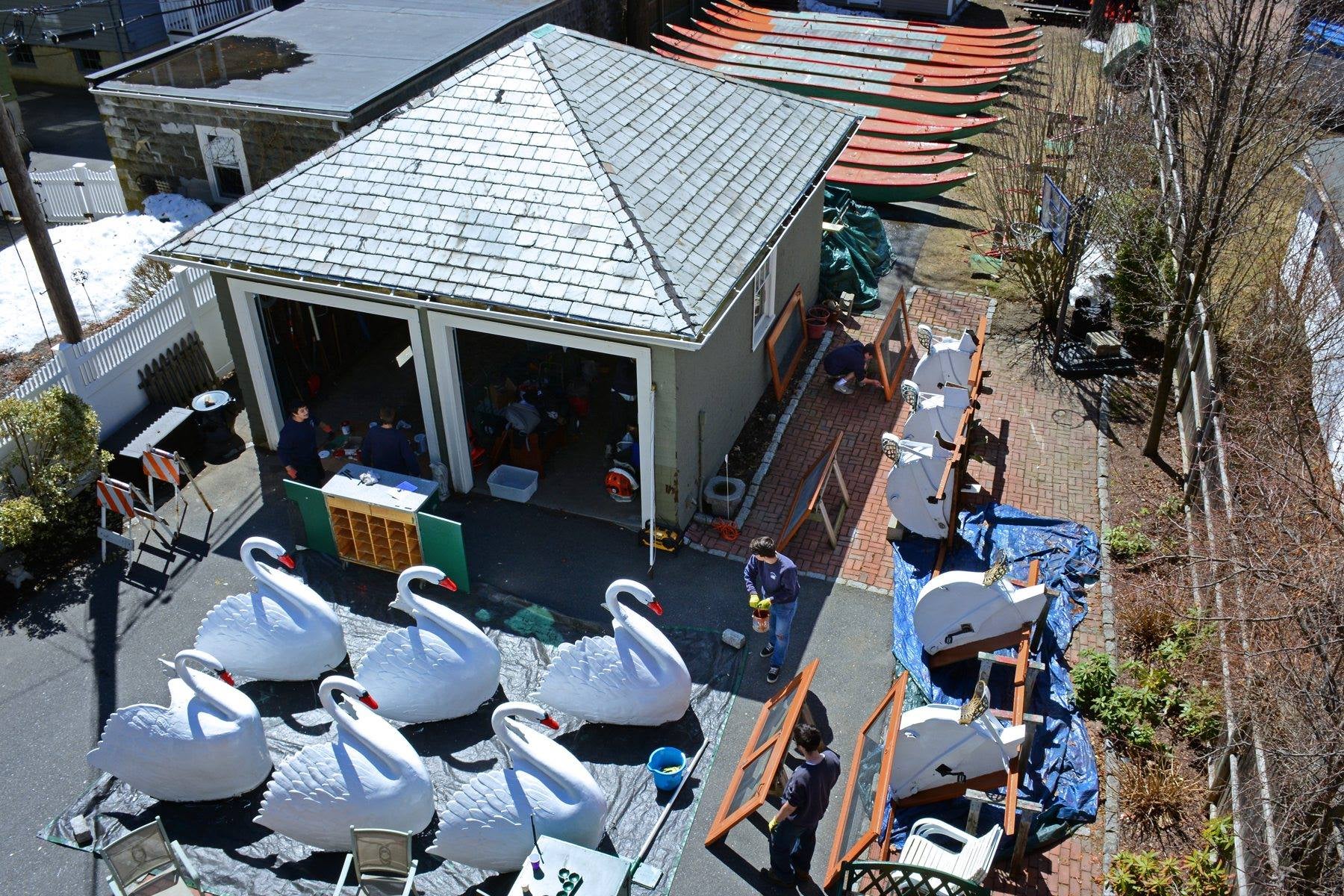
The exact address, she added, is kept private.
“I’m not trying to be elusive about the location, but it is not secured so we typically do not disclose that information.”
Once dismantled, what gets hauled away includes:
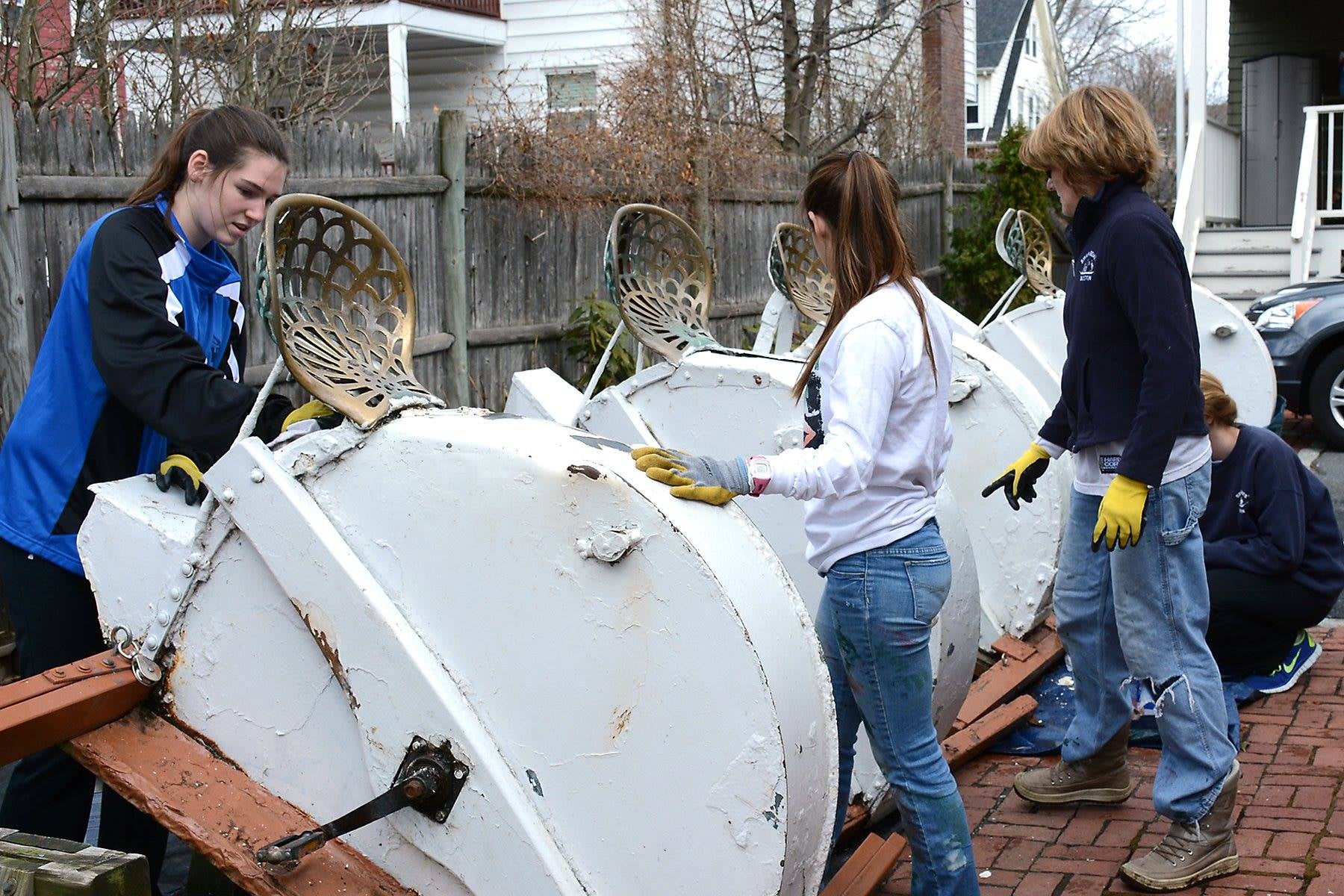
The dismantling takes several days, Paget said.
Some parts are stored outside initially for repairs and painting before being moved into a garage space or covered for the winter.
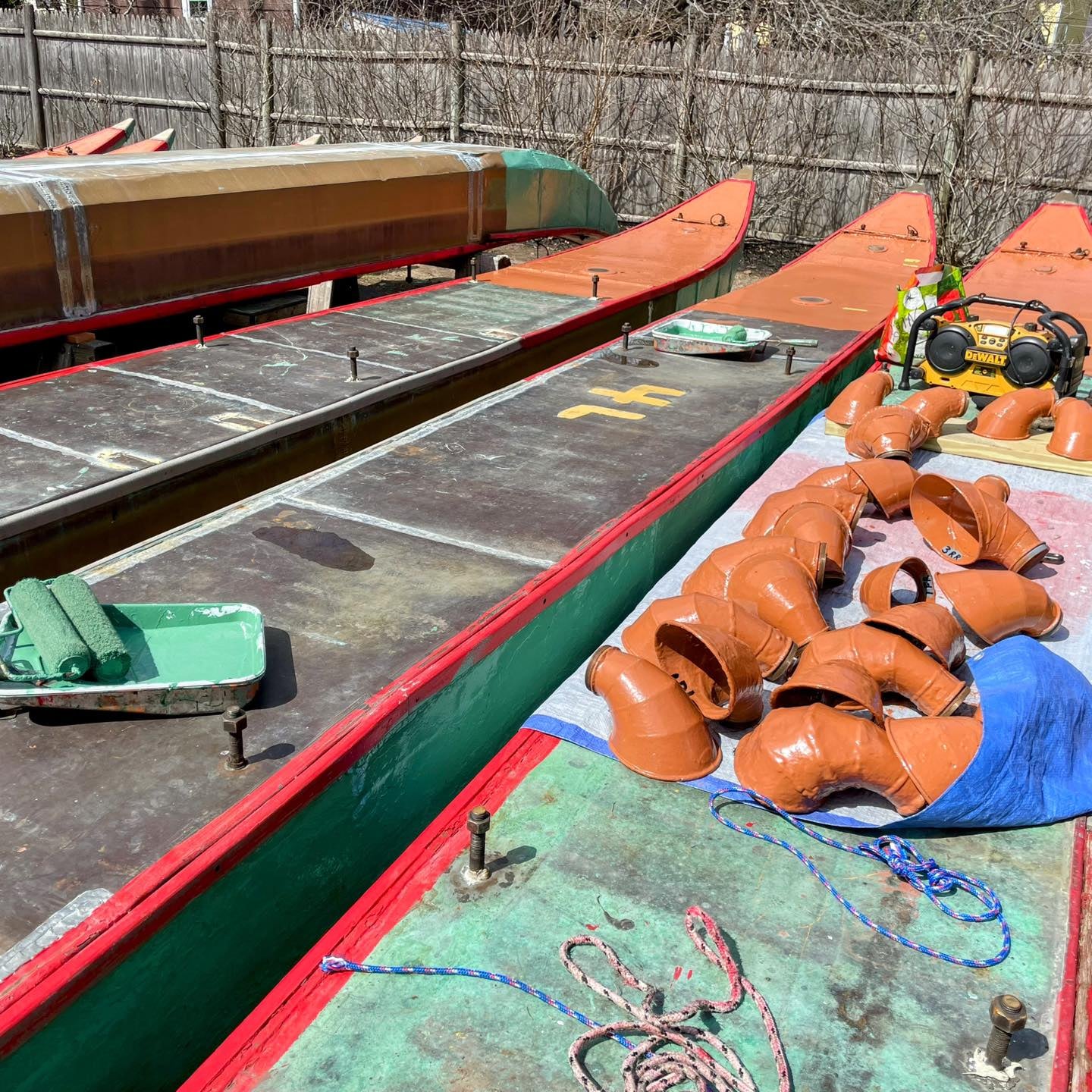
Winter isn’t just storage season — it’s maintenance season.
“Our goal is to keep this unique and historic fleet in full working order, making the off-season critical for maintenance,” Paget said.
Some of the work is predictable: sanding, varnishing, painting. Other projects depend on what took the most wear and tear during the season: rebuilding a paddle-box, replacing benches, or restoring decorative brass.
And sometimes, late-season snow throws off the schedule.
“While the boats are secured against weather damage,” Paget said, “we occasionally face the challenge of an early spring snow. Some seasons, we’ve actually had to shovel them out to get them ready in time for opening.”
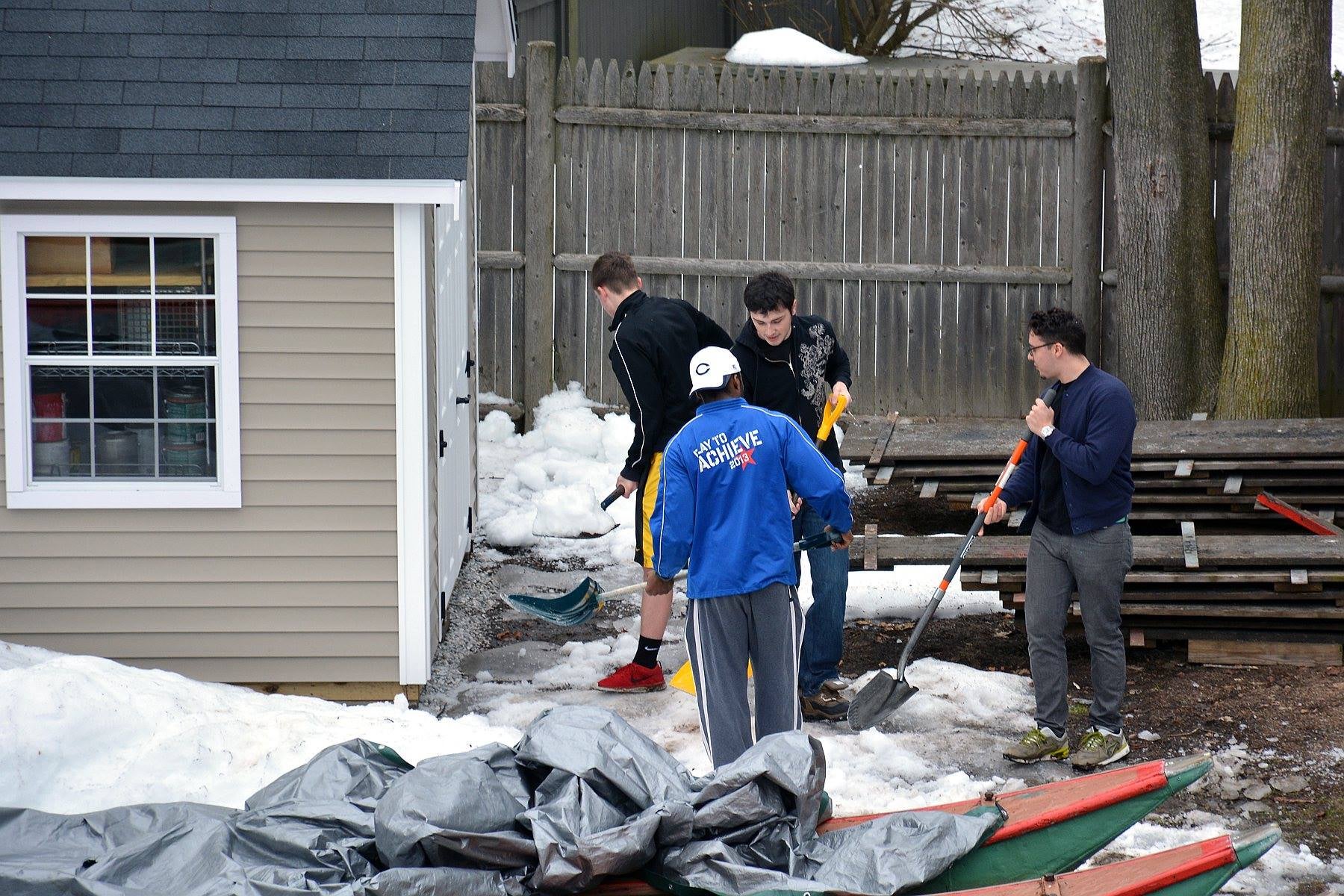
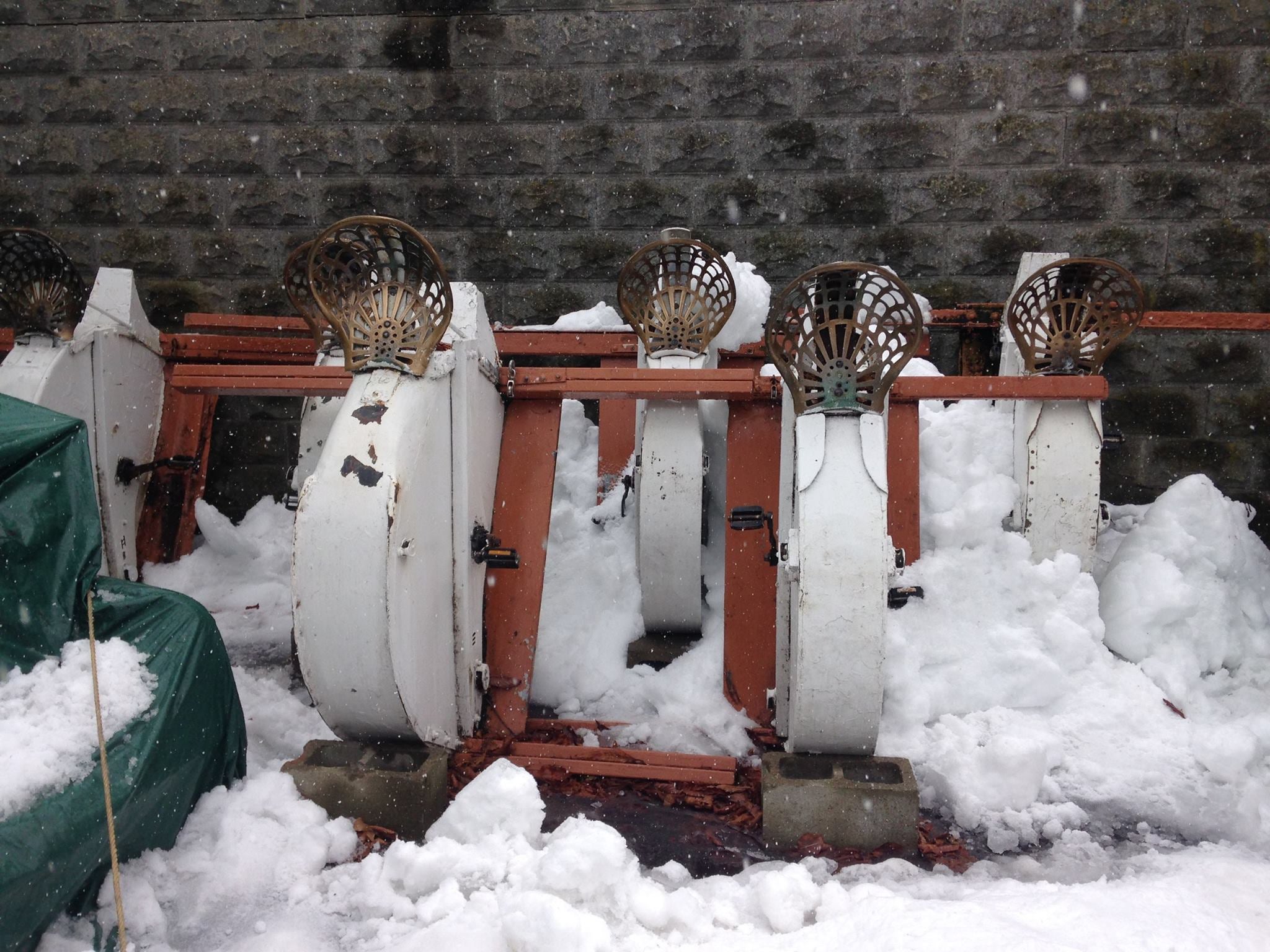
Despite being one of Boston’s most recognizable throwback attractions, the Swan Boats aren’t frozen in time.
Planning for future seasons often starts before the current one even ends — a mindset Paget credits to her grandfather.
“My grandfather said ‘there’s always room for improvement,’ and he was right,” she said.
Sometimes it means tackling a major repair. Other times it’s a series of small upgrades: testing a better brass polish, making small tweaks to help parts hold up longer, or organizing historical images for the website.
With preseason work beginning in March, the freshly painted fleet is typically ready by early April.
“One week before opening,” Paget said, “we begin the move into the Public Garden.”
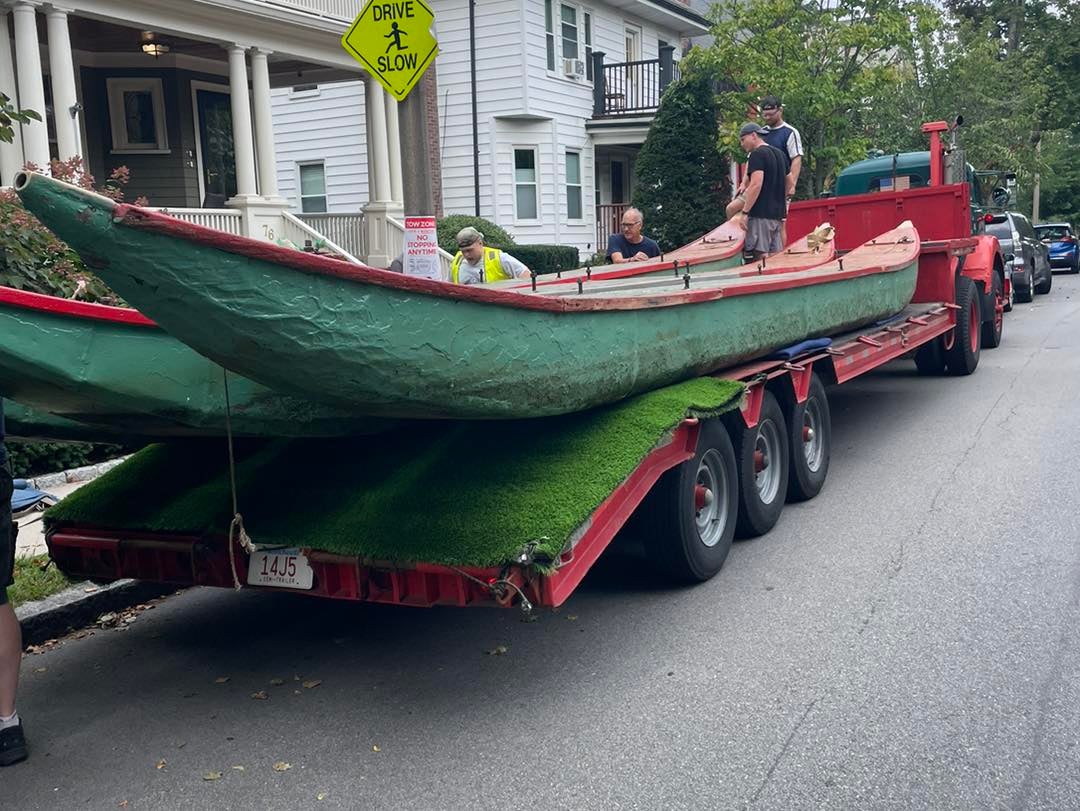
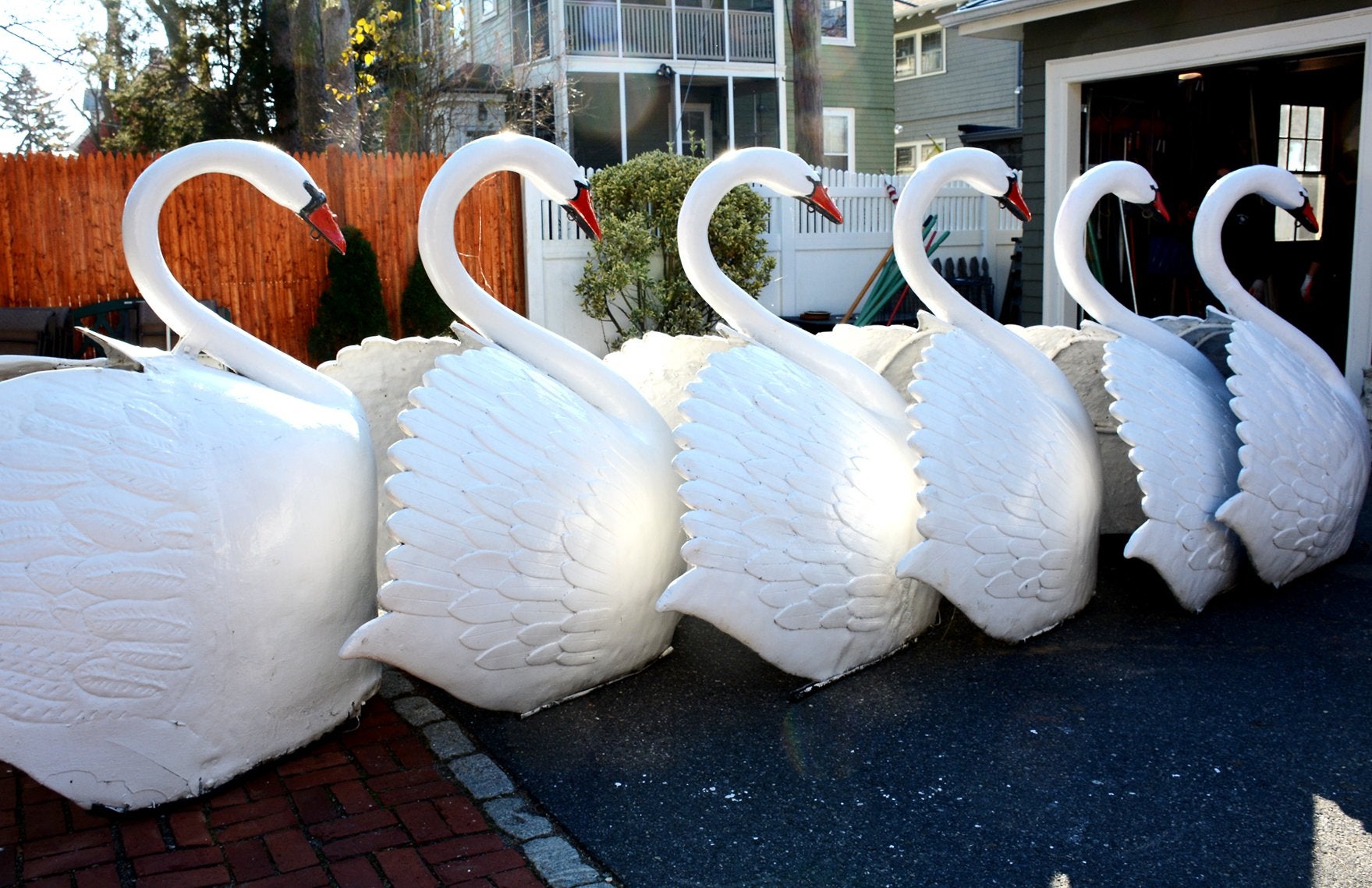
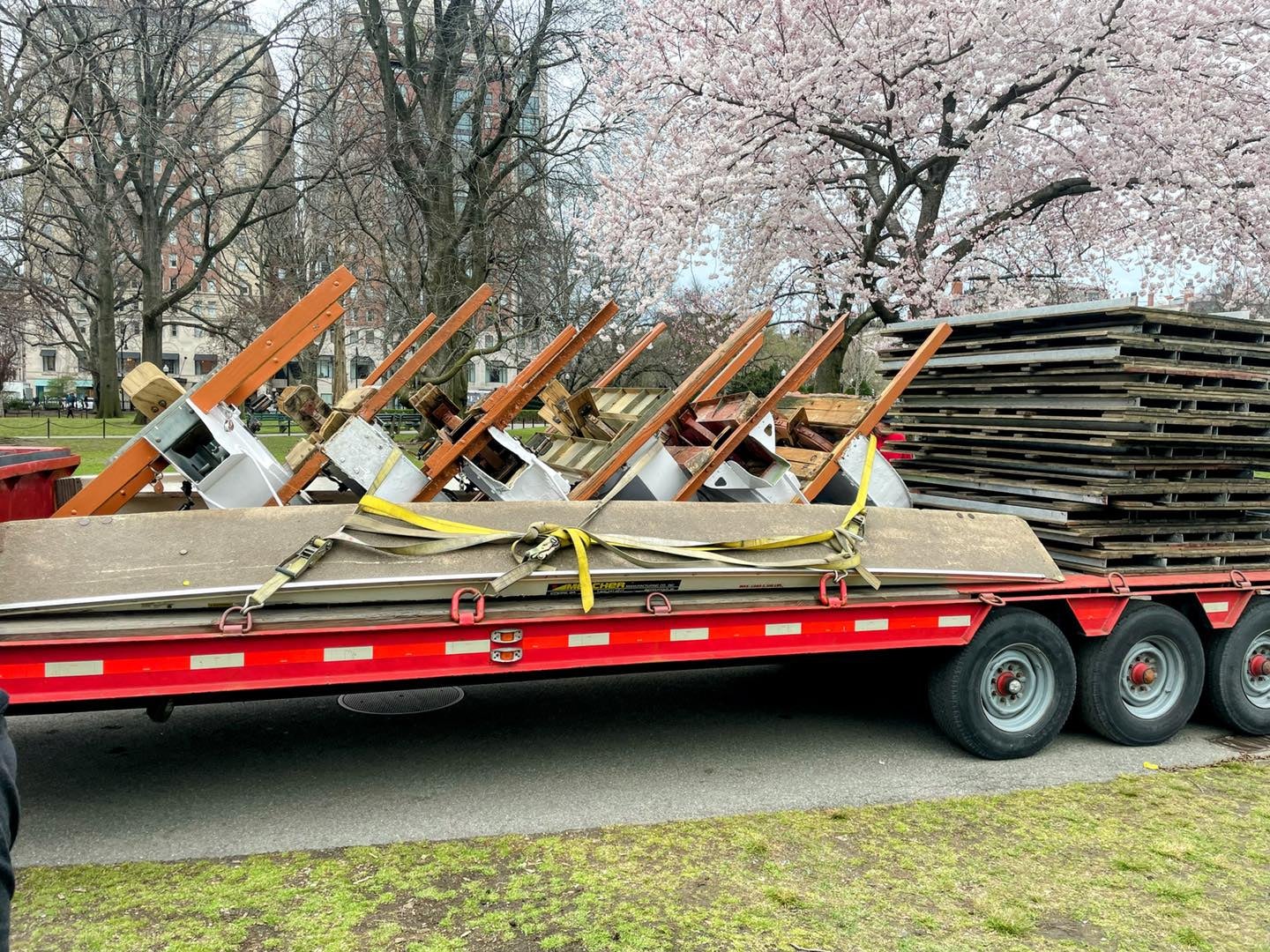
From there, it’s a multi-day operation: a crew of about a dozen people, two days of transporting boat parts, equipment, tools, and supplies, followed by one intensive day of assembly.
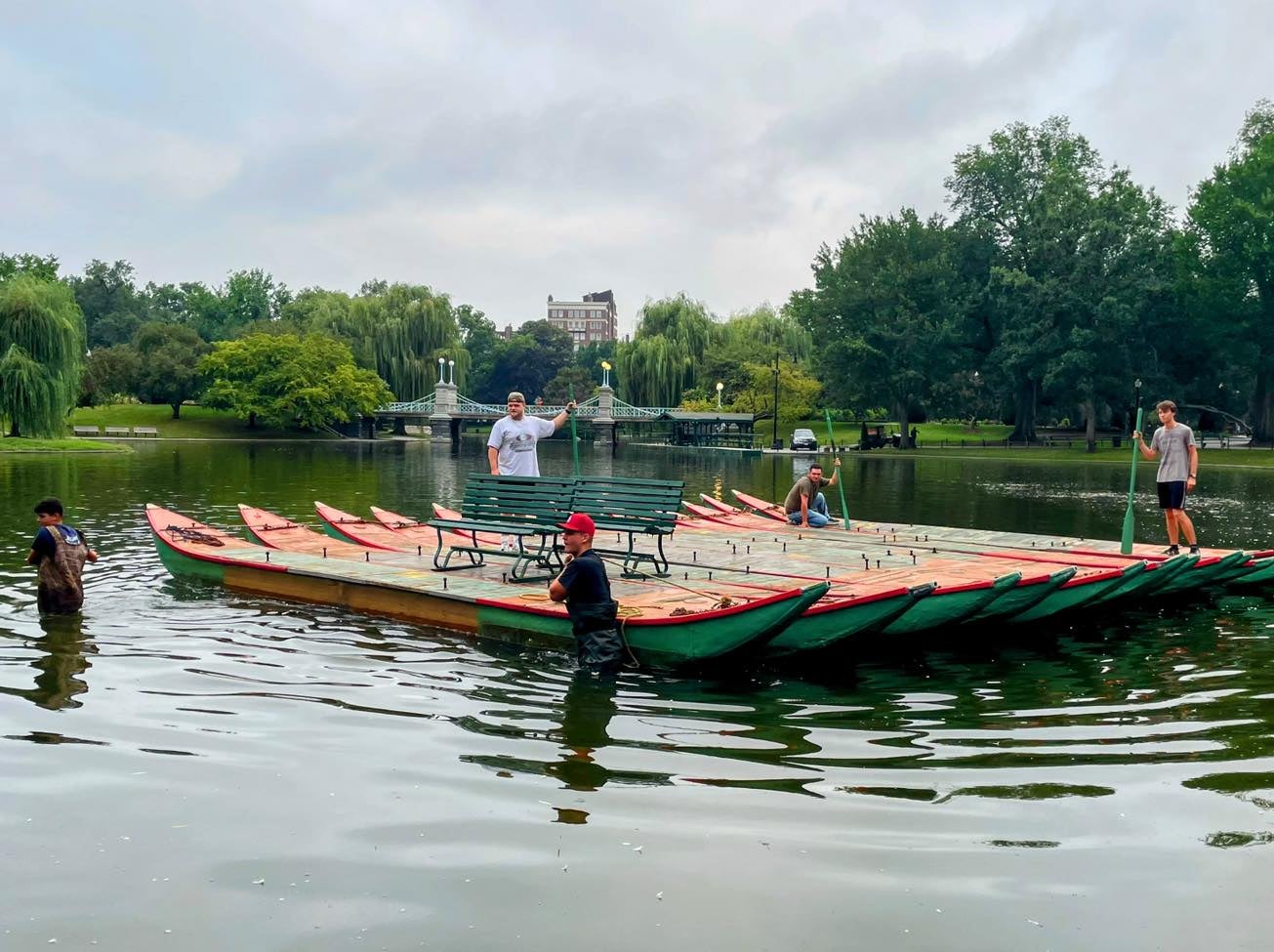
It’s a system refined over generations for one purpose: getting the boats back on the lagoon right on time.
This year, the swans return to the Public Garden on April 18.
Get everything you need to know to start your day, delivered right to your inbox every morning.




To comment, please create a screen name in your profile
To comment, please verify your email address
Conversation
This discussion has ended. Please join elsewhere on Boston.com