
Readers: Should Massachusetts change its right-to-shelter law?
A state judge on Wednesday allowed Gov. Maura Healey to move forward with limits on the state's emergency shelter system. But advocates warn it could put families in danger.
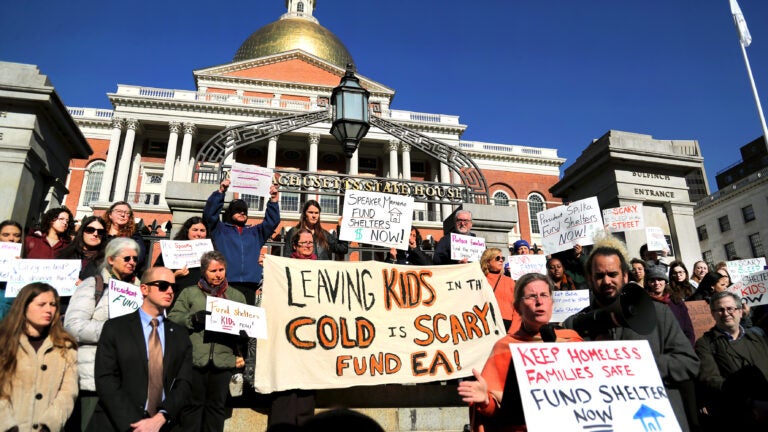
On Wednesday, a state judge ruled that Governor Maura Healey can push forward with her plan to cap the number of families allowed to stay in the state’s emergency shelter system, which advocates say could leave children, pregnant women, and others to find shelter on the streets.
Suffolk County Superior Judge Debra A. Squires-Lee rejected a request from Lawyers for Civil Rights, a Boston-based advocacy group, to temporarily block the Healey administration from creating a cap of 7,500 families on the statewide program, which has been overwhelmed by a surge of migrant families into the state.
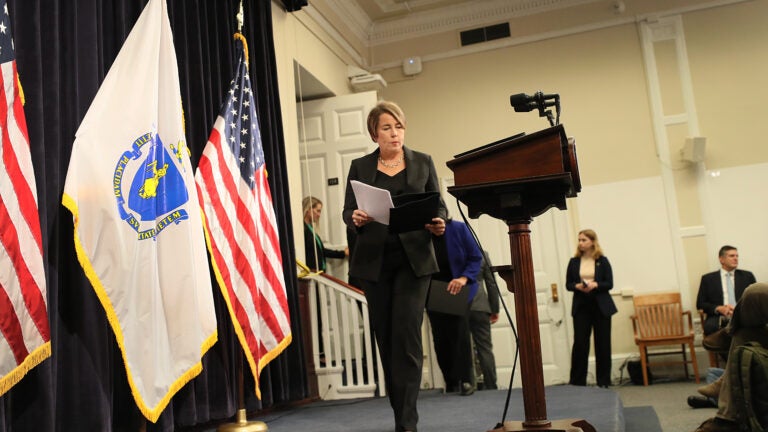
The shelter system has been overburdened for months as the state grapples with a housing crisis and an influx of migrants. After declaring a state of emergency in early August, Healey spent months pressing federal officials for more resources and action that would allow newly-arrived migrants to obtain their work permits faster. The Healey administration and federal Department of Homeland Security will host a work authorization clinic for migrants in emergency family shelters on Nov. 13.
But despite the efforts to move people out of shelters by speeding up the work authorization process, Healey said that the state is simply running out of room.
“We do not have the shelter space, the physical space. We do not have the number of shelter providers and service providers to be able to withstand this capacity and we don’t have the funding,” Healey said Tuesday on WBUR.
As of Thursday, the state reported 7,404 families were enrolled in the state’s emergency shelter system, with 25 families enrolled in the system in the last 24 hours.
Critics say Healey’s plan violates the state’s “right-to-shelter” law, which requires Massachusetts to provide shelter to eligible families through the emergency assistance program, and puts families most in need in danger.
“Without this Court’s swift intervention, those changes will deny shelter to eligible families, leaving destitute women and children out on the street,” attorneys wrote in the lawsuit.
Once the shelter system hits the new limit of 7,500 families, families seeking shelter would be moved to a waitlist.
Under the new guidance, four separate groups would be considered top priority for shelter: those with children aged three months or younger, those with relatives who are immunocompromised, women with high-risk pregnancies, families with someone who has a tracheostomy tube, as well those deemed at “imminent” risk of danger from domestic violence.
Other families with infants, women in late-term pregnancy, or those whose medication that requires refrigeration would make up the lower priority tiers.
The new emergency regulations also allow state officials, with 30 days notice, to begin cutting off how long a family could stay in a shelter – the state has never taken such a step since adopting its right to shelter law 40 years ago, homeless advocates told the Boston Globe.
Andrea Park, an advocacy director at the Massachusetts Law Reform Institute, told the Boston Globe that what the administration is proposing is “extremely concerning,” especially considering the dipping temperatures.
“There isn’t going to be a safe place for families to stay,” Park said.
We want to know how you feel about changes to the state’s right-to-shelter law. What do you make of the new guidance and the shelter cap? How do you think it will effect homeless families? Tell us by filling out the form or e-mailing us at [email protected], and your response may appear in a future Boston.com article.
Sorry. This form is no longer available.



Be civil. Be kind.
Read our full community guidelines.To comment, please create a screen name in your profile
To comment, please verify your email address