
Sign up for the Today newsletter
Get everything you need to know to start your day, delivered right to your inbox every morning.
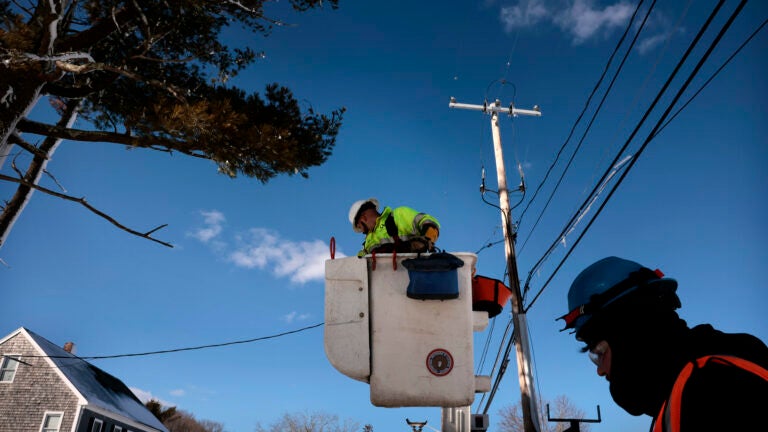
Massachusetts residents pay the highest electricity costs in the continental U.S., according to the U.S. Energy Information Administration — but what you pay can heavily depend on where you live.
A recent Boston Globe report found that in dozens of Mass. communities served by locally-owned municipal utilities, customers often pay about half as much for electricity as those served by large investor-owned companies.
There are 42 municipal utility plants that serve 52 communities across the state, accounting for about 13% of all energy customers in the Commonwealth.
Investor-owned utilities, meanwhile, operate under a different model. A recent report from the Energy and Policy Institute found that Eversource earned nearly 16 cents in profit for every dollar customers paid — about $630.6 million in total profits in 2025. The national average is closer to 13 cents per dollar.
Municipal utilities are able to keep costs lower for several reasons. The Globe reported that their smaller service areas are easier and less expensive to maintain, and many benefit from long-term power supply contracts with nuclear plants like Seabrook and Millstone, locking in electricity at roughly 5 cents per kilowatt-hour. Without pressure to deliver returns to shareholders, excess revenue can be reinvested into operations rather than paid out as profit.
There are some trade-offs. According to the Globe, customers served by municipal utilities are not eligible for Mass Save, the statewide program that offers energy-efficiency incentives, though many municipal providers run their own programs.
Switching from an investor-owned utility to a municipal system is possible — but expensive, according to the Globe. Voters would have to approve the purchase of existing infrastructure like poles, wires, and transformers, a process that can cost millions or even billions of dollars in larger communities.
An alternative is municipal aggregation, in which towns purchase electricity supply in bulk while leaving existing utility infrastructure in place. The state has approved that approach for 225 communities, including Boston.
As electric bills continue to rise, we want to hear from you: Are your electric bills getting out of control?
Do you know what kind of utility supplies your power — and would you switch to a municipal option if you could?
Tell us by filling out the form or e-mailing us at [email protected]. Your response may appear in a future Boston.com article.

Get everything you need to know to start your day, delivered right to your inbox every morning.




Be civil. Be kind.
Read our full community guidelines.To comment, please create a screen name in your profile
To comment, please verify your email address