
Sign up for The Dish
Stay up to date on the latest food and drink news from Boston.com.
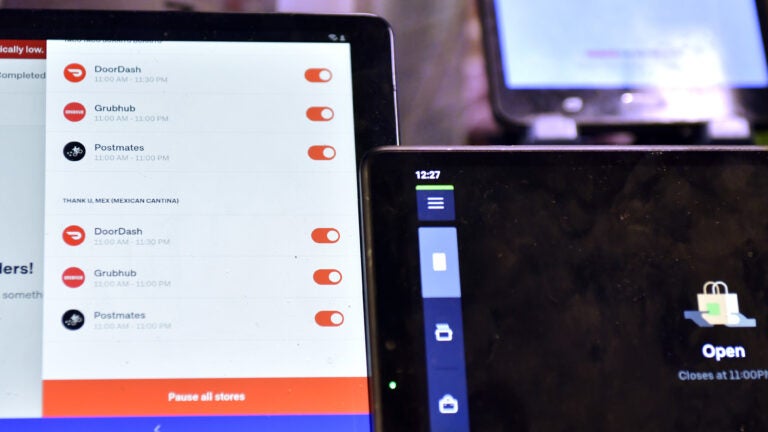
Third party-food delivery apps, once a necessity for restaurants and diners during the early pandemic, have become a nuisance in more ways than one as usage has grown among consumers.
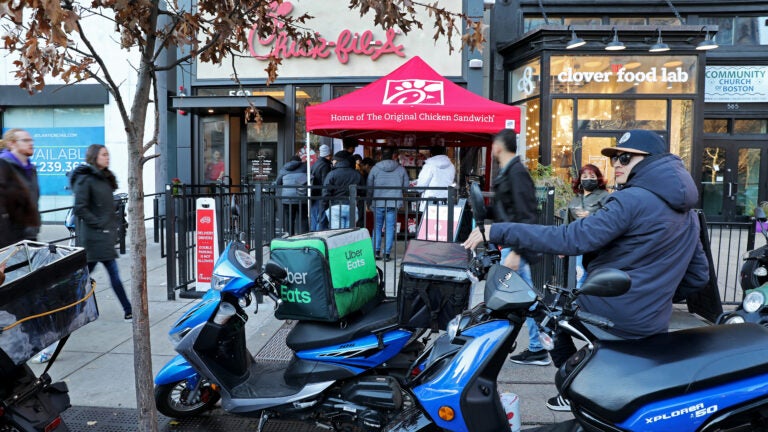
One such gripe that has seemingly piqued the interest of Boston residents and officials alike: traffic problems caused by drivers in a hurry to get meals from restaurants to paying customers. In neighborhoods with high concentrations of restaurants, it’s not uncommon to see a heap of delivery scooters hogging bus and bike lanes, or even some delivery drivers running red lights.
This week lawmakers gave a warning to the companies, like Uber Eats and DoorDash, to regulate their drivers’ bad road habits. But as one Boston Globe correspondent, who signed up with DoorDash as a delivery driver, pointed out, the apps set unrealistic delivery targets for drivers.
Then there’s the fees that, in an instant, turn your late-night $12 cheeseburger and fries into a $30-plus meal. Lawmakers, such as U.S. Sen. Elizabeth Warren, have called the practice of hidden fees produced by delivery apps “price gouging.”
Another hidden fee to consumers: what restaurants are charged for being on the app. Some restaurants have reported that the apps take out as much as 30% from the order total, which sometimes forces restaurants to increase the prices of menu items only in the apps. There are also issues of communication and accountability between the restaurant, delivery driver, and consumer when it comes to fixing a failed order.
The apps are just as much of a problem for delivery drivers, who are independent contractors, therefore they do not get traditional employee protections or benefits.
The laundry list of issues for delivery apps became more apparent, of course, during the pandemic, when restaurants’ only orders from customers came through delivery apps. But now that the worst of COVID-19 is behind us, lawmakers have discussed ways to regulate the apps. Boston officials had recently threatened the three apps — UberEats, DoorDash, and GrubHub — that they would be held responsible for any traffic violations by their delivery drivers.
“The City will consider your company responsible for continued violations by drivers operating on your behalf,” the letter said. “These dangerous behaviors cannot continue.”
Given the mounting issues surrounding the delivery apps, how do you feel about their presence in Boston?
We want to hear from consumers and restaurant industry workers about their experiences using the apps as of late, what they think works, doesn’t work, and what should be done to fix any of the above problems. You can fill out the form below with your response, or e-mail [email protected]. Your answer may be featured in future coverage on the issue.

Stay up to date on the latest food and drink news from Boston.com.



To comment, please create a screen name in your profile
To comment, please verify your email address
Conversation
This discussion has ended. Please join elsewhere on Boston.com