

Address Newsletter
Our weekly digest on buying, selling, and design, with expert advice and insider neighborhood knowledge.
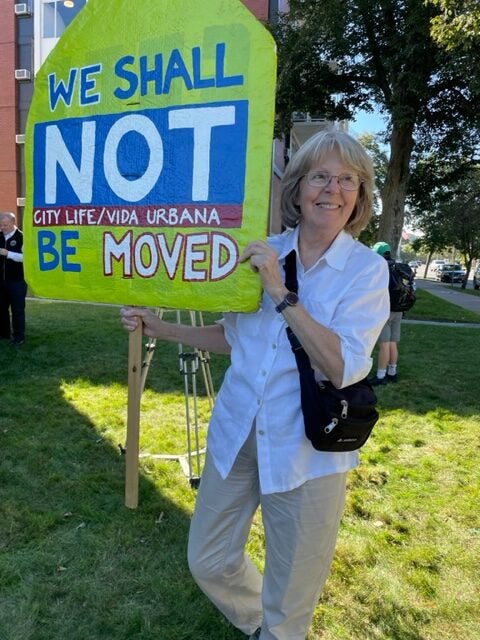
Laura Frost, 74, has been a resident of a 60-unit building in Arlington for twenty years. Over the last five years, she and the other tenants in the building have been facing — and fighting — costly rent increases through their tenants union.
As the leader of the Torrington Tenants Association, Frost negotiates with the property development and management firm Torrington Properties for the rights of herself and her fellow tenant association members. Torrington Properties bought the property where Frost lives in 2019.
While Frost said she and her fellow tenants have faced rent increases before, they came from landlords who “wanted them to stay.” Torrington Properties, however, wants to push them out, she said.
“They didn’t want to give us leases at a lower rate. What they wanted was for us to clear out,” she said.
The increases were followed by a remodeling project of the complex’s units, according to Frost. She said the remodeled units have been listed for double what they once were and said she believes the remodeling effort is another part of the process to displace her and the other tenants of the complex – many of whom she said are elderly, immigrants, lower-income, and/or have been living at the property for decades.
“These big property developers swoop in to affordable properties, make them unaffordable, and push out the existing tenants while they’re doing it. They’re displacing people left, right and sideways,” she said. “This is how this game is played. And it’s not just here, but I’ve had a front row seat to it.”
In a statement to Boston.com, Torrington Properties said they “have 48 signed leases at the property and remain hopeful we can come to an agreement with these nine residents at rents which are still significantly below market.”
Massachusetts, and especially the Boston area, is notorious for its high cost of living that has caused a mass exodus of residents moving to more affordable cities. The Commonwealth was named one of the most “moved out of”’ states in the country in 2023, and Boston remains the third-most expensive city for renters nationally, according to an ApartmentAdvisor’s analytics. The average one-bedroom apartment in Boston is over $3,000 as of March 2024, according to Apartments.com.
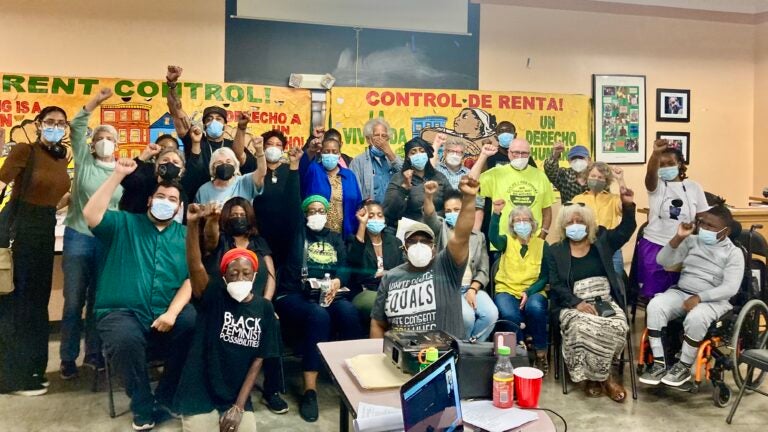
To fight against the rent increases and the prospect of mass displacement, Frost re-formed the tenants association at her complex during the summer of 2022 with the help of City Life/Vida Urbana (CLVU).
Frost is currently in the process of negotiating with Torrington Properties to address the rent increases and stay in her home, after she and her fellow tenants were served notices to quit – the first step in the eviction process – at the end of January. She is determined to stay in her home and keep her fellow tenants from being displaced, she said.
“I wouldn’t be able to sleep at night knowing my business to make money for myself included pushing people out of their homes. I just couldn’t. But that’s what they’re doing and that’s what we’re fighting.”
City Life/Vida Urbana (CLVU) is a 48-year-old bilingual community organization based in Jamaica Plain that supports tenant rights and tenants unions (called “tenant associations” at the organization) through twice-weekly meetings and organizing.
Mass displacement, rent increases, and mass evictions are all common issues CLVU sees tenants face in private market buildings, according to Steve Meacham, an organizer with CLVU for 24 years.
“Basically, these are all the things associated with the housing crisis,” he said in an interview with Boston.com. “Tenant associations support people in not paying the huge rent increases and contesting the no-fault evictions. And we’re pretty successful at that actually.”
Each year the organization helps hundreds of tenants stay in their homes, form their own tenants associations, and helps train those who are brought to housing court through a collaboration with the Harvard Legal Aid Bureau. CLVU is currently working with 25 tenant associations across the state from Lawrence to Brockton. The tenant associations range in size and represent tenants in buildings as small as an individual two-family house with two units, to larger apartment complexes with 340 units.
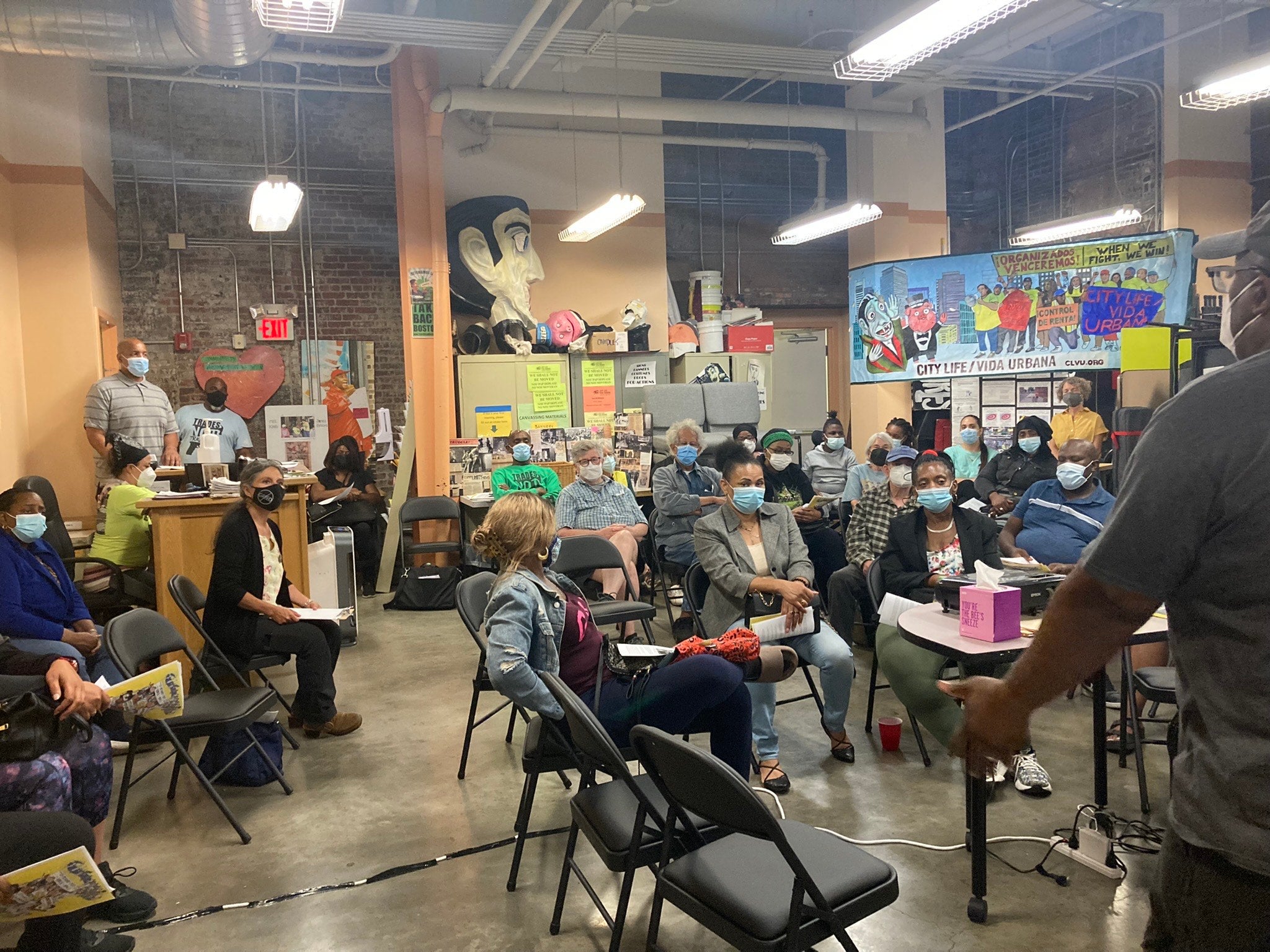
The organization specializes in negotiating collective bargaining agreements with landlords, similar to what unions negotiate with employers, to limit rent increases over the course of several years.
“The contracts that come out of [collective bargaining agreements] could be for a term of five years. So instead of getting huge rent increases, the negotiation might be a rent increase of two to three percent, as opposed to unforeseen, unknown increases,” Grace Holley, the co-director of communications at CLVU said.
The model is becoming more widely known and recognized both in Greater Boston and across the country, Holley said.
Another way to protect tenants from eviction and rent hikes could be legislation called the Tenants Opportunity To Purchase Act (TOPA), CLVU organizers said.
Yvette Moore, a 65-year-old yoga instructor living in Dorchester, is one such case of what TOPA could look like in Massachusetts.
After months of open houses, multiple purchase attempts, and negotiating, the landlord of Moore’s building finally accepted an offer in December from the Boston Neighborhood Community Land Trust, a nonprofit that works to combat displacement and to create permanently affordable, community-controlled housing in the Boston area, particularly in Roxbury, Dorchester, and Mattapan. When the purchase is complete, Moore’s rent will never go up, and the building will remain affordable even if she moves.
“We’re hoping we can get more of these in Boston. Hopefully this fight will continue opening up the door for others,” Moore said.
So, how do you form a tenants union/association if you’re not a part of one already?
Starting a tenants union can begin by simply as talking to your neighbors, Cameron W., an organizer with the Greater Boston Tenants Union told Boston.com. Get to know each other and learn about any common issues you share regarding the property or the landlord, he said.
“Where the tenants union helps out is by walking people through the scenarios before they go through a certain process, and determining what might happen if you ask for certain things, how the landlord might respond to it, whether what the landlord’s doing is even legal or illegal in the first place,” he said.
Once tenants have come to a consensus about the common issues they face, Cameron encourages tenants to write a collective list of demands or grievances to the landlord. The list could include a range of issues, from more minor nuisances to larger issues such as unsafe living conditions.
From there, the next steps depend on how the landlord responds to the list, he said. If the landlord retaliates, the union and the law is there to help support tenants.
“A landlord is not allowed to evict you because you were part of a tenants union, you organized, you asserted your rights, you went to the health board to try to get something fixed, etc. Those are what we call protected activities, and the landlord cannot take adverse action against you for those things,” Eloise Lawrence, an assistant clinical professor of law and the acting faculty director of the Harvard Legal Aid Bureau, told Boston.com.
Take it from Betty Lewis, 72, who is a tenant leader with the Fairlawn Tenants Association in Mattapan. She has been living in her apartment for over 40 years and was paying $1,800 per month in rent until she received a rent increase in 2019 that threatened her housing security. But forming a union has helped keep her in her home, she said.
In 2019, Lewis and a group of Fairlawn tenants formed the Fairlawn Tenant Association with the help of CLVU to fight against high rent increases and poor living conditions.
“I try to work with everyone. It’s been slow-going, it’s hard. But we keep pushing because we have to, because we can’t let them take us and throw us out.”

Lawrence emphasized that when it comes to protecting tenant activity, Massachusetts tends to do a fairly good job of it.
“If a landlord is refusing to recognize [your protected rights as a tenant], you can assert it as a defense to any eviction action. You can also file an affirmative case against the landlord. You can also send a letter to the landlord and make your public officials aware that this is how the landlord’s treating you. There are lots of options, ” Lawrence said.
And being a part of a tenant union is always in your best interest as a tenant, she said.
“If you are organizing, know that there’s power in numbers and that you feel like you’re not out on your own. Working with your fellow tenants in the building is always a good idea,” Lawrence said.

Our weekly digest on buying, selling, and design, with expert advice and insider neighborhood knowledge.



Be civil. Be kind.
Read our full community guidelines.To comment, please create a screen name in your profile
To comment, please verify your email address