

Sign up for the Today newsletter
Get everything you need to know to start your day, delivered right to your inbox every morning.
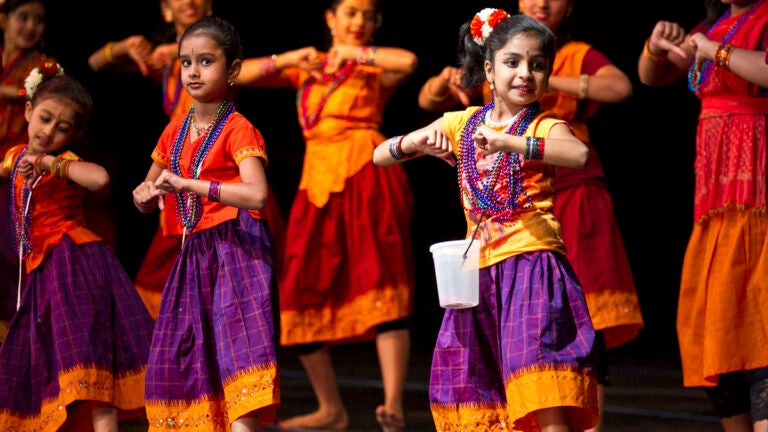
Efforts to add holidays of cultural and religious significance to minority groups in Massachusetts have gained traction in recent years as communities diversify, but members of some school communities say adding to the academic calendar would be a mistake.
We asked Boston.com readers to tell us what they think about adding more holidays for cultural and religious groups to public school calendars. Of the 76 readers who shared their thoughts with Boston.com, 74% said additional holidays shouldn’t be recognized.
“Schools should follow state holidays,” said a reader named J.B. “If the state recognizes additional holidays they can be added to school calendars.”
In Quincy, where the school committee recently voted 6-1 to reject a proposal to recognize Lunar New Year. The town has a 30% Asian population and residents there argued that not including the holiday was unfair to the many students who miss a day of instruction to celebrate with their family.
“As an Asian-American student attending North Quincy High School, where the population of the student body consists of 55% Asians, not having Lunar New Year off is simply mind-boggling to me,” high school student Angela Chen said at an April school committee meeting. “To the Chinese and other Asian populations, Lunar New Year is a very, if not the most important holiday in our cultures. This is why recognizing Lunar New Year as an official city holiday is a must.”
Elsewhere in the state, South Asian students and their parents are pushing to have schools closed for the celebration of Diwali.
Despite changing student demographics, our readers argue that adding more holidays to the calendars would complicate rather than improve the lives of students and their families. They shared with Boston.com their concerns about learning loss, childcare, and more.
One of the biggest concerns for readers is how adding more days off would impact working parents who have to juggle their jobs with school closures.
“Childcare is also hard enough to find these days and most companies don’t acknowledge cultural or religious holidays, only federal, so taking time off comes out of paid vacation time, which also needs to be saved for all the other week-long breaks,” one reader said.
The solution, Matt G. from North Andover said, is to have school holidays and vacations align better with the day parents are more likely to have off from work.
“Having a February and April vacation is bad enough, adding holidays for every religion, culture, or whatever would be a disaster. It is not always easy to take PTO time because the kids are out of school,” he said.
A smaller portion of readers, or 24%, said schools should make their academic calendars more inclusive of the many cultures and religions that make up their student bodies. Wayne from Tewksbury recalled what it was like to be a Jewish student navigating the high holidays.
“I grew up in Winthrop in the 70s and early 80s. At the time, a majority of students and teachers were Jewish. Having those two high holidays off when they fell on school days benefited students, parents, and teachers,” he said. “It was always annoying to me that Christian holidays were part of the school calendar but not Jewish ones given the student population. I am sure people of other religions feel the same way.”
Several readers pointed out that many school districts recognize Christian holidays while balking at recognizing holidays for other religions and cultural groups. In Quincy, where the school committee recently rejected a proposal to recognize Lunar New Year as an official holiday, students are given Good Friday off from school.
“A huge percentage of our students are out celebrating [Lunar New Year],” said Matt V. from Quincy. “If we’re not going to accommodate cultural holidays, Good Friday should be removed as a holiday.”
“This country is for everyone, not just Christians,” Adam B. from Salem said.
Rather than add to calendars, many readers argue schools should pare down the religious and cultural days they currently recognize.
Sarah, a Monomoy Regional School District parent, told Boston.com that school calendars should only include “holidays related to honoring the country where we all live” such as Thanksgiving, Presidents Day, and Independence Day.
“Somehow I don’t think those who voted against adding the Lunar New Year would vote to eliminate Christmas even though it means they’re clearly separating out one entity (Christianity), which they claim to not want to do,” she said.
One workaround recommended by a reader would be to allow for excused absences for holidays without closing down the entire district.
“Excused absences should be allowed for those who acknowledge the holiday. Removing the holidays would make for a more consistent start to the school year and end the school year sooner,” argued a reader named Christine. “I do think significant cultural and religious holidays can be acknowledged in school but I don’t think a day off is the best way to recognize a holiday. This would also eliminate school districts having to decide which holidays to take off.”
It’s no surprise that research shows less time in school can have a negative effect on learning. And after pandemic-related learning loss, some readers argue that school districts should prioritize having students in school as regularly as possible. On average during the pandemic, Massachusetts students lost 75% of a school year’s worth of math learning and 41% of a year of reading, according to a study by the Educational Opportunity Project at Stanford University.
“It’s impractical to take off every day of importance to every group and still fit 180 days of learning between late August and the end of June,” said Shannon from Andover. “The only reason to close down a whole district is if not enough students or staff can attend to make the day productive.”
Trying to accommodate everyone and keep up with learning needs would be too tricky, said T.W. from Swampscott.
“At some point, we should just educate our children,” he said.
Boston.com occasionally interacts with readers by conducting informal polls and surveys. These results should be read as an unscientific gauge of readers’ opinion

Get everything you need to know to start your day, delivered right to your inbox every morning.



Be civil. Be kind.
Read our full community guidelines.To comment, please create a screen name in your profile
To comment, please verify your email address