
Massachusetts should change its right-to-shelter law, readers say
“There are simply too many people in need. A cap makes perfect sense.”
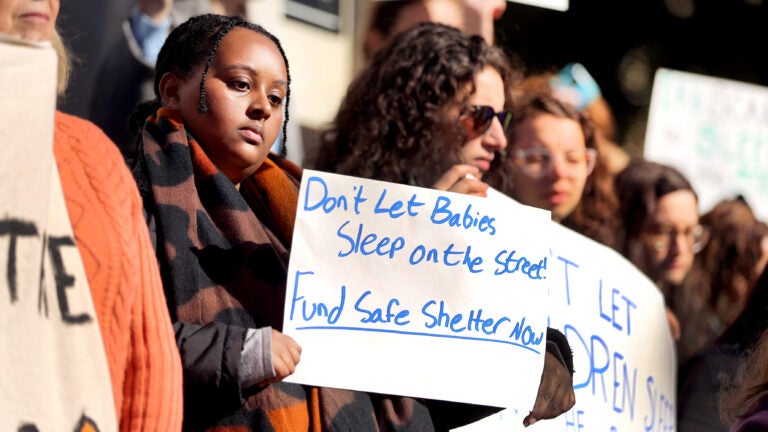
Massachusetts’ right-to-shelter law, which provides shelter to homeless families and pregnant women, has been at the center of controversy in recent months as an influx of migrant families has overwhelmed the state’s emergency shelter system.
In response to the shortage of available shelter options, Governor Maura Healey introduced a plan that would cap the number of families in the emergency shelter system at 7,500 and put those that go over the cap on a waitlist.
We asked our readers if Massachusetts should change its right-to-shelter law. Readers overwhelmingly said yes to changes to the law, whether through new laws or regulations to the existing statute, as Healey had proposed.
Of the 477 respondents, 84% supported changes to the state’s right-to-shelter law, with only 16% against changes.
“There are simply too many people in need. A cap makes perfect sense,” Tom W. from Bourne said.
But critics say the plan violates the right-to-shelter law and a new proposal by Massachusetts lawmakers could delay the Governor’s plan.
On Tuesday, Massachusetts House leaders proposed a $2.7 billion spending plan that sets aside $250 million to manage the surge of homeless and migrant families. The bill (H.4167) would allocate $50 million toward the creation of an overflow site or sites for waitlisted families and would delay Healey’s shelter cap if state officials don’t create the site(s) within 30 days after the bill is enacted.
The legislation would require the Healey administration to revoke its declared shelter cap of 7,500 families “until said overflow site or sites are secured and operational.”
The Massachusetts House is expected to vote on the proposal on Wednesday, after which it would move to the state Senate for consideration.
As of Monday, there were 7,439 families in the system, according to the state’s Emergency Assistance Placement dashboard.
More on right-to-shelter:
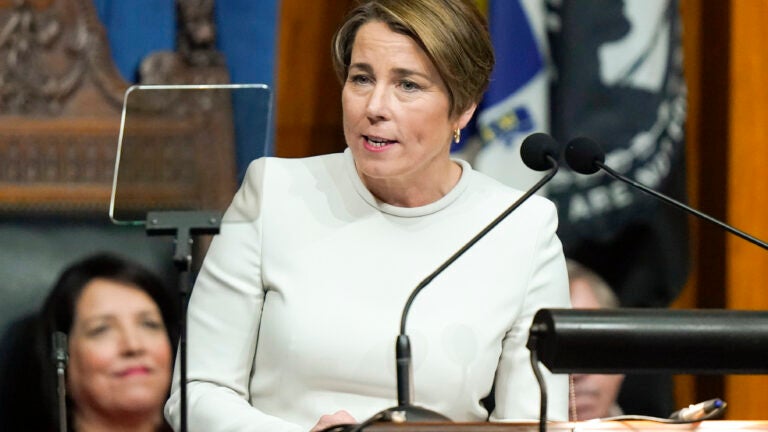
Reader Dave from Woburn told Boston.com that the influx of migrants has not only overwhelmed the emergency shelter system but also exposed its flaws.
“At some point, we have to say no. Right now, the entire process is not sustainable, both with resources and escalating costs,” he said.
Statewide, residents are still in favor of the law. A recent CommonWealth Beacon poll of over 1,000 Massachusetts residents found that 76% support the right-to-shelter law, with 45% saying they strongly support it, and only 19% saying they opposed the law.
Notably, a smaller percentage of respondents support housing migrants in the state’s emergency shelter system. Fifty-five percent of those surveyed said they support shelter for migrants, while 40 percent were opposed. Those who felt strongly on the issue were split evenly, with 23 percent strongly supportive and 23 percent strongly opposed.
For many of the readers who don’t want changes to be made, the right-to-shelter law upholds basic human rights and saves homeless and migrant families from danger, especially as the cold winter months approach.
“A right to shelter is one of those basic human rights, and the image of immigrants on the streets in the cold winter makes all Massachusetts residents responsible for that condition,” Mumat from West Springfield said. “I don’t want to be responsible for denying people access to shelter.”
Below you’ll find a sampling of readers sharing their thoughts about the state’s right-to-shelter law.
Some responses have been lightly edited for clarity.
Should Massachusetts change its right-to-shelter law?
No, ‘we need to solve our own problems before we reach out‘
“I believe there is a need to revisit the right-to-shelter laws in Massachusetts to ensure they are serving the intended population effectively. The original intent of the law was to provide a safety net for residents of the state. However, by not limiting to existing residents, [the current version of the law] impacts the support available for local residents who are in need. A review and possible amendment of the laws would help ensure that the resources are adequately directed toward supporting the residents of Massachusetts. Only once the needs of our existing residents are met should we consider opening up those resources to others.” — T.L., Foxborough
“It’s great to support people who are in need — if it’s possible. But Massachusetts has more than enough issues that need real sustainable solutions. We need to solve our own problems before we reach out, or how can we offer quality assistance? Don’t allow people to come here with false promises of quality care we’re not in a position to offer.” — Allen, South End
“We have enough veterans and homeless families that are American that we are not helping…I feel for the immigrants, but believe we need to help Americans first.” — Jean M., Bristol County
“We are overburdened. There are over 2,300 apartments that are taken out of the [list for state-funded housing] because they are in need of repairs. If [the state] cannot upkeep the apartment they have, how can we trust them to provide shelter? We are not meeting the needs of citizens, the state system is broken. It must be fixed and regulations enforced.” – Mariellen D., Boston
“As far as I know the shelter law is for the benefit of Massachusetts residents only. But now it appears that this is not enforced and anyone is eligible to benefit from this law, especially [undocumented immigrants]. It is an unacceptable burden to the taxpayers in our state.” – Luis C., Boston
“We have a major housing crisis, there is no room in the system and minimal federal resources. Federal problem, not a state problem.” – Albert D., Mansfield
“There’s a major disconnect between the need for housing and the homes available. Massachusetts should take the steps needed to increase the supply of homes so as to make the ‘right-to-shelter law’ practical to implement.” – Drew H., Weymouth
Yes, ‘we must keep the universal right-to-shelter’
“We must keep the universal right-to-shelter and the Legislature must act to provide extra funding. We’re a wealthy state and can easily afford it, and it’s an expression of our values in addition to being a sound policy. Changing it the first time it’s really been put to the test would be short-sighted and cowardly. It’s needed now more than ever.” – Charlie H., Boston
“The right-to-shelter ‘seems’ to guarantee migrant families shelter and avoid being unhoused. In a state, like so many, where housing costs are insane and there are more and more people on the verge of losing housing and needing housing (families that are low-income, individuals, the elderly), to put a cap on guarantees seems ridiculous. Our system could stand expanding so all who need housing can get placed in safe and comfortable housing.” – Andrea F., Roslindale
“Massachusetts is one of the richest states in the country – with millions of people – and it can’t afford to shelter less than 1% of its population? Unbelievable.” – Paul, Boston
Readers offer possible solutions and suggestions
“I’m not convinced that all possible alternative resources have been explored. What about mothballed facilities at Fort Devens, the Barnes Air National Guard Base, and the Westover Air Reserve Base? My recollection of these places is a bit dated since I retired from the United States Air Force back in 1990, but they were all active facilities back in the day, and then some were carried over in the 1990s into the Base Realignment and Closure system (BRAC). Hence mothballed but with some provisions for reactivation.” — Tom A., Duxbury
“Claiming it’s too expensive to provide shelters means taxpayers will spend even more money on law enforcement; the Department of Children and Families (DCF); and emergency room, court, and hospital costs. Instead, make parking lots, malls, and unused office buildings into affordable or transitional housing and shelter.” — Liat, Cambridge
“While the intentions are good, the execution is not feasible. We need to fix the immigration system, slow down the influx of those that need the shelter, and spread the support across all states.” — John, Bridgewater
“The right-to-shelter should require a three-year residency requirement before someone is eligible. Also, priority should be given to people who have an extensive work history and who are not working because they are elderly or disabled.” — Vinca, Worcester County
Boston.com occasionally interacts with readers by conducting informal polls and surveys. These results should be read as an unscientific gauge of readers’ opinion.



Be civil. Be kind.
Read our full community guidelines.To comment, please create a screen name in your profile
To comment, please verify your email address