

Sign up for the Today newsletter
Get everything you need to know to start your day, delivered right to your inbox every morning.
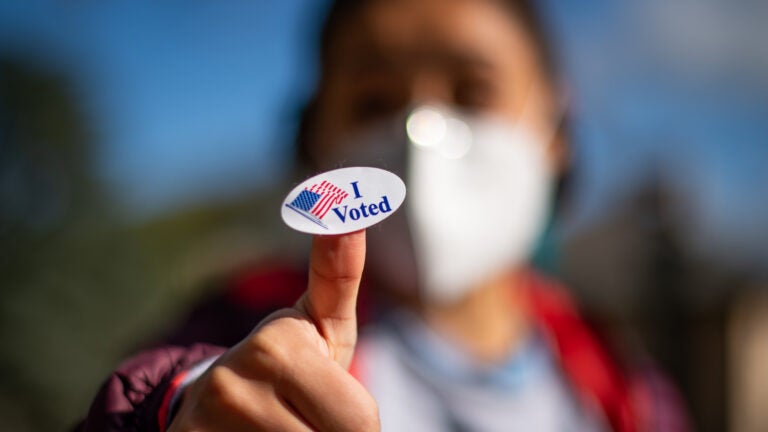
Boston City Council will consider a change to local elections that would allow immigrants with “legal status” to vote in municipal elections, regardless of their citizenship status.
Councilor Kendra Lara proposed the home rule petition earlier this month and argued that the change would allow legal immigrants who “pay taxes and contribute to Boston’s economy” to “participate in the electoral process.”
Several of her colleagues on the City Council voiced their support for the measure, but Boston.com readers aren’t as enthusiastic about the proposal. In an informal poll, 95% of the 188 respondents said no, “legal status” immigrants should not have voting rights in local elections.
“Voting is a privilege [that] should only be afforded to citizens,” said Katherine G. from Roxbury, echoing the opinion of many readers.
Legal immigrants in Boston pay an average of $2.3 billion in annual taxes and hold about $6 billion in “collective spending power,” according to Lara’s petition. Those tax dollars are a big reason to allow these residents to participate in the electoral process, the councilor argued. Still, opponents of the change say allowing immigrants to vote in municipal elections prior to getting citizenship could do them more harm than good.
Federal law bans non-citizens from voting in federal elections and doing so, even accidentally, could bar an immigrant from ever gaining citizenship.
Councilor Michael Flaherty, who has served on the City Council for close to 20 years, said he’s seen similar proposals considered in the past. While he doesn’t oppose the measure, he cautioned his colleagues to weigh the measure carefully.
“We need to find a way through this, we need to continue to be inviting and welcoming to new Bostonians, we need to encourage all that community involvement and participation,” Flaherty said. “There are some inherent dangers that were outlined in a number of hearings through prior council sessions.”
Last summer, a similar measure allowing legal status immigrants to vote in New York City was struck down after a judge ruled that it violated state law.
Boston City Council will schedule a hearing to hear from experts. Despite the arguments in favor, several readers said that the proposal should be a “non-starter” for Boston politicians. Below you’ll find a sampling of responses from readers sharing their thoughts on allowing non-citizens to vote in local elections.
Some responses have been lightly edited for clarity.
“What does it mean to be a citizen? Voting is the most important right of a U.S. citizen. (Although, many citizens neglect it.) Allowing non-citizens to vote dilutes the meaning of citizenship. Immigrants with legal status can certainly participate in elections by campaigning and canvassing for candidates but voting should be one right designated exclusively for United States citizens.” — Neil R., South Boston
“Voting is a right for U.S. citizens. Go through the process, get your citizenship, and the reward is the ability to vote in our elections.” — Abe L., Haverhill
“There is a pathway to citizenship and the privilege to vote. To circumvent this process opens the door for voting abuse.” — Mimi K., Cape Cod
“I wish the City Council was more focused on getting citizens to vote. Turn out was low. I don’t think it’s too much to ask a person to make the commitment of becoming a citizen before they are allowed to vote.” — Allen, South End
“Voting for non-citizens is a non-starter. Only citizens and naturalized citizens should be able to vote. It is their country and their voices should matter most. Allowing non-citizens to vote would dilute and weaken the ability of U.S. citizens to influence elected officials, policies, taxation, and budgetary decisions, leading to excessive “tax-and-spend” to subsidize programs benefiting immigrants at the expense of Americans. It would also continue to attract more and more immigrants, stress municipal services, and increase competition for housing, making it more expensive for everyone. It would be detrimental to our economy, national unity, and social cohesion. Americans cannot go to other countries and vote (unless they become citizens). Why should it be any different here?” — Eva W., Brighton
“I support residents to be able to vote in local matters regardless of their federal citizenship status. As community members, both citizens and non-citizen residents send their kids to local schools, pay property taxes, and provide important firsthand perspectives on questions that impact their local neighborhoods.” — Elaine D., Wayland
“As an immigrant myself, I think it is hypocritical given the revolution was predicated on ‘taxation without representation.’ Similar to the requirement for immigrants to sign up for selective service and prove it during the naturalization process is high.” — Mike S., formerly from Groton
“They pay taxes and are directly impacted. No different than someone moving to Boston from out-of-state and then voting in local elections.” — Dan, East Arlington
“As an immigrant, I can own a house but I cannot…vote in town elections that impact what happens in my town regarding how my property taxes are spent.” — Glynn, Littleton
Boston.com occasionally interacts with readers by conducting informal polls and surveys. These results should be read as an unscientific gauge of readers’ opinion.

Get everything you need to know to start your day, delivered right to your inbox every morning.




Be civil. Be kind.
Read our full community guidelines.To comment, please create a screen name in your profile
To comment, please verify your email address