
Sign up for the Today newsletter
Get everything you need to know to start your day, delivered right to your inbox every morning.
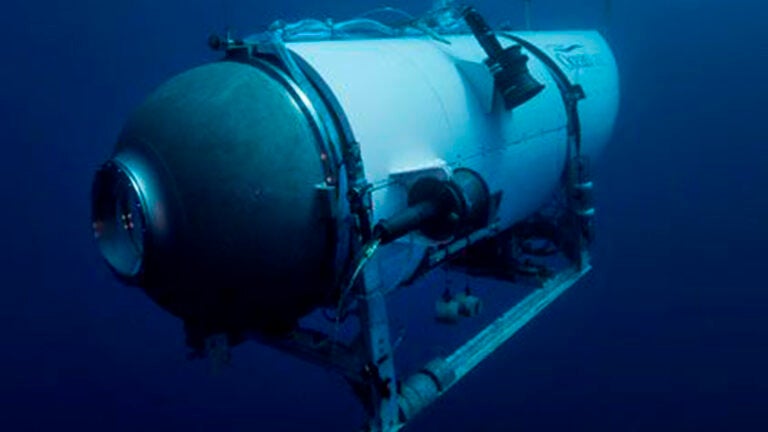
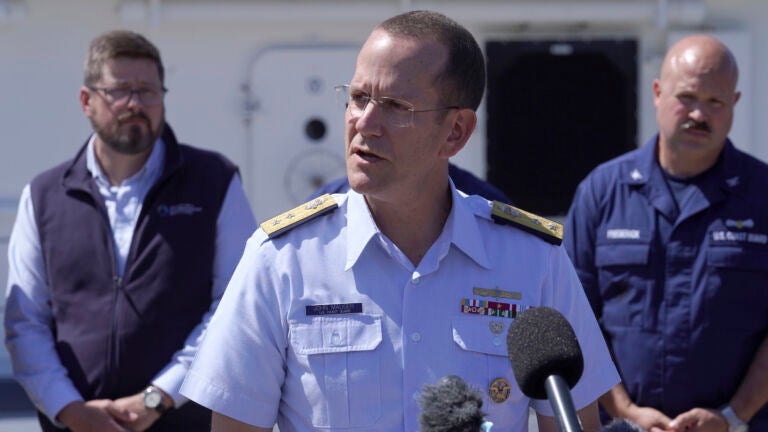
The search for the missing Titan submersible ended Thursday when U.S. Coast Guard officials said they discovered debris indicating the sub had imploded, killing all five passengers on board.
OceanGate, the company behind the submersible, has come under fire for flouting industry standards, ignoring regulations, and risking the safety of its passengers. The Titan disappeared an hour and forty-five minutes into a private dive to the Titanic shipwreck, 13,000 feet below sea level. U.S. Navy officials said yesterday underwater microphones detected the Titan sub’s implosion the day it disappeared.
Lost on the ship were pilot Stockton Rush, the CEO of OceanGate; British adventurer Hamish Harding; British Pakistani businessman Shahzada Dawood and his son Suleman; and French explorer and Titanic expert Paul-Henry Nargeolet.
Deep sea tourist trips have become increasingly popular among the wealthy in recent decades, but as the industry grows, regulations have not kept pace, posing a risk to those who take the trips. We asked Boston.com readers to share their thoughts about the deep sea tourism industry and 68% of the 633 readers polled said that private companies shouldn’t be running tourist trips to the depths of the ocean. The vast majority of readers, 93%, said they would never do a deep sea trip in a submersible.
Rebecca S. from Oak Bluffs said she supports deep sea exploration for conducting scientific research, but even then, the work should be thoroughly regulated by trusted third parties.
“Visiting the Titanic wreck by a group of ‘explorers’ doesn’t really contribute to our body of scientific knowledge in any substantial way,” she said. “It is difficult enough for hardworking scientists to apply for and get the funding they need. Let’s find better ways for financing them in their very important research,”
While she praised the U.S. Coast Guard and other governments for their search efforts, she said, ultimately, the rescue shouldn’t have had to happen.
“This is a poor use of our taxpayers’ money,” she said, adding, “OceanGate didn’t even have an adequate backup plan. That’s a huge sense of entitlement to just assume the government will use all its resources to save the lives on an OceanGate mission…an expedition that is essentially foolhardy.”
For a smaller percentage of readers, the Titan tragedy isn’t reason enough to abandon the new frontier of deep sea exploration. Some readers, like Jim R. from Reading, said they’d even do a submersible trip themselves — given it was better tested.
“As long as we’re talking about consenting adults who know the risks it’s fine. Everest is littered with the bodies of people who knew the risks but went anyway,” Jim R. said. “Yes, I would take a trip on a sub but a certified one like the Alvin. Not something like Titan.”
Aside from safety concerns, many readers took issue with deep sea tourism on moral and financial grounds. As of now, it’s unclear whether OceanGate will pay for the rescue efforts or if taxpayers will foot the bill. The rescue mission would “probably cost millions,” according to a report from New York Times.
Below you’ll find a sampling of responses sharing their view on the risky exploration venture.
Responses have been lightly edited for length and clarity.
“The Titanic wreck is effectively a grave site for over 1,500 people. Turning it into a tourist attraction for the super-rich, who are the only ones that can afford the trip, just seems wrong. As of this week that grave site is now littered with modern-day debris that will likely be there forever. Is nothing sacred anymore?” — Jack, Lynn
“These shipwrecks are graves. Be respectful and treat them as such. These should not be treated as tourist trips for the richy rich. Study is one thing, tourism is totally different. Mother Nature will always win. Man never seems to learn that message.” — Amanda, Stoneham
“The Titanic is a grave site. Over 1,500 people died and now billionaires can go play adventure time and desecrate their watery graves. It’s disgusting. There should be some sort of international coalition to protect the waters around there.” — Katie C., Beverly
“It is both sad and disgusting that after over a century, it continues to take lives. This is no longer about research or science. This is nothing more than hubris and greed. It is time we let the site rest in peace. It is, after all, still a grave site.” — R.P., New Bedford
“I want my tax dollars to be put to work preparing for climate change rather than funding massive rescue missions for foolhardy voyeur tourists who shouldn’t be deep sea diving in rickety submersibles in the first place. May they and the Titanic souls rest in peace.” — Anonymous, Newton
“I think anyone who signs up for or offers such adventures like this should require the client or the company to put up a bond so that when the adventure goes wrong taxpayers are not left with $50 million in debt to look for [people] trying to get their kicks. This is thrill-seeking, nothing more.” — Anthony M., Andover
“We require drivers to have liability insurance because an accident can cause costly damage to someone else’s property and if you cause that you have an ethical and legal responsibility to repair it. Deep sea tourism operators should be required to have insurance that pays for the enormous quantity of resources spent on a search and rescue operation in the event of a mishap. It’s not fair that taxpayers should have to foot the bill for that.” — David, Ayer
“I would never participate in such a risky and unnecessary tourism endeavor. The high risk and grave consequences of failure cannot justify any perceived ‘reward’ of viewing a historic, undersea shipwreck and graveyard. For a small company using rudimentary and unsafe undersea technology, without the safeguards created by the global navies and their submarine forces…this outcome was assured. The only question was when would we see a complete failure? I would ask the company providing these deepwater tours, please define the value of this opportunity. Toursim to Mars: same story!” — Warren M., Alexandria, Va.
“I’m a certified scuba diver and a big part of the training is how dangerous it is to be even 60 feet down. While there is value in this type of research and exploration, the environment is at least as dangerous as space, if not more. Any craft should therefore be designed to the same level of design rigor as a manned spacecraft, and be subject to the same level of pre-launch inspection if human life is on the line. This is an area where remote operation is perfectly appropriate. Having a human at those depths provides no research value. A tragic loss caused by hubris.” — Norb G., Ashland
“I understand OceanGates attempt to fund their research by appealing to tourists, however, this catastrophic event shows that it is not worth the danger. The Titanic is a historical site. With how unpredictable the ocean can be, people-guided submarine and subversive vehicle explorations put the integrity of the structure of this historical site at risk.” — Taylor, Medford
“Why can’t people choose to take a risk to see something they want to? We’re far too risk-averse these days but that doesn’t mean we should limit further expeditions into unknown areas. It’s better we shine a light on the next frontiers and push ourselves forward instead of living in a bubble. What better way to honor those that lost their lives than talking through and finding ways to make things safer going forward? God rest the souls of all involved today and in the past.” — Greg D., Groton
“Deep sea tourism is here to stay. Stricter safety controls and requirements should be enacted and enforced to make sure submersibles are in excellent condition before they are allowed to submerge, but oceans cover most of this planet and exploring them is important. Tourism should not be restricted but more safety protocols need to be enacted and enforced.” — Brian W., Jackson, Mich.
“Is space tourism ethical? Is climbing Mount Everest ethical? Is allowing humans to race motorbikes on the Isle of Man ethical? Human beings, who are adventurous at heart and are willing to brave the extremes for the chance to do something few have done, shouldn’t be told they can’t. Any person choosing to hop in a tiny vessel and travel a mile below the sea will have known the risks of doing so, so why do we judge them when something goes wrong? Perhaps it’s because the majority of us are not brave enough to put ourselves in their shoes. I applaud individuals willing to sacrifice it all in order to fulfill their life’s ambitions whether it be overcoming the fear of riding a roller coaster or searching shipwrecks below the ocean. Everything has risks. Stop being so critical. Rather, celebrate the lives of the adventurers who never returned home.” — Peter B., Cambridge
Boston.com occasionally interacts with readers by conducting informal polls and surveys. These results should be read as an unscientific gauge of readers’ opinion.

Get everything you need to know to start your day, delivered right to your inbox every morning.




Be civil. Be kind.
Read our full community guidelines.To comment, please create a screen name in your profile
To comment, please verify your email address