
Sign up for the Today newsletter
Get everything you need to know to start your day, delivered right to your inbox every morning.
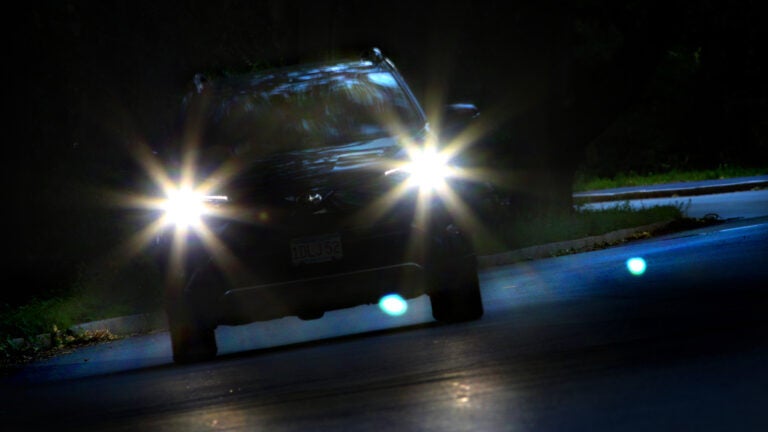
The last thing that people want to happen when they’re driving is to be sprung with a bout of temporary blindness from the headlights of an oncoming vehicle. However, this occurrence is all too common across the country, with LED headlights gradually replacing the old norm of halogen and high-intensity discharge lights.
There are a few factors that contribute to the increase of blazing headlights. Tall vehicles, such as pickup trucks and SUVs, cause the placement of headlights to rise, which can cause an uncomfortable glare for the drivers in front of them, John Bullough, the program director at Mount Sinai’s Light and Health Research Center, told Business Insider. Headlights being misaligned is common as well, said Bullough, with “two-thirds of every car” either having headlights aimed too far up or far down. Mark Rea, a professor at Mount Sinai’s Icahn School of Medicine, told Business Insider that the switch from halogen bulbs, which produce a yellow light, to the cool blue of LEDs also causes headlights to appear brighter.
With this in mind, we asked Boston.com readers whether or not they think car headlights are too bright. Of the nearly 600 readers who responded to our poll, 93% of readers agree that the brightness level is too much, 5% of readers said they were not, and 2% were unsure.
One of the most mentioned qualms from readers was the blinding nature of headlights. “Every drive at night is now a near death experience,” reader JT said. “When driving into incoming traffic, the options include closing my eyes and praying, or effectively staring into the sun and being temporarily blinded anyway. Ban these super bright lights!”
Because of the brightness, many readers also say that they mistakenly believe that oncoming vehicles have their high beams turned on. “Very often I think an approaching car is being driven with its high beams on only to find that when I flash my lights, the approaching driver flashes his lights that indicate all along his low beams, not his high beams, were on,” said reader Pope H. from Dover. “If I’m on a winding, wooded road I feel that I have to stop for safety’s sake and let the car pass before I start up again.”
Read on to see what Boston.com readers had to say about the state of headlights today and why they are — or aren’t — bothersome.
Some quotes have been edited for length and clarity.
“Oncoming headlights can be temporarily blinding, even when they are not switched to the ‘high beam’ setting. This is especially true on rainy nights. Maybe safer for the driver of the offending vehicle, but completely unsafe for oncoming drivers trying to navigate past them back into the darkness safely.”
– Alison M., Wilton, N.H.
“This has been bothering me for a couple of years now. When I am driving at night, most headlights almost appear to be in the high beams position; they’re blinding when you are facing their direction in oncoming traffic.”
– DD, Norton
“I had to buy night vision sunglasses. I couldn’t tell which side of the road I was on anymore.”
– Heather, Tewksbury
“More lights, whiter and brighter than ever, are now common. Trucks and Jeeps are some of the worst offenders. Absolutely blinding, particularly on rural roads.”
– Bryan, Northampton
“It is terrible — lights too bright and not focused properly. And it leads to the typical Mass-hole response… folks driving with their brights on intentionally, to equal the annoyance of the bright LEDs in newer cars. ‘If you blind me, I’ll blind you!'”
– Gregory G., Milton
“I’ve been hit at night with oncoming lights so bright that I’ve had to come to a stop because I couldn’t see the road. I would have previously assumed they were high beams but it’s happened enough times now that it really could just be how lights are now. And can I just say — there should be a way to alert someone behind you that their high beams are blinding your rearview mirror!”
– Kris, Worcester
“I am constantly blinded by the intensity and hue, and everyone I know — without exception — says the same. It seems like there are a lot of factors —lifted trucks/SUVs, new light technology with different light temperatures, people relying on automatic high beams – but we need safety regulations about this issue yesterday.”
– Elizabeth M., Springfield
“I’ve been saying this for years — why are there no regulations around these lights? Some are WAY too bright, others are crazy, distracting colors — blue, yellow, purple — how can that be safe? And sometimes it’s even worse when they come up behind you. (At least when they’re coming at you, they eventually pass you.)
– Matt H., Quincy
“When I’m in my little Honda Fit and faced with the new LED headlights oncoming in trucks and SUVs, I cross my fingers and pray! On the highway, these headlights make it really difficult to change lanes safely because they shine directly in my side and rear views…it didn’t used to be this way.”
– Casey, Amherst
“With large cars and small cars on the road, those of us in the smaller cars really feel the impact of those intensely bright headlights.”
– GG, Marblehead
“Not only are they too bright, ever-taller trucks & SUVs now shine them directly into the eyes of everyone driving a sedan. Hard to imagine they make people safer on the whole.”
– Brendan, Lowell
“Are they brighter or are the headlights all too high due to the 21st-century bloat/height of large SUV and truck front ends? I suspect it’s the height. Front end height has certainly made the road less safe in more ways than one.”
– Tommy, Providence
“I’d say half of the normal headlights today are brighter than high beams were 20 years ago. It’s a major driving distraction and a real hazard. I’m complicit in it too. I drive a Wrangler and very often I get flashed at to let me know my brights are on. I’ve gotten in the habit of being ready to flash my brights back at them like, ‘I know, sorry buddy. But those are just my regular obnoxiously bright headlights.’ I say absolutely limit the lumens!”
– Brian, Harvard
“Headlights have evolved given access to new technologies and goal of improved visibility. Prevalence of SUV-type vehicles has raised driver position, likely diminishing impacts of oncoming vehicles.”
– Pierre G., Dennis
“Headlights should be as bright as possible, but aimed properly. Most importantly, drivers have to realize when they have their high beams on; too many drivers leave them on when they’re not supposed to, blinding on coming traffic.”
– Al, Concord
“It’s not the lights themselves. It’s the lack of control. If we’re mandated to ‘safety’ inspections, poorly aimed and performing lights should be caught during this very ‘thorough’ examination of vehicles. Regulation, which Mass is excellent at administering, should be top priority. The sad fact is that Western Europe has better performing and in fact brighter lights that have been banned by federal regulators until recently. Let’s not worry about brightness and work toward better aim and maintenance issues.”
– MS, New Hampshire
“Being able to see is a critical part of the driving experience. The older halogen lamps often dimmed over time or salt made the headlight lens ‘frosted.’ The new LED lights are better for visibility and driver safety. If people sat up in their seat versus leaning down the light wouldn’t hit them directly in the face.”
– Jay M., Salisbury
Get everything you need to know to start your day, delivered right to your inbox every morning.




Be civil. Be kind.
Read our full community guidelines.To comment, please create a screen name in your profile
To comment, please verify your email address