
Sign up for the Today newsletter
Get everything you need to know to start your day, delivered right to your inbox every morning.
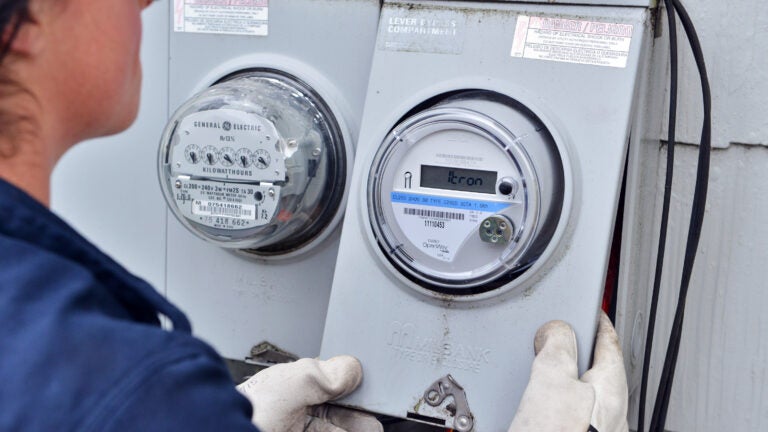
Boston.com readers are sounding the alarm on rising electricity costs — and by a wide margin, most say their bills are becoming unmanageable.
In a poll, 239 readers weighed in on whether their electric bills are getting out of control. An overwhelming 200 respondents said yes, compared to 32 who said their bills are still manageable and 7 who fell somewhere in between.
Many readers pointed to sharp increases over a short period of time, with some saying their bills have doubled — or worse.
“75% increase over the last year, on National Grid. Would love to switch if it is cheaper,” Cameron from Topsfield said.
For others, it’s not just the electricity itself driving costs, but the added fees that come with it.
“Its not just the cost of the product, it is the hiked up cost of the delivery, which is likely as high if not higher than the product itself … The utilities are pricing its residents out of MA,” David from Bellingham said.
Several respondents said they would switch to a municipal utilities provider if they had the option — which in some Massachusetts communities can offer significantly lower rates.
“My utilities are way out of whack. I will switch to any option that is better than what I have now,” said Will of Medway.
Others described the long-term financial strain of paying increasingly high utility bills every month.
“I’ve seen my bill increase by almost two times what I was paying in the past 5 years,” Toni A. from Haverhill said. She hopes to one day offset the cost by adding solar panels to her home, but in the meantime, she struggles. “This has not been an easy past two years,” she added.
Still, a smaller group of readers said their bills remain manageable, often pointing to specific factors like solar energy or access to a municipal light department.
“I live in a city that has a Municipal Light Department that keeps electricity lower,” Jean from Peabody said.
Massachusetts residents already face the highest electricity costs in the continental United States, according to federal data, and where you live can make a significant difference. Communities served by locally-owned municipal utilities — often see much lower rates than those served by investor-owned companies. Fifty municipalities in the state are served by a municipal light plant.
The divide is reflected clearly in readers’ responses: while many feel stuck with rising costs and limited options, others say access to alternative systems like municipal power or solar has helped keep their bills in check.
Here’s what readers had to say about their electric bills.
Responses have been lightly edited for grammar and clarity.
“I have National Grid and yes I would switch to municipal utilities if I could. Our costs were outrageously high all winter. A bill of over $900 for just the month of January to only heat a small room in my basement so our pipes wouldn’t freeze!” — E.R.S., Medford
“On average my electric bill is about $800 to $900 a month. About 18 months ago it averaged $200 to $300. Presently, my ‘service delivery fee’ is about the same cost as my electric usage. This is robbery, price fixing and a monopoly. My provider is Eversource.” — Katie, Westwood
“Since December, my bills have been $500 then around $650 for January and February. March was back down around $500. I had a mini split/heat pump system installed late last summer that was pitched to me as a way to save [money] on my electric bill. My bills were higher than ever this winter. I use a 3rd party supplier too at about 14 cents per kilowatt hour. It’s getting beyond ridiculous having to pay so much.” — Fino C., Billerica
“National Grid. Absolutely would switch to a municipal company if available. The nearby town of Hingham has their own light plant and they never seem to lose power, unlike my town! Natural gas rates through Eversource are now through the roof too and becoming unaffordable.” — Linda, Hanover
“I live in a small Cape-style home (1100 sq. ft.), we keep anything we don’t use unplugged. During the day the lights are o.ff, we open the shades instead. Why is my bill $500/month? With half being the actual usage?” — Denise, Franklin
“Our energy comes from National Grid. For 2025, my gas bills were up 27% over the average of the last 3 years and electricity was up 46% for the same period. That’s before this winter’s outrageous bills. We are retired. Between energy and healthcare, we feel like we are being forced out.” — Terese Z., Gloucester
“Living in Pepperell, Massachusetts, I benefit from a community electricity rate: 13.688 cents per kilowatt-hour (kWh) for the Pepperell Basic plan, 14.578 cents per kWh for the Pepperell Greener plan, and 16.578 cents per kWh for the Pepperell 100% Green plan. Compared to the National Grid’s residential rate of 15.484 cents per kWh, the Pepperell Basic plan offers a significantly lower cost.
In my recent bill from the National Grid, I noticed that I received the MA Winter Bill Relief of a 25% reduction from the governor. This relief reduced my 502 kWh usage of “delivery services” by $46.28, bringing my new total bill to $70.12.
This is quite surprising, considering that my electricity usage only costs $68.71. This discrepancy suggests that my new total bill of $138.34 includes more than half of the cost as ‘delivery fees,’ which are significantly discounted temporarily.
As a former resident of Virginia, I find these electricity delivery fees to be extremely high. It’s frustrating that residents are burdened with such high electricity costs when there are more affordable options available, including installing solar panels without the government tax rebate. I’m concerned about how some residents are managing to pay these rising costs. It’s crucial that there is action to limit National Grid with these excessive fees.” — Ryan, Pepperell
“We are with [National] Grid, an investor-owned energy delivery company servicing New York and Massachusetts. I believe we are sitting around $0.35/ kWh delivered. The disturbing part is that transmission and delivery cost is significantly higher than the actual energy cost; they used to be approximately the same but not anymore. Clear indication of poor infrastructure management. Between the utility and state mandated programs, they are really impacting homeowners and businesses negatively. Unfortunately, there is no strategy in MA to increase gas supply to the power stations. I don’t believe municipal utility would be any better.” — Peter, Newburyport
“Eversource provides my electricity. I’m on a budget plan, so I pay the same amount every month. As ‘luck’ would have it, I had to replace my HVAC with a new heat pump in January 2025. I think the efficiency that comes with the new system is the primary reason my monthly budget amount and usage has not gone up.” — Anne, Kingston
“The Town of Norwood has a municipal light department. Norwood residents love it. For the first 4 months of 2026, my electric bill averaged $109. We don’t heat or cook with electricity. It naturally increases during the summer because of central air conditioning.” — Tom D., Norwood
“I live in one of those communities that has a municipal power company. Our bill is about $100 a month. They also offer high speed internet for $65 with equipment included. These two reasons us boomers decided to stay put in our house.” — David D., Sterling
“I get power from a municipal light department and pay about $.155 per kilowatt hour. I also installed my own solar panel 10 years ago. Bring on the sun!” — Al, Danvers
“I have Danvers municipal electric. When I moved here, my bill quite literally was half of what it was when I had National Grid elsewhere for the same usage.” — Josh T., Danvers
“NStar supplies our electricity in Natick. National Grid supplies our electricity in the Berkshires. I haven’t noticed a material increase in electricity costs for either house over the years. It always seems to hover around $1,500 a month total for both homes (more in summer, less in winter). Not too bad.” — Bob J., Natick
Boston.com occasionally interacts with readers by conducting informal polls and surveys. These results should be read as an unscientific gauge of readers’ opinion.

Get everything you need to know to start your day, delivered right to your inbox every morning.




Be civil. Be kind.
Read our full community guidelines.To comment, please create a screen name in your profile
To comment, please verify your email address