
Sign up for the Today newsletter
Get everything you need to know to start your day, delivered right to your inbox every morning.
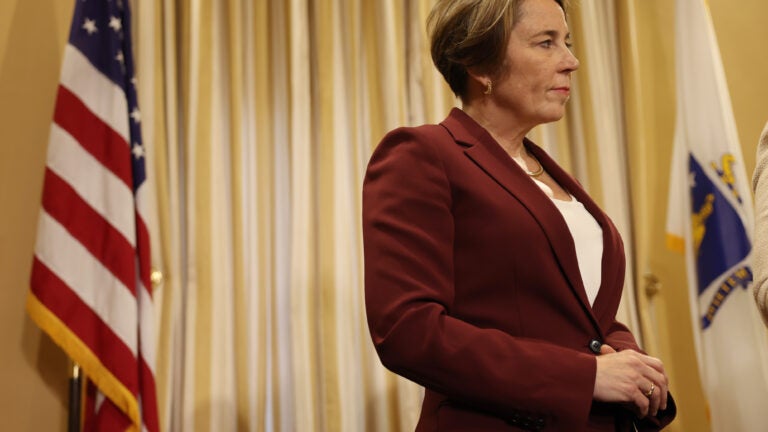
Gov. Maura Healey is set to address the Commonwealth Thursday evening, delivering a speech to tout her achievements from the past year and to likely promote her reelection bid this fall.
Healey officially launched her gubernatorial reelection campaign on Tuesday with promises to address affordability concerns and to continue resisting president Donald Trump’s immigration crackdown.
During her address, Healey is expected to reflect on the past year and outline her policy priorities for 2026. This includes specific plans to reduce residential gas and electric bills, as well as “several new initiatives to lower costs,” according to a release.
Healey is one of seven candidates running in the 2026 gubernatorial race. The primary is slated for Sept. 1, followed by the general election on Nov. 3.
Unlike her republican challengers, Healey has not self-funded her campaign.
GOP prospect Michael Minogue leads the pack with $5.5 million of his own funds poured into his campaign, followed by Mike Kennealy with $1.8 million, and Brian Shortsleeve with $200,000.
When we asked readers if they agree with Mass. GOP candidates bankrolling their own campaigns, we heard from just over two dozen respondents. Among them, a majority (78%) supported self-funding, arguing candidates can spend their money as they like — plus, it gives them a boost against more well known incumbents, readers said.
“If they struggle with finding fundraising elsewhere, what else are they supposed to do — give up?” Michael from the West End said. “This seems like a non-issue turning into an issue to stifle competition, egregious at best.”
There is no limit to the amount of money candidates can contribute to their own campaigns, according to the Office of Campaign and Political Finance. There are, however, limitations on the amount individuals, lobbyists, political action committees, and other political groups can contribute.
Below, readers share why they support Massachusetts Republican gubernatorial candidates self-funding their campaigns.
Responses have been lightly edited for grammar and clarity.
“Self funding is a way to break the lock on campaign funds that incumbents have. Incumbents naturally attract a lot of funds because giving to them can mean that you may get them to help out your cause. Also they are more well known.” — Jim Q.
“The self-funding shows that the candidate is ‘vested’ in the campaign. I am looking forward to an interesting election cycle.” — Tim, Medway
“I prefer self funding to taking special interest funding. But there should be a maximum that can be spent.” — Kiki, Pinehurst
“They’ll take GOP money after the primary. Why shouldn’t they fund their own campaign? At least it keeps their integrity intact.” — Brighton C., Framingham
“I care more about how they made their money than how much they have. Getting the funds from vested interests is also bad. How much will Healey get from the beneficiaries of all the mergers and acquisitions she approved as attorney general?” — Mike
“As a challenger, you are limited because you don’t receive donations from those that have a vested interest in the office. An incumbent has a much easier time raising money than a challenger because those that need access to government give to ‘a sure thing.’ Giving to a challenger puts you in the crosshairs of the incumbent which might jeopardize your access to those making decisions.” — Vann S., California (formerly of Dorchester)
“Mass residents are looking for someone to fix the financial disaster that is our Commonwealth. Someone with no personal wealth lacks the proof that they can actually do the work of making the business of government transparent, accountable and beneficial for its shareholders (taxpayers).” — Stephanie, Worcester
“If they can bankroll their own campaign, their priority won’t be helping average folks who don’t have a bankroll handy to fund their daily lives.” — Nancy, Wareham
“It’s how money makes the field uneven. Put a $1,000 limit on any contribution, no matter where the money comes from. It’s better [to] have someone who gets $1,000 from many voters than getting a million dollars from one person. Plus, no corporation should ever be allowed to contribute to any election. Period. Corporate money is why we are in this mess. Corporate money has too much influence. Which is why we get too many bad laws. Too corporate centric. Running a government means for all the people, not the select few.” — M.H., Norwell
Boston.com occasionally interacts with readers by conducting informal polls and surveys. These results should be read as an unscientific gauge of readers’ opinion.

Get everything you need to know to start your day, delivered right to your inbox every morning.





To comment, please create a screen name in your profile
To comment, please verify your email address
Conversation
This discussion has ended. Please join elsewhere on Boston.com