
Sign up for the Today newsletter
Get everything you need to know to start your day, delivered right to your inbox every morning.
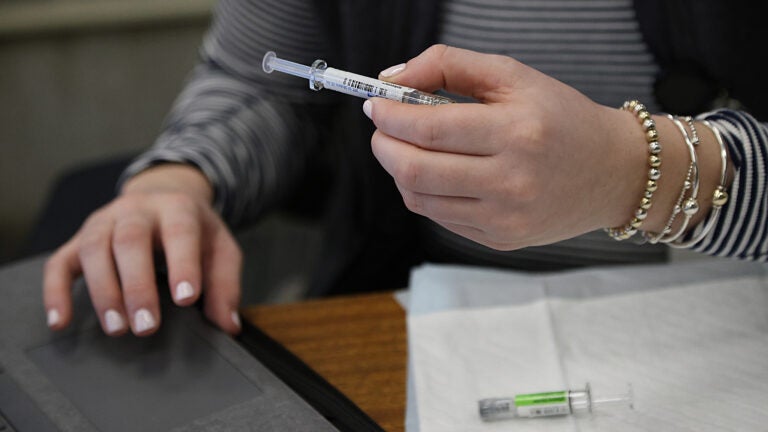
For many Massachusetts residents, this year’s flu season hasn’t felt routine — it’s felt relentless.
“Terrible. Like death. Chills, aches, fever, vomiting, diarrhea, snot production at 100% and then it settles into your chest,” said Boston.com reader Jen L. of Newton. “0/10 do not recommend.”
On Cape Cod, A.M.B. said the illness landed her in the hospital. “I was diagnosed with Flu A on 12/30/25. I was hospitalized 6 days later. I was never so sick in my entire life. I am still recovering.”
Others said the flu hit hard and fast, even among those who were vaccinated. “The flu season seems worse than usual,” said Karen B. “I am currently getting over the flu and felt the worst for about 36 hours. I am vaccinated but still got sick.”
So, is this flu season actually worse than usual — or does it just feel that way? And what can you do to protect yourself and others?
We asked experts and readers to weigh in on this year’s flu season.
Dr. Daniel Kuritzkes, senior physician of the Division of Infectious Diseases at Mass General Brigham, said it’s difficult to definitively call this year’s flu season worse than last year’s.
“The difference this year has been the earlier onset of the epidemic, not so much that there has been any difference in severity of individual cases,” he said.
According to Kuritzkes, last year’s flu season actually saw more cases during its peak than this year’s.
The 2024-2025 flu season peaked in February with 9,817 confirmed influenza visits to emergency departments in Massachusetts, Kuritzkes said, referring to data from the Massachusetts Department of Public Health.
This year’s flu season appeared to ramp up quickly in late November and peaked during the week of Christmas with 6,686 confirmed emergency department visits for influenza, the data show. The most recent data show flu activity remains “very high” in Massachusetts for the week of Jan. 4, although hospitalizations have continued to decline since the peak.
Still, the data doesn’t capture the full picture of what this year’s flu season has — or will — look like, experts said; the season is not yet over and many who become infected with the flu don’t require hospitalization or self-test to confirm they had the virus.
“We’re always looking at an iceberg,” Dr. Vandana Madhavan, clinical director of pediatric infectious disease at Mass General Brigham for Children, said of the state’s influenza data. “The number of [confirmed viral] infections is obviously an underestimate.”
On the receiving end, emergency rooms have felt the strain, Kuritzkes said.
Nearly 11 percent of hospitalizations during the week of Christmas were associated with influenza, state public health data show. While seemingly a small percentage, it had a profound impact on hospitals, Kuritzkes said.
“That’s a huge burden on the emergency departments and urgent care centers across the Commonwealth,” he added.
Mandavan concurred, saying influenza is the principal diagnostically confirmed respiratory infection she is seeing within the Mass. General Brigham hospital system. “Influenza is by far and away number one, followed by Covid,” she said.
Health experts said several factors likely contributed to the early surge, including lower vaccination rates and changes in the virus itself.
Just over a third (35.8 percent) of residents statewide received the flu vaccine this year, according to the Department of Public Health, slightly down from the nearly 38 percent of residents who had flu shots as of this week last year.
“With those declining rates, we’re going to see more infections and more hospitalizations or more complications,” Madhavan said. Kuritzkes echoed Madhavan’s concerns, saying lower rates of vaccination will “certainly leav[e] many more people susceptible to influenza.”
To make matters worse, the flu is also just “extraordinarily good at being a virus,” Madhavan said. It constantly changes or mutates to find new ways to infect humans.
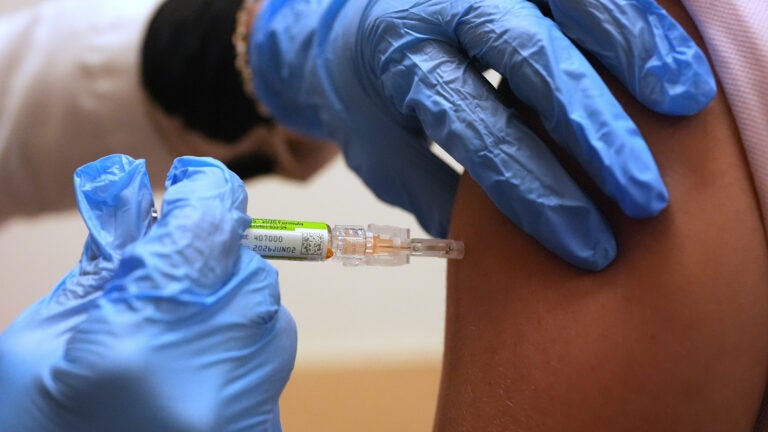
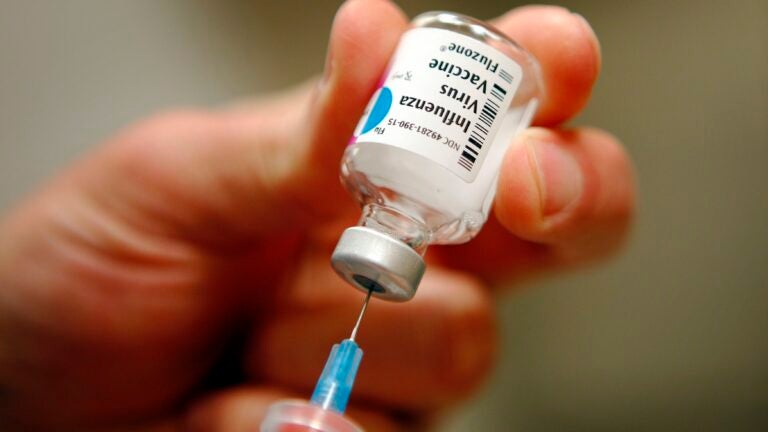
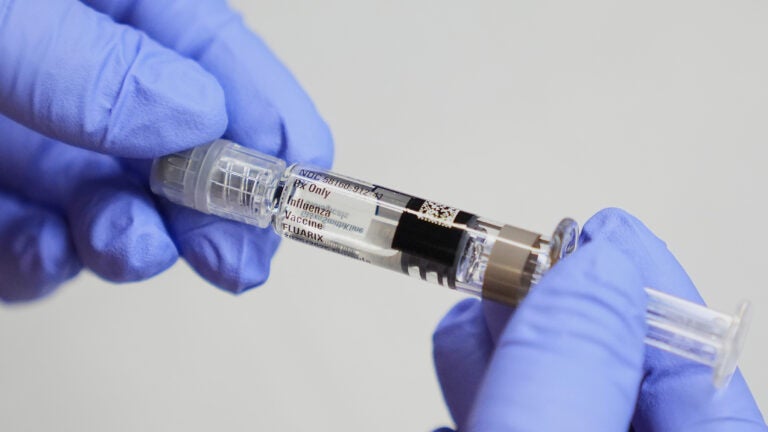
The dominant strain circulating this season — a variant of the influenza A H3N2 virus known as “subclade K” — is not a perfect match to this year’s vaccine, both experts said. However, getting the vaccine is still a safe and effective way to reduce the severity of the illness if you are infected, they emphasized.
“The vaccine may be less effective in preventing people from getting influenza, but we think it is still helping to moderate the severity of disease,” Madhavan said.
While many people recover at home, experts stress that influenza is not an illness to take lightly.
The people most at risk for flu complications are children under two and adults 65 and older, Madhavan said. People with underlying conditions such as asthma or heart disease are also at higher risk.
But even healthy individuals can become seriously ill. “Completely healthy people can get very severe influenza, and complications directly from influenza,” Madhavan said, including neurologic complications or severe muscle inflammation.
So far this season, 112 influenza-related deaths have been reported statewide, according to the Department of Public Health, including 5 deaths among children. While tragic, Kuritzkes said the number of deaths does not represent a dramatic increase compared with previous years. Last year’s flu season (2024-2025) was the deadliest since pre-pandemic, with 470 influenza-related deaths.
Experts said people who develop flu symptoms should take the illness seriously — but not necessarily rush to a doctor’s office if they don’t have to.
Madhavan recommends masking in crowded spaces, frequent handwashing and supportive care at home, including hydration and fever control.
Kuritzkes stressed the importance of early treatment for people at higher risk. “The treatments are most effective when taken within the first 48 hours after symptom onset,” he said.
Two antiviral medications are commonly used: oseltamivir, also known as Tamiflu, and baloxavir, known as Xofluza. “Both are highly effective against influenza,” Kuritzkes said.
Above all, experts urge people not to dismiss the flu as “just a bad cold.”
“Influenza is not a common cold. It’s not just a virus,” Madhavan said. “It absolutely can have very significant complications, including death.”
As this year’s flu season continues, doctors say the message is clear: stay vigilant, get vaccinated if you haven’t already, and seek care early if symptoms worsen.
Both experts emphasized that vaccination still matters — even now, post-peak.
“People still need to be taking this seriously, because it’s not gone. It’s just on the way down,” Kuritzkes said. “People who have not yet gotten vaccinated should still get vaccinated.”
That includes those who have already had the flu, he said. “Having had influenza A in December or early January is not going to protect you against catching influenza B when that begins to predominate later in the winter and into the early spring,” he added.
Madhavan agreed. “It’s definitely not too late,” she said, noting that flu activity can extend into March and sometimes even spike again in the spring.
With February vacation approaching for those with school-aged children, Madhavan urged families to take precautions. “Different parts of the country will have different levels of circulating influenza,” she said. “It’s never too late to get protected and get the vaccine.”
Below, readers share what this year’s flu season was like for them.
Responses have been lightly edited for grammar and clarity.
“I am a 59-year-old man and first started having flu symptoms on January 5. I went to the Brigham ER on January 9 with some difficulty breathing. I was discharged that day. I no longer have a fever but the cough is deep and strong and no medication will curb the cough so sleeping is difficult. My chest crackles so loudly that it is unreal. I walk up a flight of steps and I am so winded I have to sit down. Of course, there is also fatigue. The flu is no joke. I was vaccinated and my symptoms could have been a lot worse if I was not. I think I am slowly getting better.” — Peter B.
“Work in a hospital. Got the flu shot. Just today I woke up with a horrid cough and lots of flu-like symptoms. Not too bad though. Nothing a glass of whiskey can’t fix!” — Richard, Fall River
“5-month-old hospitalized with breathing difficulty from Flu A.” — Jessica, Buffalo, New York
“I cared for my mom (age 82) as she experienced a rough three weeks. She is asthmatic, COPD and a heart patient. On December 21, she was taken to the ER by ambulance. She was released five hours later with a prescription for [Tamiflu] and cough syrup with codeine. I left for an island vacation on December 24 and returned January 2. No illness.” — Pamela N., Fall River
“My family of 4 all had the flu last week and it was awful. Fever, sweats, body aches, congestion and coughs, vomiting for 3-5 days. One family member had received the flu shot and still got it. They sought out medical attention as they are elderly.” — Mags, Andover
“Fortunately I was vaccinated. I only suffered 2 days of misery before my fever broke and I was on the mend. My unvaccinated friend, however, was out with the flu for over a week, and then got pneumonia, still recovering 3 weeks later.” — C., Cambridge
“Began with a cough. High fever of 103 degrees. No energy. Lasted 2 weeks. Congested the entire time.” — Bonnie, Hampden
“I tested positive for Flu A. I took a test to make sure I wasn’t going to infect vulnerable family around the holidays. While it didn’t prevent me from getting sick, I think the vaccine was helpful to me since I had very mild symptoms (no fever, just a minor sniffle / stuffy nose, and a cough but it wasn’t too bad). My boys tested positive and had to miss a couple of days of school. One of my boys had a fever and the other just a mild cold. My husband is an ER doctor and he never tested positive for flu. We were all vaccinated. It’s so helpful that you can now buy a test through Amazon, etc. to test all at once for Covid/Flu A/Flu B.” — Nichole C., East Greenwich, Rhode Island
“I was sick for 3 weeks, Christmas Eve, Christmas Day, New Year’s Eve, and New Years Day; and a week after. The flu was just awful, then I got pneumonia after and had 2 rounds of antibiotics since I also have asthma.” — Nick A., Lexington
“Worst flu I have had in 20 years even having had the flu shot!” — Gary G., Andover
“2.5 weeks home. I am 66 and never had the flu that long.” — Leonard B., Newton
“I caught it in December, my best friend was sick and I caught it from her. I spent a good amount of time with her taking care of her, getting her medicine and what not. I don’t blame the vaccine, it’s not 100% effective, maybe I was able to recover faster because of it.
As far as symptoms, I experienced the typical fever, body aches, cough, and headache. It was weird, I was running a fever of almost 102 but I felt fine. I almost called out of work one day but when I woke up I felt great. The next day was complete misery. I ended up taking a day and a half off of work but thankfully I still had sick days leftover. As far as medical care I just used the medicine I had at home plus some home remedies. Overall, if I had to get the flu I am glad I got it before Christmas/New Year.” — Scotty, Framingham
“After returning from Thanksgiving on 11/29, the next day I came down with the flu for the first time in 50 years. I went to the doctor the next day in case it was Covid and tested positive for the Flu A. I am now 63. I had a lot of congestion, a fever, chills, headache, a very deep cough and extreme fatigue. I stayed home for a week and could have rested more, but work responsibilities prevented it. It took about 5 weeks to completely recover and since I still have congestion now and again. This illness was quite severe.” — John M., Oak Bluffs
“My 6-year-old looked run down on Sunday. Fever spiked around noon. Went to about 101 before we got Advil in her. It took about 30 minutes for the fever to drop. She tested negative on the home test but tested positive for flu Type A at urgent care. They prescribed Tamiflu. She took Tylenol and Advil one more time each for the fever. It broke Sunday night. Here we are on Tuesday with no fever, no congestion etc. We all had the flu shot. I had an elevated temperature Sunday afternoon for a couple of hours but my wife and I both tested negative. She has been home from school the last two days but is ready to go back. Just holding her home, not wanting to infect her classmates.” — J.C., Attleborough
Boston.com occasionally interacts with readers by conducting informal polls and surveys. These results should be read as an unscientific gauge of readers’ opinion.

Get everything you need to know to start your day, delivered right to your inbox every morning.




To comment, please create a screen name in your profile
To comment, please verify your email address
Conversation
This discussion has ended. Please join elsewhere on Boston.com