
Sign up for the Today newsletter
Get everything you need to know to start your day, delivered right to your inbox every morning.
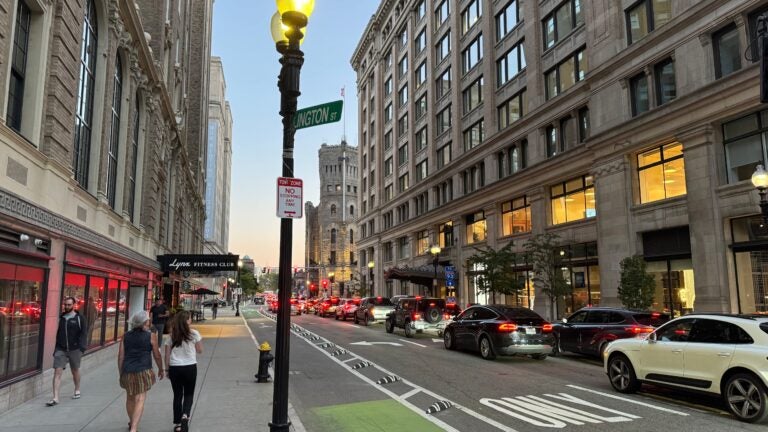
The Boston City Council is considering opening publicly-owned grocery stores to address food insecurity — but not everyone’s convinced it’s the right solution.
After a majority of the council showed support for a hearing order about publicly-owned grocery stores on Oct. 8, we asked readers if they thought the city should do this.
Despite a majority of the council body showing support for a hearing order on publicly-owned grocery stores, readers were less than thrilled at the idea.
“There is no way that city government could efficiently run a grocery store at the kind of scale that’s being discussed,” reader TF in Boston wrote. “The grocery business is incredibly difficult – the money would be better spent in partnership with an existing grocery operator.” An anonymous reader simply wrote, “The city has no idea how to run a store.”
An overwhelming 79% of the more than 200 readers who answered our poll voted against publicly-owned grocery stores, and 16% vote for Boston opening them. Two percent said ‘It depends,’ and 3% said they didn’t know yet.
The hearing order comes among rising food insecurity in the area. Trump’s One Big Beautiful Bill Act is set to disrupt some 40,000 SNAP recipients in Greater Boston due to the bill’s tighter work requirements, according to an analysis from Boston Indicators.
Also, the Greater Boston Food Bank’s latest annual report found that 37% of Massachusetts households faced food insecurity this year, up from 19% in 2019.
“Now is the time to have these conversations,” Council President Ruthzee Louijeune said at the meeting. “This is a timely conversation to explore our fragile food network.” Louijeune, who cosponsored the hearing order, hopes to explore the broader conversation in finding ways the city can support nonprofit grocers.
Publicly-owned grocery stores have become a hot-button issue after New York City mayoral candidate Zohran Mamdani has proposed city-owned grocery stores to lower food prices and combat food deserts as part of his campaign.
The hearing order will be the subject of a future discussion where city officials, nonprofit workers, and others will be asked to answer questions posed by City Council members.
Ahead, read a sampling of what readers say about publicly-owned grocery stores in Boston.
“There is no way that city government could efficiently run a grocery store at the kind of scale that’s being discussed. The grocery business is incredibly difficult – the money would be better spent in partnership with an existing grocery operator. There could be a series of 2-3 year contracts which grocers would bid on in order to provide lower cost options for Boston residents.”- T F from Boston
“This seems likely to be a new government bureaucracy, with its own inefficiencies and no govt experience in the area. Why not give those advantages to an existing functioning grocery chain on a competitive, profit-sharing basis?” – Anonymous from Brookline
“Noble goal. However, it’s failed everywhere else it’s been tried for a litany of reasons. This City Council has trouble staying out of prison let alone managing this project. Waste of time.” – David D. from Boston
“Who is going to pay for this? Keep raising taxes and you won’t be able to afford it.” – Joe from Cambridge
“Cities/towns will look for ways to fund them which will ultimately mean higher taxes. Either way…we pay!”- Anonymous from Amesbury
“Won’t work or make a difference. They’ll go bankrupt. Those who truly can’t afford food can’t afford cheap food either. Better off donating more to food banks for tax breaks.” – Al from Allston
“Food is a human right, and no one should have to choose between getting a better job and being able to afford food. If your income gets bumped just above the SNAP threshold, oftentimes you end up worse off than before. The money you have to spend on food (that was previously covered by SNAP) then has to come out of rent and other essentials. Not to mention if you have allergies (like my wife) and all your food costs more than an ‘average’ persons. I hate watching my wife run out of food they can easily eat over and over because our SNAP ran out due to high prices on ‘health’ foods. No one can control their body and what it reacts to. Everyone deserves nourishment. It’s literally the most basic need for all of us.” – Marziel from Quincy
“We need more affordable grocery options. Artie T. Demoulas should be invited to lead the effort.” – Anne from Watertown
“We are one of the richest states in the country. We can afford to help the poorest residents in our state to make sure basic needs are met which would increase local safety and reduce poverty, hunger, and crime as well as give children of the working poor a better chance to have success in school and in their early development.” – Tovia S. from Worcester
I’m for exploring it with the caveat that ALL residents will be able to shop there. There can be a fine line between individual needs and the City should not implement some type of an income/needs based program. – Paul B. from Dorchester
Boston.com occasionally interacts with readers by conducting informal polls and surveys. These results should be read as an unscientific gauge of readers’ opinion.
Get everything you need to know to start your day, delivered right to your inbox every morning.




To comment, please create a screen name in your profile
To comment, please verify your email address
Conversation
This discussion has ended. Please join elsewhere on Boston.com