
Sign up for the Today newsletter
Get everything you need to know to start your day, delivered right to your inbox every morning.
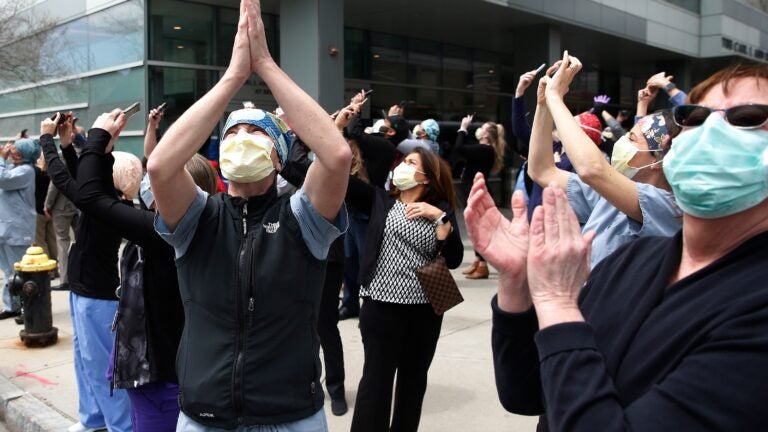
Five years ago, on March 11, 2020, the World Health Organization (WHO) declared COVID-19 a pandemic. In the weeks, months, and years that followed, COVID-19 reshaped the world as we knew it.
Daily life was moved indoors under lockdown, businesses shuttered or found new ways to survive, and in-person learning was moved online. Countries closed their borders, and began the global response to the pandemic.
Then, slowly, the world returned to something resembling “normal”: vaccines became available, restrictions were lifted, masks became optional, schools and businesses reopened, and economies rebounded from their lockdown-era slump.
The WHO declared an end to Covid-19 as a global health emergency on May 5, 2023, and Massachusetts ended the statewide COVID-19 public health emergency on May 11. But despite having “ended,” most respondents to our poll said the pandemic is far from over – and remains an ever-present threat to public health, despite much of society having moved on.
“I haven’t felt ‘2019 normal’ at all and I don’t think I ever will again. I’ve lost a lot of faith in people, and now our government, to help our communities should another outbreak of any kind happen in the future,” Danielle from Winchendon said.
The number of COVID-19 cases and deaths has gone down significantly since the early years of the pandemic, both nationwide and statewide. COVID-19 cases in Massachusetts reached an all time high during the first week of January 2022, with a total of 177,747 confirmed and probable cases. The most recent state data show weekly cases at just a fraction of the January 2022 peak: from February 23 to March 1, 2025, there were a total of 839 confirmed and probable cases, according to the state Department of Public Health COVID-19 dashboard.
Despite the progress made, people are still getting sick and dying from the virus. There were 497 confirmed COVID-19 deaths and 65 probable COVID-19 deaths this respiratory season (which begins in July and ends in June), the state dashboard shows. Boston.com readers were quick to point out this stark reality.
“People are still catching COVID. It is still disabling people with long COVID. This isn’t over,” Rebecca from Waltham said.
For many living with long COVID-19 – a chronic condition that can occur after a COVID-19 infection, and which lasts for at least three months – the pandemic is a palpable, painful part of their lives. It’s a daily reminder that while the world might have moved on, their lives haven’t – can’t.
“I have had long COVID that has severely limited my life for the past 15 months. Unfortunately, it seems like it will dominate my life going forward,” reader Elias from Jamaica Plain said.
Below, readers share why they feel the COVID-19 pandemic isn’t over – and what we should do to better protect ourselves and others.
Responses have been lightly edited for grammar and clarity.
“There have been some amazing shifts since 2020 thanks to the healthcare workers, scientists, and organizers who worked tirelessly to bring us vaccines, masks, tests, air filters, and wastewater monitoring — all of which I use to this day! A favorite memory was Facetiming friends across the country to celebrate as our vulnerable loved ones became eligible for the vaccine.
However, I don’t expect things to feel ‘normal’ again. Hundreds of people [across the country] die from COVID every day, there is no cure for the millions of Americans suffering from long COVID, and it feels like people are generally getting sicker than before, possibly due to COVID-damaged immune systems or lowered vaccine uptake. We need to look these problems in the eye to truly end this pandemic and prepare for the next.” – Sarah, Cambridge
“COVID is still spreading, and while vaccines help with preventing severe illness, they don’t prevent infection as much as we hoped. People are still dying from COVID every week – this is very much not over for disabled, immunocompromised, and elderly people. Additionally, the rates of long COVID are still being discovered, and the long term effects are still being uncovered as well. So even if you are healthy you could be at risk. I never stopped masking or testing to make sure I protect my health. It is absolutely not over.” – Alex, Boston
“I have long COVID. I was diagnosed in January 2023. It has destroyed my life. I can no longer work, I am mostly confined to my home due to severe exhaustion, difficulties with thinking, poor balance, and severe digestive problems. No. COVID is not over.” – Ann, Watertown
“My child has long COVID. I continue to wear a KN95 or N95 indoors. I can’t afford to get sick. We would need to improve indoor air quality significantly and develop a true culture of staying home when sick for me to change my behaviors.” – Anonymous reader, Arlington
“I’ve been living with long COVID for 5 years now. My long COVID support groups keep getting bigger, with more and more arriving, newly-disabled from COVID. There are still no approved treatments. People are still dying and becoming disabled. Our public health policies have been dictated by corporations, not science. Too many health care providers still don’t understand what the virus does to our bodies, whether or not we end up with long COVID. I’d say we’re in a stage of denial, not the end of a pandemic.” – Sarah W., Belchertown
“I’m immunocompromised. The world has largely become inaccessible to me, due to people acting like the pandemic is over, when it is not. If everyone cooperated, and prioritized community care, we would be in a much better place than where we are right now. The (ongoing!) pandemic has really illuminated how normalized ableism and individualism and lacking empathy has become. It is a privilege to be able to pretend it is over.” – C, Chelsea
“My husband has heart disease and I have an autoimmune disease. We can’t pretend that COVID isn’t a threat anymore. Catching COVID could kill my husband (yes, even with vaccines!) and could disable me further. I wish folks understood that COVID damages your cardiovascular, neurological, and immune systems.” – Beth, Roslindale
“What normalcy? What I see – as an immunocompromised middle-aged woman living with her elderly high risk family member – is the public acquiescing (or eagerly agreeing to) ‘leadership’ making an empty declaration to save the economy. My family members and I wear N95s everywhere outside our home. We have kept up precautions that most folk abandoned long ago. We watch loved ones and strangers somehow accept being sick multiple times a year due to compromised immune systems because of prior SARS-CoV-2 infections, and the changes to risk assessment and empathy (for multiple reasons including said infections) are ever present every day.” – Tamar S., Belmont
“I am a longtime registered nurse and former infection control nurse, and while subsidies for the pandemic ended in 2021 under President Biden, the pandemic is not over and it continues to kill and disable hundreds of thousands of Americans every year in the United States. Public health messaging has been poor around COVID-19 and people are living like it’s 2019 with absolutely no mitigations and with vaccine acceptance being currently very low, which means that the pandemic is roaring along, but no attention is being given to it by either the CDC or mainstream media. Our government has chosen profit over people, with the economy being the most important thing for our elected officials.” – Karen W., Westfield
“The collective urge to return to ‘normalcy’ has resulted in a process that was rushed and botched, largely because of poor leadership. Our community has suffered greatly because of this. COVID is still prevalent. I mask and test regularly after potential exposures. Care for your fellow human, wear a mask.” – Brian, Medford
“It’s not over. My wife has long COVID and I don’t know if our lives will ever go back to normal. And I’m terrified our current health administration is going to endanger the vaccine system.” – Jane, North of Boston
“I wish the pandemic were over. As time has passed, those in power have done everything they can to eliminate the ongoing pandemic from public consciousness so that people will behave as if it is a thing of the past. Unfortunately, ending the government response to the pandemic did nothing to end the pandemic itself; it has, in many ways, made things worse.” – Becca, Waltham
“COVID can lead to long term complications and we are still learning about how detrimental repeat infections of it are to our bodies. It won’t be over for me until there is a vaccine that is better at preventing it.” – Sara, Worcester
“It’s not over. People are still getting infected, becoming disabled, and dying from COVID. I have a blood clotting disorder and my partner is chronically ill and we cannot risk any of the many and varied health complications COVID is known to cause, nor do we want to roll the dice on long COVID. We still mask everywhere we go, test before seeing friends and family (and ask them to test as well), use air purifiers whenever possible, do not eat in indoor public spaces, make sure to get updated vaccines when available, and limit our time in crowded spaces like concerts and conventions. We will likely mask for years to come, unless some scientific breakthrough produces a vaccine that prevents COVID or an effective and enduring treatment for long COVID.” – Hannah, Boston
“COVID is very much still a concern; we continue to infect millions of people who go on to have resulting health problems and are disabled by long COVID symptoms. My family continues to mask in public spaces, avoids dining indoors, tests regularly, and asks those around us to notify us of illness before getting together. I am personally waiting for a sterilizing vaccine to feel more comfortable declaring some sort of normalcy. But I don’t think I want to go back to the ‘normal’ of pre-2020. I worry about what will happen if another pandemic arises given how quickly people have dismissed simple and effective public health measures.” – Nicole, Metrowest
“I continue to mask and take other precautions to protect my own health and the health of others in my life and in the community. There is still a substantial number of people in Boston, in Massachusetts, throughout the country and in the wider world that are still at high risk of severe illness or death if exposed to COVID. This has not changed for them throughout these five years. Some of the people I’m referencing are people with continued effects of long COVID or medical complications that resulted after a covid infection. Some of these folks have been dealing with other chronic medical problems or disabilities since even before the pandemic.
Most people have decided to ‘move on’ from COVID, but others of us are still here, remembering what we learned about simple ways to keep each other safe and mourning a lot of the ways we see people disregarding each other when it comes to public health. We’re not done with public health crises and we can’t solve them individually. I hope some day more of us see it that way.” – A, Boston
“I still avoid indoor gatherings, with the exception of necessary medical care and a few other necessary situations. I wear a high quality, well fitted N95 mask when I do have to be indoors with others. I’m waiting to see the people who don’t take precautions by choice return to normal health, rather than everyone coughing and ailing and developing new puzzling medical symptoms all the time. I’m waiting for the healthcare system to be able to function properly again.” – Erica S., Pawtucket, Rhode Island
“I still mask almost everywhere, and ask guests to rapid test if they’re going to unmask in my house. I schlep air filters to work and social events – I don’t understand why it’s so hard to have clean air five years in! I’m disabled and already spend two or three hours a day managing my disability. I don’t think I could cope with long COVID on top of what I’m already dealing with. Research indicates the risk of long covid increases with each infection, so even though most of my friends act like it doesn’t exist anymore, I’m still trying to stay safe and healthy.” – Lidia P., Medford
“I continue to mask in indoor, and crowded outdoor spaces. I do this for my own health, for the health of my family, for the health of those around me, and for the message it sends about caring for the community. By ‘moving on’ we have signaled to our low-immune and disabled neighbors that we don’t care about them.” Because we don’t mask, nor address air quality, nor invest in better vaccines, what we are saying, as a society, is that a generation of disabled and sick kids is okay with us. I don’t want that for my teen. I don’t want that for myself. I don’t want that for my society.” – Kristina K., Arlington
“When the kids were allowed in classrooms without masks.” – Chad, Newton
“When my parents and in-laws got their second doses of vaccine and could see their grandkids without all the paranoia and constant fear of getting them sick. My doses would come later but once loved ones were vaccinated I could finally breathe easier.” – Chris, Upton
“Personally, the feeling it was over grew as in-person interactions increased without any repercussions.” – Melody, New Hampshire
“I was flying in the air when the Supreme Court overturned the mask requirement at airports and on planes back on April 18, 2022. People around me saw the news on their phones and asked the flight attendants if we could remove our masks. We watched her go up to the pilots and 5 minutes later we hear the pilot announce “We have received an update to our masking policy, it is now optional to wear a mask.” The plane erupted in claps and cheers with people spinning masks over their heads. You could sense it even more walking through the airport after landing, people telling each other masks were not required. This is when I know people wanted to live normal without restrictions.” – James, Quincy
“When we could finally fly and go to the doctor without a mask. That’s when I knew the world was back.” – Joe, North End
“When COVID boosters became the new normal in fall 2021. I get them when they come out and have avoided getting COVID, by avoiding close gatherings in seasonal surges. I haven’t worn a mask since the summer of 2021.” – Mike, Seacoast, New Hampshire
Boston.com occasionally interacts with readers by conducting informal polls and surveys. These results should be read as an unscientific gauge of readers’ opinion.

Get everything you need to know to start your day, delivered right to your inbox every morning.





To comment, please create a screen name in your profile
To comment, please verify your email address
Conversation
This discussion has ended. Please join elsewhere on Boston.com