
Newsletter Signup
Stay up to date on all the latest news from Boston.com
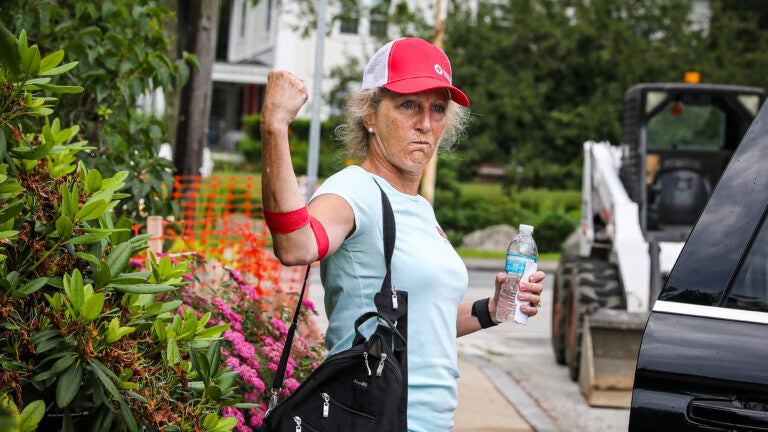
If you’ve been putting off setting up an appointment to donate blood, now’s the time to do it. Hospital leaders and humanitarian organizations like the American Red Cross are sounding the alarm about a severe blood shortage in the country that’s impacting medical care nationwide.
We asked readers to tell us how often they donate blood, and 96 people wrote in to tell us why they felt it was important to give blood whenever they can.
“I found out I’m O negative, and when I heard of the shortage, felt like there was no better time than now to donate,” said Sarah from Brookline. “I work for a big health system and realized we were at risk of canceling elective procedures again if we didn’t start getting more blood banked.”
Hospital beds are starting to fill up with COVID-19 patients as the delta variant spreads just as they face increased demand from patients who postponed medical care earlier in the pandemic. According to the Red Cross, hospitals are also “responding to a higher number of traumas and emergency room visits.”
The heads of hospitals across New England have called on residents to donate blood, saying in a public service announcement that their providers continue to face a severe blood shortage.
Kim Cronin, the manager of donor services at Massachusetts General Hospital said the blood shortage is the worst she’s seen in nearly a decade. Because of the pandemic, businesses and schools that would typically serve as locations for blood drives have been closed to drives for over a year.
People are also less likely to venture out of their homes to donate, and those that do are met with short-staffed donation clinics because of the pandemic-induced labor shortage. Pre-pandemic, the hospital could run 30 bloodmobiles. Now, they’re down to five or six.
When there’s a shortage, hospitals like Mass General have to prioritize who gets blood, meaning some patients in need have more of a wait.
“It’s really important for people to understand that the blood needs are constant, it never stops. Even at the height of COVID, the hospitals were open. We were still doing surgeries, we’re still dealing with people coming into the ER,” Cronin said.
Forty-seven percent of readers who responded to our survey said they had donated blood this year and 9% said they had last year. Of those who haven’t donated in the last five years, or ever, the most mentioned reasoning was the inconvenience of scheduling a donation appointment. Some also said they had scaled back their donations during the pandemic as a way to limit their contact with others.
“I gave in [the] past because it was convenient. Helpful when Bloodmobile or ARC [BloodHub] team came to my place of employment,” said one reader. “[I] have been reluctant to give because I am trying to limit contact during the pandemic with folks outside my home due to my family’s health. I’m O negative which I know is in demand.”
“Giving blood is not on the top of everyone’s priority list but we have to try to get people to remember that no matter what is going on in the world, there are people in the hospital who desperately need blood,” Cronin said. “And the only place we can get blood from is another human being who’s willing to roll up their sleeves and share their good health.”
If you’re looking to give blood, here’s what you need to know to donate blood in Massachusetts.
If you’re donating in Massachusetts, there are certain guidelines you need to follow in order to donate blood. You’ll be asked to complete a questionnaire, including health and lifestyle questions, at your blood donation appointment to determine eligibility. In general, donors must be in good health, be at least 17 year old, or 16 with parental consent, and weigh at least 110 pounds.
If you have specific questions about your health and eligibility, Cronin said it’s best to call and your donation clinic and ask.
You can visit Massachusetts General Hospital’s blood donation center at 55 Fruit St. in Boston. Although they’re less frequent now with many businesses and schools closed, the center also hosts blood drives.
There are also seven Red Cross blood donation centers across the state in Springfield, Worcester, Danvers, Dedham, Boston, Weymouth, and Raynham. The Red Cross sponsors blood drives at local businesses, churches, clinics, and other community organizations. Anyone interested in donating can find a drive closer to them.
Most blood donations will take 30 to 45 minutes, according to Cronin. Donors should be prepared to fill out paperwork prior to donating and wait 10 to 15 minutes afterward to ensure they don’t get lightheaded.
“The donation is actually the shortest period of time in this whole process. The actual donation average for people is about seven to eight minutes to donate the unit of blood,” Cronin said. “Then you move on to the refreshment area and you get your juice and cookies and that’s the favorite part of it.”
The most important thing a person can do before giving blood is to be well-fed and well-rested. Other than that, if you’re eligible to donate, there are no special precautions you need to worry about.
“We’re taking a unit of blood so we want you to eat a meal. The big thing is to really hydrate well. That’s so important to really increase the amount of water intake for 24 hours before in the day,” Cronin said, adding, “You shouldn’t come in if you’re exhausted. We want you feeling good.”
Donors can safely give blood every 56 days, but shouldn’t feel obligated to donate on a strict schedule if that doesn’t work for them, Cronin said. Instead, it’s more important to focus on giving whenever possible.
“I never want to discourage people. We’re not asking you to come every 56 days but if you could come in two times a year, that’s great. Three times a year, that’s even better,” Cronin said. “Do what you can and what you can fit into your schedule. Every bit is going to help.”
Whether they donate every 56 days without fail or try to donate at least once a year, readers said they knew the value of giving blood when eligible. Ahead, you’ll find some responses from readers on why they feel blood donation matters to them and to their community.
These responses have been edited for length and clarity.
“The first time I gave blood was in Millis High School in the 1970s. There was a blood drive and my mother signed a permission slip. I no longer live in Millis but just gave my 110th pint at my local blood donor center, and have given over 15 gallons in my lifetime. It’s easy, it’s important, and they give you cookies. Give the gift of life. Donate blood today.” — Mike, Millis
“The Nicholas Xiarhos memorial blood center at Cape Cod Hospital is where I usually go every two weeks to donate platelets with my wife. While I was active duty at Fort Hood, I’d donate whole blood every two months because it would go directly overseas to support the military. I’m currently deployed with the 1-101 Field Artillery Regiment of the Massachusetts National Guard and just donated platelets again out here with a standing reservation every two weeks to come back. Whether it goes to fellow service members or to refugees out here, it’s critical and also low. Back home, just another way to quietly serve my community with my wife, who’s a local dentist and a Captain in the Massachusetts ARNG.” — Jeremy D. Armstrong
“I give to Children’s Hospital regularly to help give back all they did for my niece who needed multiple transfusions as an infant.” — Lori, Freetown
“I’ve been giving since the ‘70s. Ninety-five pints, almost 12 gallons. I am healthy and hope that I can make a difference in someone’s life.” — Anonymous
“I donate platelets every two to three weeks. I’m able to give enough to help three patients with each donation which makes me want to do it as often as I’m able. They only last five days so there is always a high need for donors.” — Cat, Central Mass.
“My father, a police officer, gave regularly as he saw firsthand the need for blood donation. I then picked up the habit from him and have been at it regularly for several decades. There’s a great need, so please begin giving.” — Chris Gregory, North Smithfield, R.I.

Stay up to date on all the latest news from Boston.com




To comment, please create a screen name in your profile
To comment, please verify your email address
Conversation
This discussion has ended. Please join elsewhere on Boston.com