
Newsletter Signup
Stay up to date on all the latest news from Boston.com
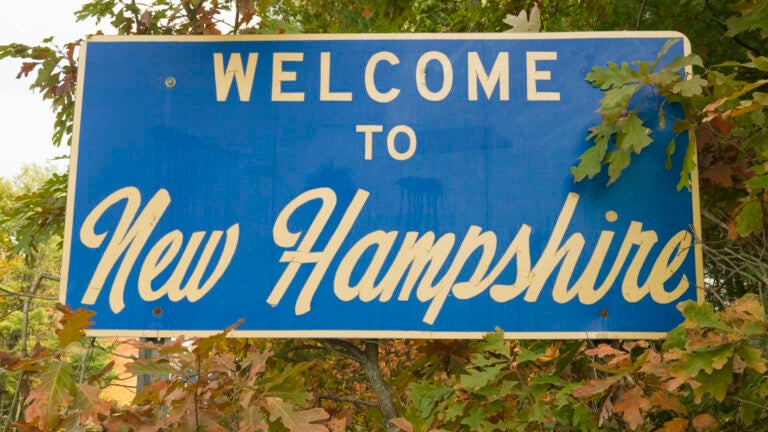
Massachusetts and New Hampshire residents alike have strong opinions about the ongoing income tax dispute between the two states.
This week, the Supreme Court declined to hear a case on whether or not Granite State residents working remotely for Mass. companies should be charged income tax. Gov. Chris Sununu’s administration sued Massachusetts in October after Gov. Charlie Baker’s administration said it would hold workers who had started telecommuting during the pandemic to the state’s 5 percent income tax.
“By siding with the Biden Administration and allowing inappropriate taxation of NH citizens, the Supreme Court is setting a costly precedent,” Sununu told Boston.com in a statement. “This decision will have lasting ramifications for thousands of Granite State residents.”
We asked Boston.com readers if they thought people working from their New Hampshire homes for a Mass. business should have to pay Mass. income taxes, and they leaned toward opposing the tax, with 54 percent of 1,153 respondents saying Mass. was out of line. Still, a sizable 46% said the tax was reasonable.
“No way employees who live and work in New Hampshire should pay Massachusetts taxes,” one reader said. “The companies should set up a New Hampshire subsidiary and pay their New Hampshire workers though that entity.”
Another reader said that they plan to quit their job at a Massachusetts-based company if this tax stays in place.
But Massachusetts residents who support Gov. Baker’s tax say the revenue it brings in is needed to support the state’s economy.
“Taxes help build the thriving economy that produces the jobs the New Hampshire folks have,” one reader said. “They need to contribute to the system that benefits them.”
About 15 percent of New Hampshire’s workers commute to Massachusetts for work. Prior to the pandemic, more than 97,000 New Hampshire residents commuted to Massachusetts, leaving their income tax-free state to pay the Bay State’s tax. Workers who had been working remotely prior to the pandemic still don’t have to pay the tax.
“New Hampshire should create more high-paying jobs for their citizens if they do not want them to pay Massachusetts income tax,” a reader told Boston.com. “It’s obvious they were wrong since the case would not even be heard by the Supreme Court. Live free or die does not mean you do not have to pay taxes.”
Many readers pointed out, however, that remote workers use very little, if any, services in the state where their job is located. Readers against the income tax said that in a job market that increasingly involves remote work, this dispute could set a precedent that negatively impacts telecommuters.
“Remote New Hampshire residents do not use Mass. infrastructure and do not benefit from the taxes paid, and therefore are paying an income tax that is only of value to Mass. residents,” one reader pointed out. “The slogan ‘no taxation without representation’ comes to mind. As a New Hampshire resident who has worked for both Massachusetts and New Hampshire-based companies remotely, this would absolutely cause me to look elsewhere for employment in order to avoid having thousands of dollars stolen from me by a state I don’t live in and have no ties to.”
More than 100 readers shared their thoughts on this income tax dispute with Boston.com. Below, you will find a sampling of their responses.
Responses have been edited for length and clarity.
“I live in New Hampshire, company is in Massachusetts. I haven’t worked in the state of Massachusetts since March 2020 and my company doesn’t plan on ever going back. I don’t commute using Massachusetts roads or even enter the state for work purposes. Not fair that I should be paying just because there is an office located there. My company can pay the taxes if they want to keep the office.”
“Taxachusetts strikes again! They never miss an opportunity to stick it to the common people. The lawmakers on Beacon Hill have no sense of decency. It’s not enough that they squeeze every penny from actual residents of the state. Now they have to mess with people who live in surrounding states and never set a foot in Massachusetts. Disgusting!” — Brian, Littleton
“Let Massachusetts tax the corporations and see what happens. Taxes in Mass. are a joke and never go to the intended recipients. Maybe we should be spending the money more wisely and taxing less?” — Jon, Lincoln
“They’re not using Massachusetts roads or services, so they should in no way pay Massachusetts taxes. The pandemic should have nothing to do with it. If people were allowed to deduct the days spent working from home before the pandemic, it should be no different after, no matter how many more people were affected. The gutless Supreme Court punted on this one.” — Jim, Methuen
“The fact that Mass. is not charging people who were working from home before the pandemic set a clear precedent — if you’re not in the state, you don’t pay taxes in the state.” — Fred Smith, Danvers
“Last time I checked, there are MANY Massachusetts residents with second homes in New Hampshire and Gov. Sununu could go after the Mass. residents heading north every weekend! Careful what you ask for Governor Baker, our friends up north could find a way to return the ‘revenue’ back to the Granite State!” — Chris, North Andover
“Income taxes are collected from the state where income is earned. I lived in Mass. but worked in New Jersey several days a week. Still had to pay New Jersey income tax. My dad worked in Rhode Island and lived in Massachusetts. Still paid Rhode Island income tax. Why should New Hampshire be any different?” — Dan, Quincy
“It seems very simple to me that employees pay income taxes to the state that pays their salaries. People move to New Hampshire in order to avoid Massachusetts state taxes and take millions with them to spend in New Hampshire. Doesn’t seem right to me.” — J. Mistry, Lynnfield
“New Hampshire workers who do commute to Massachusetts use our infrastructure — roads and bridges such as Route 3 South, 95S — which needs to be paid for. Route 3 South and North were widened considerably 18 years ago at considerable cost to Commonwealth taxpayers. All commuters burden our infrastructure and public transportation. Many of these commuters are from New Hampshire. The income tax helps share the burden of cost.” — Chris, Wakefield
“If you get Mass. pay for Mass. work, you should pay Mass. income taxes. Either agree to a reduction in line with New Hampshire wages or take a job in New Hampshire.” — Steve, Boston
“How can the state of New Hampshire be so obtuse in regards to this? I own my own business in Massachusetts and New Hampshire taxes me 5% of my schedule K earnings even though the company is in Massachusetts and I am a New Hampshire resident. If they can justify and collect this, then they have no business claiming that Massachusetts does not have the right to collect their 5%. It’s a Massachusetts business, that’s where the jurisdiction should be. The issue here is New Hampshire’s decision to not collect the 5% from Massachusetts or out-of-state workers working in New Hampshire.”
“Massachusetts employers provide the opportunities, the means, and the rewards to their employees. Employers and employees in Massachusetts must pay taxes to the Commonwealth. It makes no sense to allow employees who live in a no-tax state to reap benefits, many of which are provided by the government and taxpayers of Massachusetts.” — Stephen Patten, Cambridge
Boston.com occasionally interacts with readers by conducting informal polls and surveys. These results should be read as an unscientific gauge of readers’ opinion.

Stay up to date on all the latest news from Boston.com





To comment, please create a screen name in your profile
To comment, please verify your email address
Conversation
This discussion has ended. Please join elsewhere on Boston.com