
What to know ahead of the 2024 Massachusetts presidential primary
The Massachusetts presidential primary will be held on March 5. Here’s what you need to know.
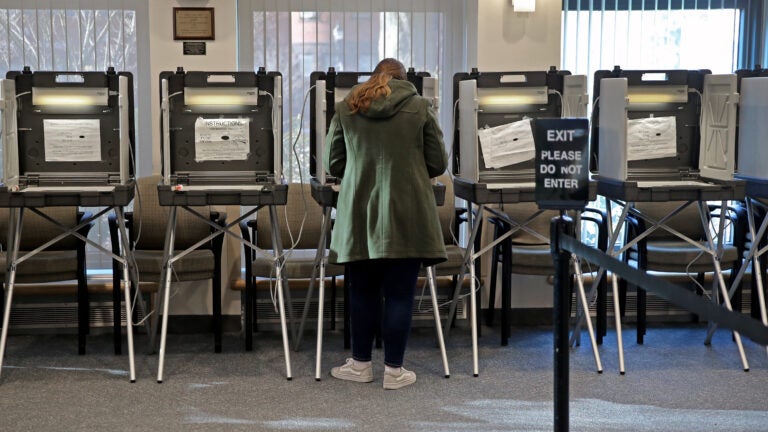
Massachusetts residents will head to the polls on Tuesday, March 5 for the state’s presidential primaries. That’s Super Tuesday, when the largest number of U.S. states (14, this year) hold their primary elections and caucuses.
In Massachusetts, every registered voter can vote in a primary election. You do not need to be a party member to participate, but your party registration may affect your ballot options. There are currently three recognized political parties in Massachusetts: the Democratic Party, Republican Party, Libertarian Party.
So what does this mean for you, the voter?
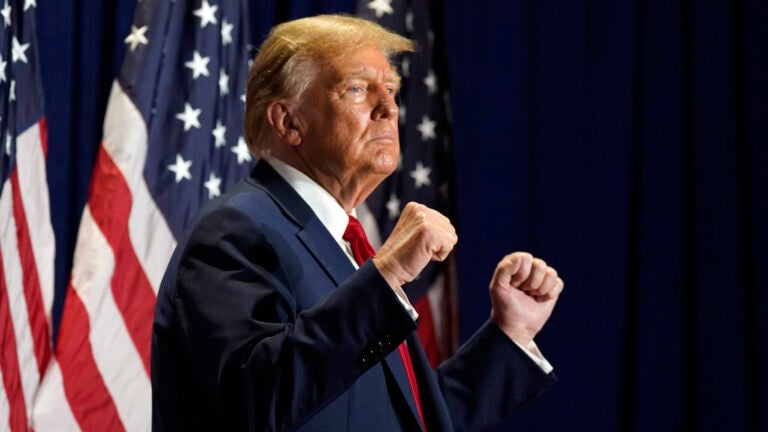
Republican voters will see former president Donald Trump on the ballot, despite an ongoing legal battle between advocacy groups and the state’s courts to bar him from being listed. A ruling by the U.S. Supreme Court on Monday has ended this effort to kick Trump off the ballot.
The U.S. Supreme court issued an opinion Monday to restore the former president to the ballot after Massachusetts and several other states attempted to bar him from appearing under Section 3 of the 14th Amendment. The justices ruled that states cannot invoke the constitutional provision to keep presidential candidates from appearing on ballots. Instead, that power resides with Congress, the court wrote.
Secretary of the Commonwealth William F. Galvin said in a press conference Monday that the court’s decision to issue the ruling the day before Super Tuesday was made “deliberately,” and he hopes it will help inform Massachusetts voters as they head to the polls.
“Today’s decision is extremely important for voters. [SCOTUS] issued it at before 10 o’clock this morning so that all the voters who are voting tomorrow – and all the voters who will be going to vote over the next few months – know what the rules are, know what the impact of the 14th Amendment is, and knows who’s responsible to enforce it – which they say is the Congress,” Galvin said.
In addition to Trump, Republican voters will also see Chris Christie, Ryan Binkley, Vivek Ramaswamy, Asa Hutchinson, Ron DeSantis, and Nikki Haley on the ballot.
Democratic voters will see incumbent President Joe Biden’s name on the ballot, as well as American businessman and politician Dean Phillips and author and politician Marianne Williamson. Both Phillips and Williamson were placed on the ballot by Secretary of the Commonwealth William Galvin after the Williamson campaign criticized the Massachusetts Democratic Party for submitting only Biden’s name to the ballot.
For Libertarian voters, it’s a five-way race between Jacob George Hornberger, Michael D. Rectenwald, Chase Russell Oliver, Michael Ter Maat, and Lars Damian Mapstead.
If you’re registered as an independent, you can vote for any party at the ballot box, since Massachusetts has an “open” primary. This means that voters who aren’t enrolled with a party can vote for any party at the ballot box. Galvin said independent voters have a significant opportunity in the primary because of this flexibility.
“We have seen that high level of interest from Independent voters very clearly. We’ve seen a significant number of fluctuations even among party enrollments that suggest that many voters are aware of this option,” he said.
You can also vote “no preference” in the primary. Organizers at a Cambridge march for a cease-fire in Gaza this weekend encouraged protesters to vote “no preference” on the Democratic ballot to protest President Joe Biden’s support for Israel in its war against Hamas. Galvin said voting “no preference” is the quicker choice, administratively speaking, than writing-in “cease-fire,” as was initially encouraged by the organizers.
“From an administrative point of view, if someone wishes to vote to express concern about an issue, [voting] ‘no preference’ would be the better choice than ‘ceasefire’ as it’s more easily counted, [and] more clearly meaningful in terms of the process of electing delegates,” he said.
Several of the candidates on the ballot have suspended their presidential campaigns since the ballots went to print in early January, but voters will still be able to cast votes for them, according to Debra O’Malley, the director of communications for the Office of the Secretary of the Commonwealth.
“As is almost always the case, several candidates have suspended their campaigns since the printing of the ballots. Voters may still vote for those candidates, and their votes will be tallied in accordance with their choices. Candidates who have suspended their campaigns may even still amass delegates, if party rules allow for it,” O’Malley said in an email to Boston.com.
Below, you’ll find an updated guide to voting in the presidential primaries.
If you have questions about the presidential primaries please email us at [email protected].
Register to vote | Early voting | Absentee and mail-in voting | Find election offices and drop boxes near you | Polling locations
Register to vote
The deadline to register to vote in the presidential primary was Feb. 24.
Early voting
For the March 5 primary, early voting took place in Boston from Saturday, Feb. 24 through Friday, March 1. If you missed the early voting period, you can still vote on Tuesday, March 5, on the date of the presidential primary.
Absentee and mail-in voting
Absentee voters use the same ballots as early Vote by Mail voters and have the same deadlines for returning their ballots. Most voters who qualify for an absentee ballot can choose instead to apply for an early Vote by Mail ballot. There are some times that an absentee ballot application is needed.
You can vote by absentee ballot if:
- You will be away from your city or town on Election Day
- You have a religious belief that prevents you from voting at your polling location on Election Day
- You have a disability that prevents you from voting at your polling location
Application Deadlines
The absentee and mail-in ballot request deadline was Feb. 27.
Any mail-in ballot must have been requested in writing by 5 p.m. on the fifth business day before the election. Your application was only be accepted if it had reached your local election office by the deadline.
The absentee and mail-in ballot return deadline is March 5.
More than 400,000 ballots have already been cast by mail, Galvin said. Ahead of tomorrow’s primary, he recommends voters (or their relative) drop off their mail in ballot at the local clerk, saying that the Postal Service at this point not reliable enough to ensure that your vote would counted. Ballots cannot be dropped off at a polling place on Election Day.
“If you have a vote by mail ballot do not put it in the mail,” Galvin said. “You need to get it into your local clerk’s office. It can be brought by a relative or somebody. It can be brought to the town halls office or the Office of the Clerk. Drop boxes in every community are available. You cannot put it in the mail [today] and expect it’s going to get counted. If it’s not received by eight o’clock tomorrow night, it will not be counted.”
Use the Track My Ballot tool to check the status of your ballot. The tracker will show you the date your ballot was mailed, the date it was returned, and whether your ballot was accepted or rejected.
Find election offices and drop boxes near you
Ahead of Election Day, use Boston.com’s map below to find the local election office and drop box nearest you.
Polling Places
Polling places will be held across the city and are open from 7 a.m. to 8 p.m on March 5. Voters in line when the polls close at 8 p.m. must be allowed to vote. Use this tool to enter your address and find the closest polling location near you.
Sorry. This form is no longer available.


Be civil. Be kind.
Read our full community guidelines.To comment, please create a screen name in your profile
To comment, please verify your email address