
Here’s how to spend the perfect day in the West End
Sebastian Belfanti, executive director of the West End Museum, takes us through his perfect day in Boston’s West End neighborhood.
In Boston.com’s Perfect Day series, we’re talking to a local expert in each of Boston’s 23 neighborhoods about how they’d spend their perfect day. See what makes this city so special to your neighbors, and share your perfect day with us at [email protected].
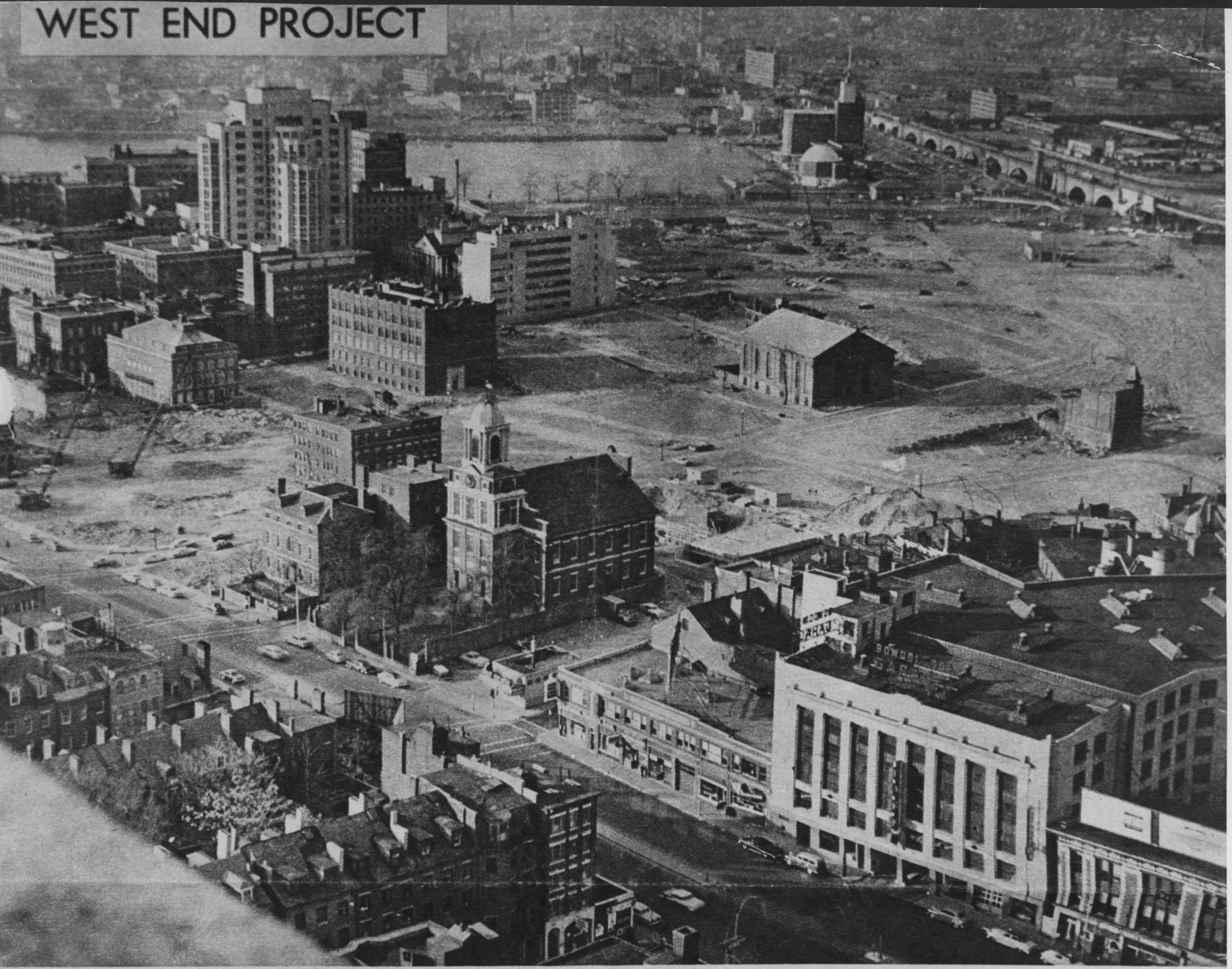
The West End’s story is a story of change. From humble beginnings as farmland and factories in the 1700s, to an immigrant base in the 1900’s, and a demolished district in the 1960’s, few of Boston’s neighborhoods have seen so much transformation.
“The West End is a really interesting neighborhood,” Sebastian Belfanti, executive director of the West End Museum told Boston.com in an interview. “This will probably be the theme of our conversation.”
As both a historian and a neighborhood leader (he’s the president of the West End Civic Association, director ex-officio of the West End Community Center, and a board member with the Massachusetts History Alliance), Belfanti’s admiration and respect for the neighborhood is clear — throughout our call, his smile is distinct even over the phone. But the neighborhood’s rich and resilient history, even without his admiration for it, can stand on its own.

The West End was used as an industrial hub in the 18th century before becoming one of the city’s wealthiest neighborhoods and a Black enclave in the 1800s, he said.
“At the same time that the Black community [in the West End] becomes one of Boston’s wealthiest communities, it leads the abolitionist movement. And then after the Civil War, it transforms into an immigrant space,” Belfanti said.
Groups of immigrants from Italy, Eastern Europe and other nations found home in the West End, and built a large multi-ethnic community. The working class and immigrant community survived until the neighborhood’s destruction in 1959 for an urban renewal redevelopment project. As a result, more than 12,000 West Enders were displaced from their homes and the neighborhood lost its identity as a mecca for the city’s immigrant population.
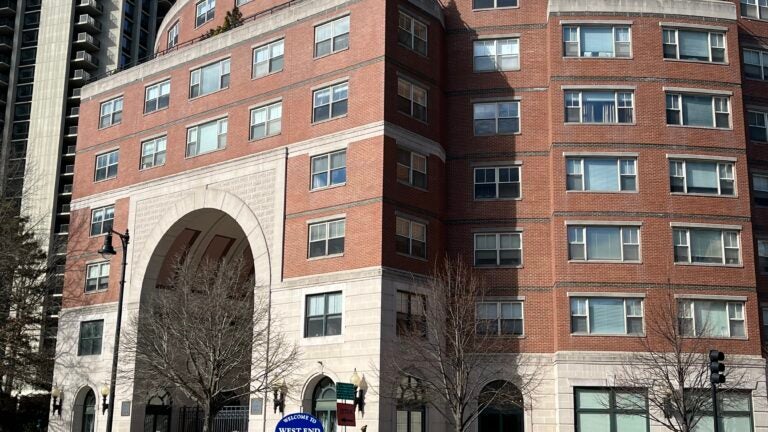
Today, the West End is one of Boston’s great economic engines, home to Massachusetts General Hospital and TD Garden, and has been reborn and reclaimed by displaced West Enders and neighborhood advocates. Belfanti has been a resident for the past two years and said he loves the neighborhood because of its rich history, its “special character,” and its accessibility to other parts of the city.
“It has always been a place where you can get everywhere else. And it served as a channel from the working class to the middle class because you could get to any job from here,“ he said. “I very much feel like it is my own. ”
Here’s how he’d spend a perfect day in the West End.
Morning | Afternoon | Evening | Map | Share your perfect day in Boston
Morning: Breakfast at Lovejoy Wharf
Belfanti’s perfect day in the West End takes place on a cool day in October, with temperatures in the low 60s or high 50s — “that’s my happy place, as I tend to run super hot,” Belfanti said, laughing.
He’s accompanied by his aunt who he has not seen in five years, since the COVID-19 pandemic began. As a child, he would stay in her apartment when visiting New York City, but this time, he’s playing host to her in Boston.
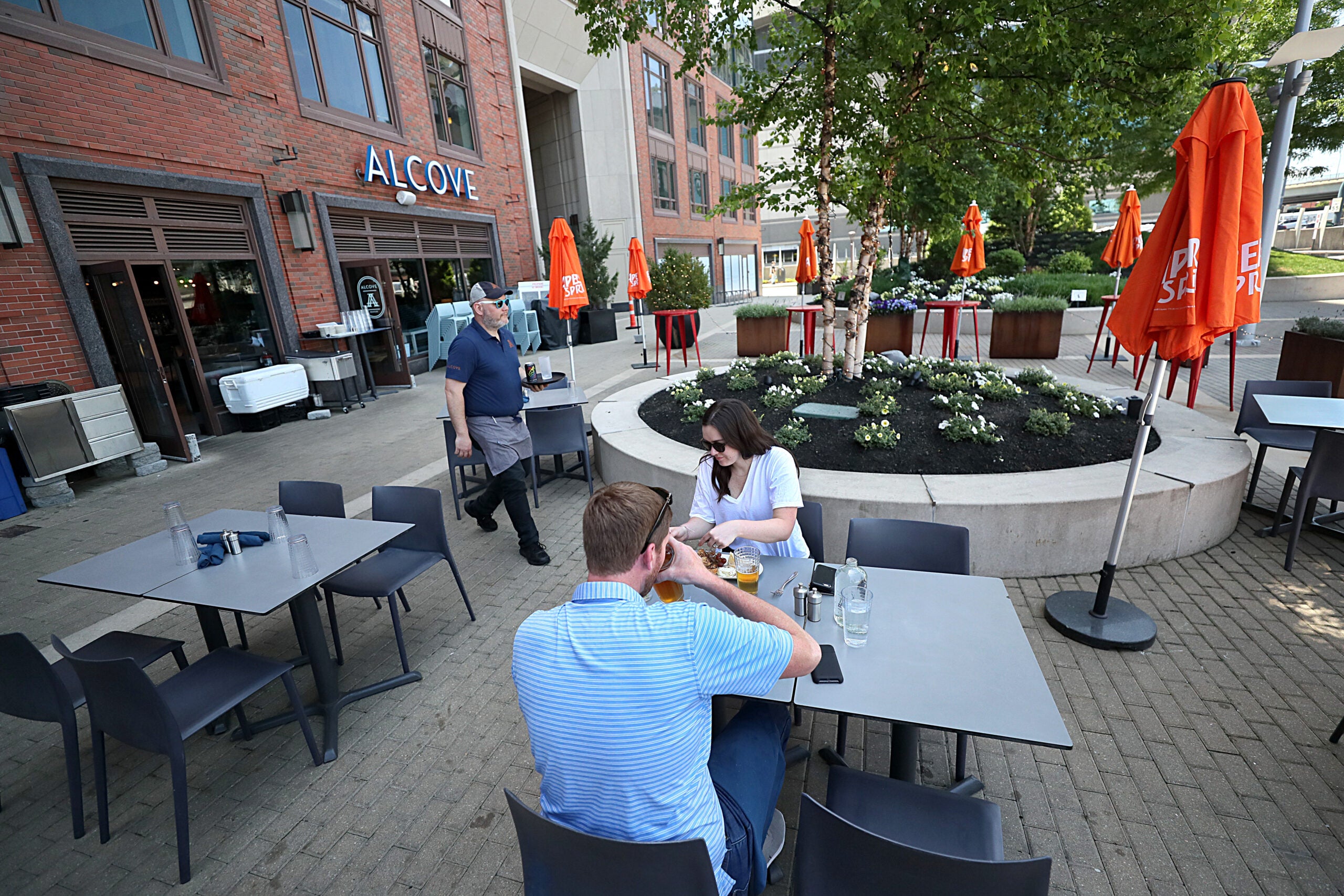
They start their day in the West End with a late breakfast at Alcove (50 Lovejoy Wharf), located at Lovejoy Wharf on the waterfront. They’ll sit outside on the patio, which looks out onto the Leonard P. Zakim bridge and the Charles River.
“That gives us an opportunity to be by the water, which is one of the benefits of the West End and these other downtown neighborhoods – we get the river here,” he said.
Belfanti will order the brioche french toast for a classic brunch dish.
If it were just him for breakfast, Belfanti recommends heading to The Cafe on New Chardon (25 New Chardon St.) for a more casual, diner-style breakfast restaurant.
Afternoon: The Gridley Locks Footpath and West End’s museums
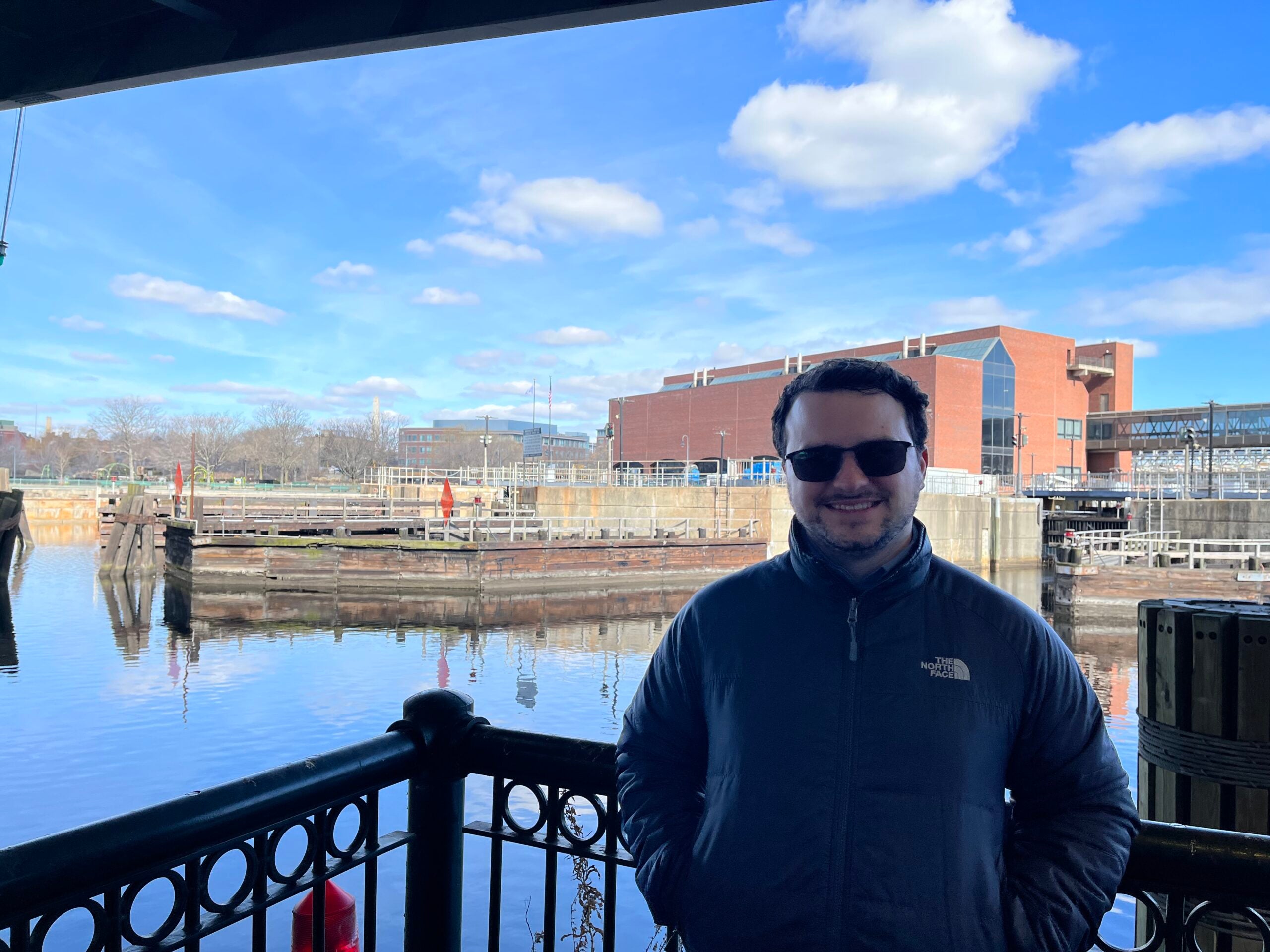
Next on the agenda is a unique walking tour of a hidden gem in the neighborhood: the Gridley Locks Footpath (200 Beverly St.). From Lovejoy Wharf, Belfanti heads toward the Massachusetts State Police Marine Section station to the entrance to the footpath. The path takes him directly on top of several locks that change the water levels of the Charles River Dam. Belfanti enjoys watching the locks in action, and said it is certainly a walk to remember.
“I really enjoy being able to see the water levels as they change, and if you get stuck, it’s totally fine. Seeing the locks open and close, or boats move through them is also fun,” Belfanti said.
As the footpath crosses atop the Charles River Dam itself, he’ll pass an interactive musical sculpture called “The Charlestown Bells” by Paul Matisse. Passersby can play the bells by pushing the handles as they walk along.
The footpath drops him off at Paul Revere Park in Charlestown, which Belfanti acknowledges is technically cheating, since he’s no longer in the West End, but it’s all part of his plan for a perfect day.
From Paul Revere Park, he and his aunt will walk along the Cambridge waterfront until they reach the Longfellow Bridge. They’ll take the bridge back to Boston and enjoy a sweeping view of the area in the process. It’s a good way to see the liveliness of the neighborhood, he said.
“You might still be able to see some people rowing on the water, some boats off of Community Boating (21 David G Mugar Way). It’s very alive and gives us a sense of the river, the neighborhood, and its energy.”
Once he’s back in the West End, Belfanti heads to The Paul S. Russell Museum of Medical History and Innovation (2 North Grove St.) at Massachusetts General Hospital (55 Fruit St). The museum is free and open to the public, and is small enough that it should only take an hour to see. He recommends checking out the old nurses uniforms — “which are a perpetual favorite” — and the iron lung, which was developed in 1928 by Harvard doctors Phillip Drinker and Louis Shaw.
From MGH, he’ll take his aunt to Flour Bakery + Café (209 Cambridge St.) for a quick lunch. He recommends ordering the cauliflower melt (a popular fall seasonal item) or the applewood smoked bacon sandwich before heading to The West End Museum (150 Staniford St.).

The museum has been closed since 2022, after a pipe burst from a residential unit above and flooded the facility. Luckily, most of the museum’s archives were spared from the damage.
“The room in front of the archive was like literally floor to ceiling water,” Belfanti said. “Yet we’ve lost only three images, which is amazing.”
The museum is set to re-open in the spring with new interactive exhibits. Guests will be able to explore the neighborhood and its history in detail. There will even be a sneak peek of what the West End will look like in 2030 thanks to big changes coming to the neighborhood — “We’re gonna go from having two skyscrapers to 12 or 13,” Belfanti said of the changes coming to the neighborhood.
Evening: Thoreau Path, dinner, and a show at Big Night Live or TD Garden
After a day spent sight-seeing and learning about the history of the neighborhood, it’s time to wind down. Belfanti will head to Thoreau Path, a little-known walkway winding through several high-rise apartment complexes. The walkway itself is an easement to the city, a small slice of public walkway surrounded by what is technically privately-owned greenspace, Belfanti notes.
It’s what adds to its little-known, often-forgotten charm, but the blurred lines around its private-public status are also what make it a bit of a contentious issue in the neighborhood, he added.
There are a few ways to access the path: from the back of St. Joseph Catholic Church (68 William Cardinal O’Connell Way) or by walking up the cement stairway between the West End Place condominiums (150 Staniford St.) and West End Apartments (15 Longfellow Pl.).

On the walk, Belfanti recommends stopping to look at the last tenement building (42 Lomasney Way) in the West End. The building was one of 30 row houses that lined what was once Lowell Street, now Lomasney Way. The four-story building is the only tenement in the entire West End neighborhood to survive the demolition efforts in the late 50s and 60s.

After the walk, Belfanti and his aunt are headed to Hub Hall (80 Causeway St.), a food hall with options from a wide range of different cuisines, such as ramen, fried chicken, and pizza. He’ll take his aunt to Sullivan’s Castle Island for a New England specialty: fried clams.
Bellies full from dinner, he’ll grab some cannoli’s from the famed North End pastry shop Mike’s Pastry, which has a shop in the Hall, before heading to TD Garden (100 Legends Way) or Big Night Live (110 Causeway St.) for a show.
“If there’s a game or if there’s a concert, that’d be great. There’s usually stand-up comedy this time of year, which I enjoy.”
After the show, he and his aunt will head back to his apartment to look out at the city at large at night, and take in the energy of the neighborhood.
“The skyscrapers will be all lit up and you can see City Hall,” he said.




Be civil. Be kind.
Read our full community guidelines.To comment, please create a screen name in your profile
To comment, please verify your email address