
Sign up for the Today newsletter
Get everything you need to know to start your day, delivered right to your inbox every morning.
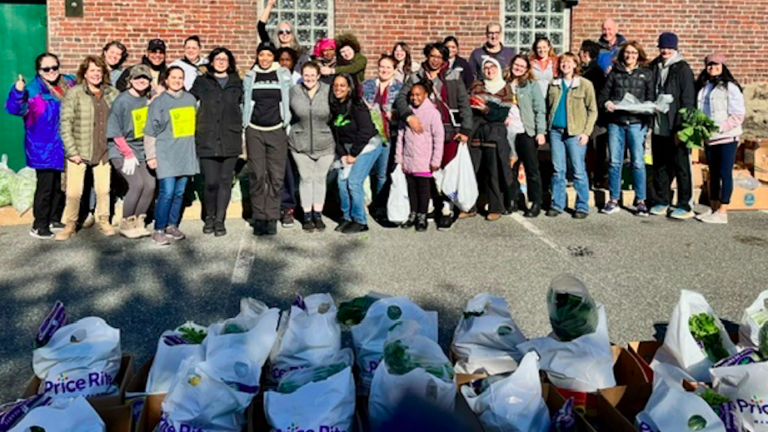
For many families in Massachusetts, food insecurity is a serious issue.
A recent report from The Greater Boston Food Bank found that one in three households in Massachusetts has experienced food insecurity. Additionally, about 36% of households reported children being affected by food insecurity.
In Roslindale, getting food into the hands of people who need it most is community-oriented work, with people and organizations coming together to effectively distribute food.
Leah Arteaga, founder of the Roslindale Food Collective, a food distribution organization. Arteaga runs a drive-up food pantry on Sundays for RFC, where all residents can take home a box of food. The collective receives most of its goods from food rescue organizations, which take excess waste from grocery stores and redistribute it to the community.
In a phone interview, she said it’s the volunteers who help distribute that make program work in a timely and efficient manner. Volunteers are also allowed to take goods home with them, Arteaga said, and many of them understand the importance of food access on a personal level.
“They get to fill their bags, so if they want apples or oranges or, you know, pizza — whatever it is they want for their family,” Arteaga said. “They’re going home and helping their family while they’re helping the community.”
More people in Roslindale are facing food insecurity than before, says Sarah Primeau, director of programs at Health Leads, a program RFC works with. One possible explanation for this could be the COVID-19 pandemic. The GBFB’s report found that overall rates in the state increased from 19% in 2019 to 33% in 2022.
“There has not really been a dip since COVID,” Primeau said. “To be quite honest, we haven’t seen a change in food insecurity and the need. In fact, we’re seeing more need.”
People in the area can easily get food from RFC, regardless of identification or proof of residence. Arteaga believes everyone who needs these resources should get it.
“I don’t believe in asking for people’s income or household size. I think that’s none of my business,” she said. “I say if you’re coming up to get a box, I’m giving you a box, and that’s all there is to it. Your zip code shouldn’t be the determinant of whether you get the food or not.”
See Boston.com’s list of food access resources in Roslindale. Share any resources we missed in the form below or e-mail [email protected].
Get everything you need to know to start your day, delivered right to your inbox every morning.



Be civil. Be kind.
Read our full community guidelines.To comment, please create a screen name in your profile
To comment, please verify your email address