
Sign up for the Today newsletter
Get everything you need to know to start your day, delivered right to your inbox every morning.
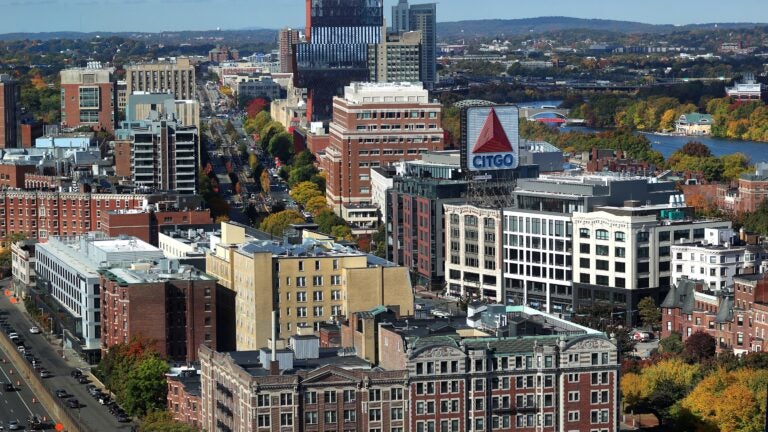
What are the defining moments and experiences that mark the transition from outsider to Bostonian? The answer to this question may go back further than we would like to admit — to Revolutionary times.
Boston’s identity has long been anchored in three things: sports, politics, and revenge, according to Thomas Whalen, an associate professor of social sciences at Boston University. “The Boston Tea Party has represented our cantankerous personality as a city,” Whalen said. “Politically, we do not like to be told what to do. And we will take matters to the extreme to ensure our independence.”
This rebellious spirit, Whalen said, has defined Boston for centuries, making it a city that demands respect and a bit of grit from anyone who wants to belong. But some would say it’s not that simple.
“I have been making emphasis lately on being a Black Bostonian because I feel like our experience is a bit different,” said Kaylicia Merisier, a lifelong resident of Mattapan. “The traditional marketing of Boston is very Paul Revere on the night ride, and I wish they would broaden the lens more.”
Dan O’Brien, a professor of public policy and urban affairs at Northeastern University, agrees. He sees the city as “three Bostons” coexisting side by side” “There’s old white Boston, new privileged Boston, and continuing people-of-color Boston,” he explained, adding that the relationship among these groups reflects Boston’s ever-evolving identity, especially on the neighborhood level.
“Boston likes to claim it is a city of neighborhoods, and I think it really is,” O’Brien said.
Some neighborhood customs, O’Brien added, show how long someone has lived here. “In South Boston, during the winter, they have an informal practice of shoveling out a parking spot and then placing something to block other people from taking it,” he said. “Knowing these things is something you pick up if you’ve been here long enough.”
Yahaira Acuna, who grew up in East Boston, knows Boston is her home because of the strong community within her neighborhood.
“It’s very much Hispanic-driven, so it’s always felt like a community, and people are always looking out for each other,” she said.
Acuna noted, though, that gentrification has begun to alter parts of her neighborhood.
“In areas that are highly gentrified, you almost don’t feel like you’re in East Boston anymore… It feels more city-like, more higher-end, and less like the East Boston I grew up in.”
Acuna’s experience reflects a larger trend experts see in changing neighborhoods.
“As neighborhoods gentrify, there’s often an effort to highlight the culture of certain long-time residents, said Japonica Brown-Saracino, a sociology and women’s, gender, and sexuality studies professor at Boston University. “This usually happens just as those same residents are being pushed out by rising costs.”
The sense of place — and its loss — are central to belonging.
“The feeling of loss highlights belonging… to lose something, you have to be part of something,” said Landon Lauder, a PhD candidate in sociology at Boston University, recalling the closure of the beloved LGBTQ+ nightclub Machine. “For me, losing [Machine] was a pivotal moment where I felt, ‘Oh, I was part of a community, but now it doesn’t exist anymore.’”
For others, belonging is defined by the connections that endure.
“Being a true Bostonian is when you feel that this is your home, and you can’t imagine yourself living anywhere else,” newcomer Amin Karmali said. “It’s when you find something that keeps you here.”
Share with us in the form below or e-mail us at [email protected], and your response may appear in a future Boston.com article.
Get everything you need to know to start your day, delivered right to your inbox every morning.




To comment, please create a screen name in your profile
To comment, please verify your email address
Conversation
This discussion has ended. Please join elsewhere on Boston.com